
Israel begins a limited pause in fighting in 3 Gaza areas as concerns over hunger mount
DEIR AL-BALAH, Gaza Strip — The Israeli military on Sunday began a limited pause in fighting in three populated areas of Gaza for 10 hours a day, part of a series of steps launched as concerns over surging hunger in the territory mount and as Israel faces a wave of international criticism over its conduct in the 21-month war.
The military said it would begin a “tactical pause” in Gaza City, Deir al-Balah and Muwasi, three areas of the territory with large populations, to “increase the scale of humanitarian aid” entering the territory. The pause begins every day at 10:00 a.m. to 8:00 p.m. local time until further notice, starting Sunday.
The military also said that it would put in place secure routes for aid delivery and that it carried out aid airdrops into Gaza, which included packages of aid with flour, sugar and canned food.
Food experts have warned for months of the risk of famine in Gaza, where Israel has restricted aid because it says Hamas siphons off goods to help bolster its rule, without providing evidence for that claim. Images emerging from Gaza in recent days of emaciated children have fanned global criticism of Israel, including by close allies, who have called for an end to the war and the humanitarian catastrophe it has spawned.
Israel said the new measures were taking place while it continues its offensive against Hamas in other areas. Ahead of the pause, health officials in Gaza said at least 27 Palestinians were killed in separate strikes.
“This (humanitarian) truce will mean nothing if it doesn’t turn into a real opportunity to save lives,” said Dr. Muneer al-Boursh, director general of Gaza’s Health Ministry, who called for a flood of medical supplies and other goods to help treat child malnutrition. “Every delay is measured by another funeral.”
Israel has restricted aid to Gaza throughout the war
The local pause in fighting came days after ceasefire efforts between Israel and Hamas appeared to be in doubt. On Friday, Israel and the U.S. recalled their negotiating teams, blaming Hamas, and Israel said it was considering “alternative options” to ceasefire talks with the militant group.
Israel says it is prepared to end the war if Hamas surrenders, disarms and goes into exile, something the group has refused to agree to.

Senior Hamas official Mahmoud Merdawi said that Israel’s change of tack on the humanitarian crisis amounted to an acknowledgement that there were starving Palestinians in Gaza and that the move was meant to improve its international standing and not save lives.
He said that Israel “will not escape punishment and will inevitably pay the price for these criminal practices.”
After ending the latest ceasefire in March, Israel cut off the entry of food, medicine, fuel and other supplies completely to Gaza for 2 ½ months, saying it aimed to pressure Hamas to release hostages.
Under international pressure, Israel slightly eased the blockade in May. Since then, it has allowed in around 4,500 trucks for the U.N. and other aid groups to distribute. The average of 69 trucks a day, however, is far below the 500 to 600 trucks a day the U.N. says are needed for Gaza. The U.N. says it has been unable to distribute much of the aid because hungry crowds and gangs take most of it from its arriving trucks.
As a way to divert aid delivery away from the U.N.’s control, Israel has backed the U.S.-registered Gaza Humanitarian Foundation, which in May opened four centers distributing boxes of food supplies. More than 1,000 Palestinians have been killed by Israeli forces since May while trying to get food, mostly near those new aid sites, the U.N. human rights office says.
Israel has railed against the U.N. throughout the war, saying that its system allowed Hamas to steal aid. The U.N. denies that claim and says its delivery mechanism was the best way to bring aid to Palestinians.
The military said the new steps were made in coordination with the U.N. and other humanitarian groups. There was no immediate comment from the U.N.
Much of Gaza’s population, squeezed by fighting into ever tinier patches of land, now relies on aid.
At least 27 Palestinians killed in latest strikes, health officials say
The Awda Hospital in Nuseirat said Israeli forces killed at least 11 people and wounded 101 as they were headed toward a GHF aid distribution site in central Gaza. GHF, which denies involvement in any of the violence near its sites, did not immediately respond to a request for comment. The military said it was looking into the report.
Elsewhere, a strike hit a tent sheltering a displaced family in the Asdaa area, northwest of the southern city of Khan Younis, killing at least nine people, according to Nasser Hospital. The dead included a father and his two children, and another father and his son, the hospital said.
In Gaza City, a strike hit an apartment late Saturday in the city’s western side, killing four people, including two women, said the Health Ministry’s ambulance and emergency service. In Deir-al-Balah early Sunday, a strike on a tent near a desalination plant killed a couple and another woman, according to the Al-Aqsa Martyrs hospital.
The Israeli military had no immediate comment on the strikes. However, it usually blames Hamas for civilian casualties, saying the Palestinian militant group operates in populated areas.
The military announced Sunday that another two soldiers were killed in Gaza, bringing the total number of soldiers killed since Oct. 7, 2023, to 898.
The war began with Hamas’ October 2023 attack on southern Israel, when militants killed 1,200 people, mostly civilians, and took 251 hostages. Hamas still holds 50 hostages, more than half of them believed to be dead.
Israel’s retaliatory offensive has killed more than 59,700 Palestinians, according to Gaza’s Health Ministry. Its count doesn’t distinguish between militants and civilians, but the ministry says that more than half of the dead are women and children. The ministry operates under the Hamas government. The U.N. and other international organizations see it as the most reliable source of data on casualties.

Trump looks to turn attention to Western Hemisphere at Americas summit
President Trump is set to gather with Latin American leaders on Saturday at his Miami-area golf club as his administration looks to turn attention to the Western Hemisphere, at least for a moment.

Trump administration’s embattled FDA vaccine chief is leaving for the second time
The FDA's controversial vaccine chief, Dr. Vinay Prasad, is leaving the agency. It's the second time he has abruptly departed following decisions involving the review of vaccinations and specialty drugs.

Family, former presidents and a Hall of Famer give Rev. Jesse Jackson a final sendoff
Several speakers at Jackson's funeral invoked his hallmark catchphrases: "Keep hope alive" and "I am somebody."
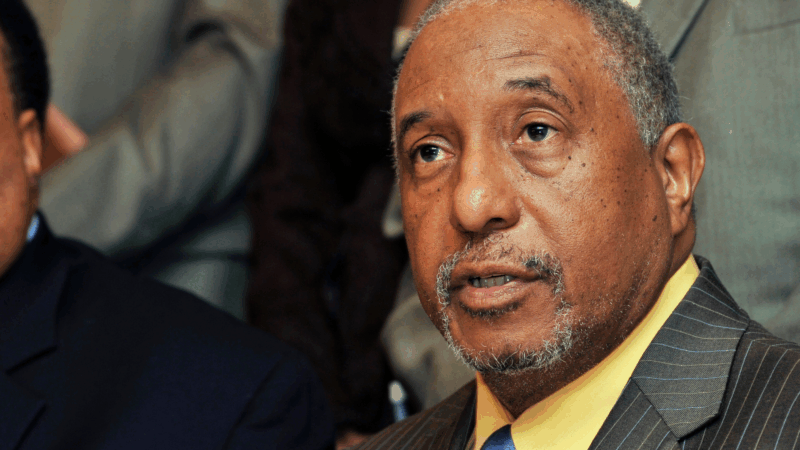
Bernard LaFayette, Selma voting rights organizer, dies at 85
Bernard LaFayette, who died Thursday, laid the foundations of the Selma, Alabama, campaign that culminated in the passage of the Voting Rights Act. He was a Freedom Rider and helped found the Student Nonviolent Coordinating Committee.

Oil surges to its highest price since 2023, and stocks drop after U.S. jobs report
Stocks fell Friday on worries that the economy could become stuck in a worst-case scenario of stagnating growth and high inflation. Oil prices touched their highest levels since 2023 after surging again because of the Iran war.

No lawsuits required: U.S. Customs is working on a system to refund tariffs
U.S. Customs told the trade court it aims for a streamlined process in 45 days to return importers' money without requiring individual lawsuits.
