
Isiah Whitlock Jr., actor from ‘The Wire,’ ‘Veep’ and Spike Lee films, dies at 71
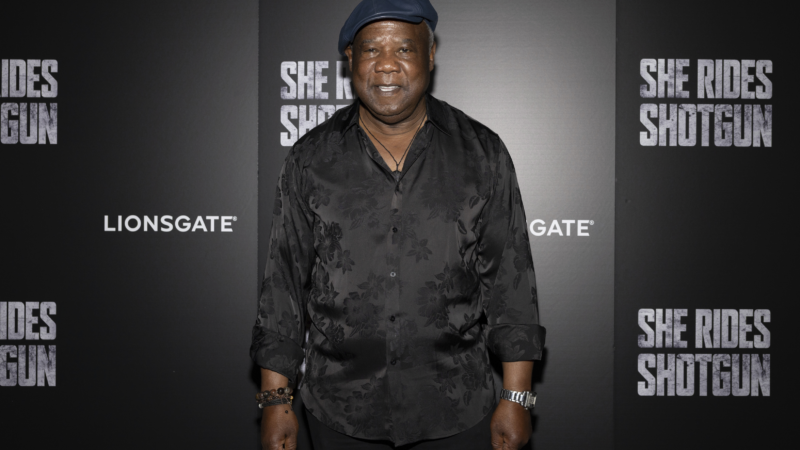
Isiah Whitlock Jr., actor from ‘The Wire,’ ‘Veep’ and Isiah Whitlock Jr., an actor who made frequent memorable appearances on the HBO series “The Wire” and “Veep” and in five films with director Spike Lee, died Tuesday. He was 71.
Whitlock’s manager Brian Liebman told The Associated Press in an email that the actor died in New York after a short illness.
Whitlock played openly corrupt state Sen. Clay Davis on 25 episodes across the five seasons of “The Wire.”
Davis, a fan-favorite character, was known for his profane catchphrase — “sheee-it” — delivered by Whitlock in moments of triumph and blunt honesty. The actor first used the phrase in his first film with Lee, 2002’s “The 25th Hour,” when his detective character discovers a cache of drugs hidden in a couch.
“It’s a big, big, big loss,” Lee said in a phone call with the AP on Tuesday night. “I’m going to miss him for the rest of my life.”
Whitlock went on to appear in four other Lee films, including 2004’s “She Hate Me,” 2012’s “Red Hook Summer,” 2015’s “Chi-Raq,” 2018’s “BlacKkKlansman” and 2020’s “Da 5 Bloods.”
“We vibed over all those years,” Lee said. “We clicked from the jump.”
Lee said he has especially sweet memories of the extended time he spent with Whitlock shooting “Da 5 Bloods” on location in Thailand, and he fondly remembered the last time he saw Whitlock — Lee and his daughter, Satchel, sat with him at a screening of “Kiss of the Spider Woman” earlier this year.
“He was just a beautiful, beautiful soul,” Lee said. “If you were around him, he made everybody feel good in his presence. He would radiate. I would put that over his acting.”
Lee pointed to Whitlock’s comic talents both on screen and off.
“He was hilarious,” Lee said. “That was just his nature, he made people laugh. Everybody was in on the joke.”
Whitlock is the second significant star of “The Wire” to die in recent weeks after the death of actor James Ransone.
A native of South Bend, Indiana, Whitlock went to Southwest Minnesota State University, where he played football and studied theater. Injuries pushed him to study acting, and he moved to San Francisco to work in theater.
He began appearing in small television guest roles on shows including “Cagney and Lacy” in the late 1980s, and he had very small roles in the 1990 films “Goodfellas” and “Gremlins 2: The New Batch.”
After “The Wire,” Whitlock moved on to another HBO show, the political satire “Veep,” where he played Secretary of Defense George Maddox for three seasons. The character ran against Julia Louis-Dreyfus ‘ Selina Meyer in presidential primaries.
“The Wire” creator David Simon also paid tribute to Whitlock in a post on Bluesky.
“As fine an actor as he was,” Simon said, “Isiah was an even better spirit and the greatest gentleman.”
Team USA faces tough Canadian squad in Olympic gold medal hockey game
In the first Olympics with stars of the NHL competing in over a decade, a talent-packed Team USA faces a tough test against Canada.

PHOTOS: Your car has a lot to say about who you are
Photographer Martin Roemer visited 22 countries — from the U.S. to Senegal to India — to show how our identities are connected to our mode of transportation.

Sunday Puzzle: TransformeR
NPR's Ayesha Rascoe plays the puzzle with listener Joan Suits and Weekend Edition Puzzlemaster Will Shortz.

Looking for life purpose? Start with building social ties
Research shows that having a sense of purpose can lower stress levels and boost our mental health. Finding meaning may not have to be an ambitious project.
Danish military evacuates US submariner who needed urgent medical care off Greenland
Denmark's military says its arctic command forces evacuated a crew member of a U.S. submarine off the coast of Greenland for urgent medical treatment.

Only a fraction of House seats are competitive. Redistricting is driving that lower
Primary voters in a small number of districts play an outsized role in deciding who wins Congress. The Trump-initiated mid-decade redistricting is driving that number of competitive seats even lower.
