
Is the ‘Gen Z stare’ just a call to look inwards?

As much as the news media serves to inform the public, we’re also here to give you something to talk about. Learning about the world around us provides the connective tissue for spirited interactions and growing deeper bonds with each other.
What are you going to bring up at the dinner table to get the conversation flowing? Did you read that article everybody has been talking about, too?
What is it? It’s a new social phenomenon … but also maybe it isn’t? (More on that later.)
We’re talking about the “Gen Z stare,” a term that has gone viral in the past week to describe what some see as the Gen Z tendency to stare blankly at people when they are spoken to in different environments.
As a society almost entirely constructed of skit video content, the short form video anthropologists making our TikTok and Instagram reels du jour have categorized their experiences with Gen Z starers in two categories.
The customer service stare: When a Gen Z worker stares silently at a customer before, during or after an interaction they think is ridiculous.
@netta.dar the gen z stare comes out when there’s nothing nice to say… #genz #genzstare #pov #fyp #skit #parody #stare #cafe #annoyingcustomers #customerservice ♬ original sound – Netta Dar
And the customer stare: When a Gen Z customer stares silently at a service worker before, during or after an interaction instead of responding in a timely manner.
@conornoburst Stop deliberately misinterpreting this. It might not be all of them, but its majority of gen z customers. #genz #millennial #genzstare #genzinreallife ♬ original sound – Kelsey
What’s going on? A new (and old duel) between the generations, one could say.
Remember back when an Australian millionaire claimed that millennials couldn’t achieve home ownership because they were too addicted to avocado toast and brunch?
Or when Plato wrote about the youths of his time in The Republic more than two thousand years ago:
“They disrespect their elders, they disobey their parents. They ignore the law. They riot in the streets inflamed with wild notions. Their morals are decaying. What is to become of them?”
Maybe at this point it’s almost sociologically inevitable. Young people reject an established social norm (for whatever reason) and their elders don’t seem to like that very much!
What are people saying? Gen Z is defending itself, Millennials are doubling down and one meme scholar is saying everyone could benefit from taking a look at the bigger picture.
Jennifer Grygiel, a social media expert and professor at Syracuse University, isn’t convinced that the “Gen Z” stare is really a social phenomenon or unique to this specific generation.
“I find Gen Z to be really great at having conversations,” Grygiel told NPR.
“I would say that if you are actually engaging them, they will engage you back. Maybe what we’re witnessing too is some boredom, especially with who they’re interacting with.”
Gen Z deeply values authenticity, says Grygiel, who has taught both millennial and Gen Z students. If interacting with them feels awkward, it might also be because they’re not only young, but haven’t had as much experience socializing out in the real world as other generations.
“If we’re noticing something of young people, maybe they are just maybe a little bit more well-versed, if anything, in when they’re actually being engaged, and maybe they don’t know how to fake it yet like old people. And maybe there’s something that’s young and innocent about that. If there were more enriching interactions for them, interpersonal interactions, maybe more of their personality and the ability to talk and engage would kind of cut through that.”
So, what now?
- Comment sections on these kinds of videos have been filled with plenty of Gen Z’ers reminding their critics that they were forced to spend some critical developmental years in front of screens — which may translate to some social awkwardness!
- And Grygiel advises that the urge to make something like this such a cultural discussion may signify some larger issues everyone is experiencing. “[Young people] become the target of the critique of the social ills of our time. Because in order to feel optimistic as a society, as a culture, you need to feel good about the next gen. And if some of the rhetoric is criticizing them or critiquing them, honestly, it’s a reflection not of them — it’s a reflection of society as a whole.”
Judge rules 7-foot center Charles Bediako is no longer eligible to play for Alabama
Bediako was playing under a temporary restraining order that allowed the former NBA G League player to join Alabama in the middle of the season despite questions regarding his collegiate eligibility.

American Ben Ogden wins silver, breaking 50 year medal drought for U.S. men’s cross-country skiing
Ben Ogden of Vermont skied powerfully, finishing just behind Johannes Hoesflot Klaebo of Norway. It was the first Olympic medal for a U.S. men's cross-country skier since 1976.

An ape, a tea party — and the ability to imagine
The ability to imagine — to play pretend — has long been thought to be unique to humans. A new study suggests one of our closest living relatives can do it too.

How much power does the Fed chair really have?
On paper, the Fed chair is just one vote among many. In practice, the job carries far more influence. We analyze what gives the Fed chair power.
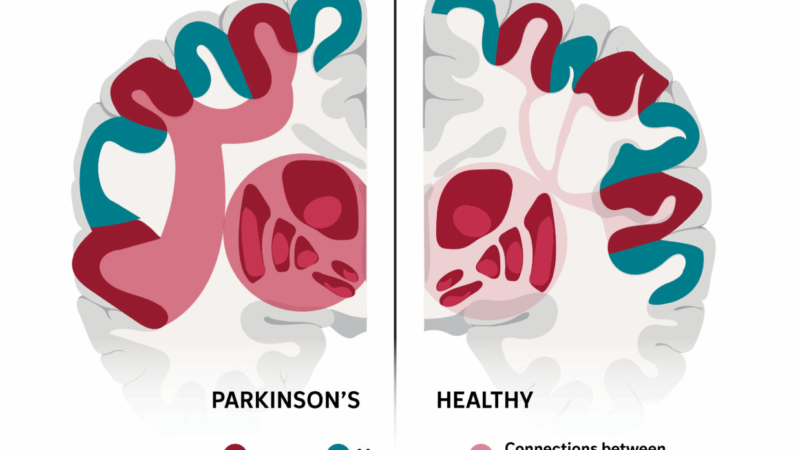
This complex brain network may explain many of Parkinson’s stranger symptoms
Parkinson's disease appears to disrupt a brain network involved in everything from movement to memory.

‘Please inform your friends’: The quest to make weather warnings universal
People in poor countries often get little or no warning about floods, storms and other deadly weather. Local efforts are changing that, and saving lives.
