
Iran strikes were launched without approval from Congress, deeply dividing lawmakers
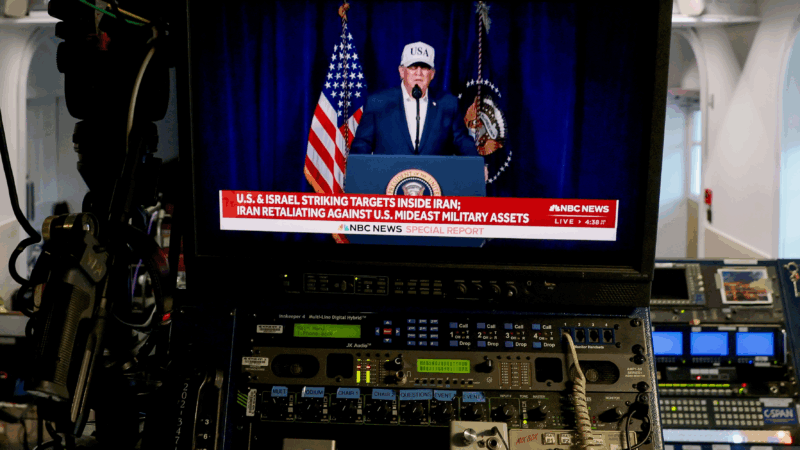
An effort to limit the ability of the president to carry out sustained military action in Iran without approval of Congress is taking on new urgency after the U.S. and Israel launched strikes aimed at overthrowing the regime.
The strikes, which began early Saturday, were launched without congressional authorization. Article 1 of the Constitution gives Congress, not the president, the power to declare war. Top Congressional Democrats and Republicans that make up a group known as the Gang of Eight — party leaders from both chambers, as well as the Intelligence committees’ leadership — were notified by the White House shortly before the attack.
Initial reaction to the overnight attack has not split cleanly on partisan lines, though most praise has come from Republicans, including Senate Majority Leader John Thune, R-S.D., and House Speaker Mike Johnson, R-La.
“Today, Iran is facing the severe consequences of its evil actions,” Johnson wrote in a statement. “President Trump and the Administration have made every effort to pursue peaceful and diplomatic solutions in response to the Iranian regime’s sustained nuclear ambitions and development, terrorism, and the murder of Americans–and even their own people.”
Thune commended Trump for launching the strikes, saying Iran’s nuclear ambitions, missile program and support for terror groups has posed “a clear and unacceptable threat” to U.S. interests in the region.
“I am confident it will successfully carry out the very clearly stated goals of this operation,” wrote Rep. Rick Crawford, R-Ark., the chair of the House Intelligence Committee. “I would strongly advise the Iranian regime heed President Trump’s warning.”
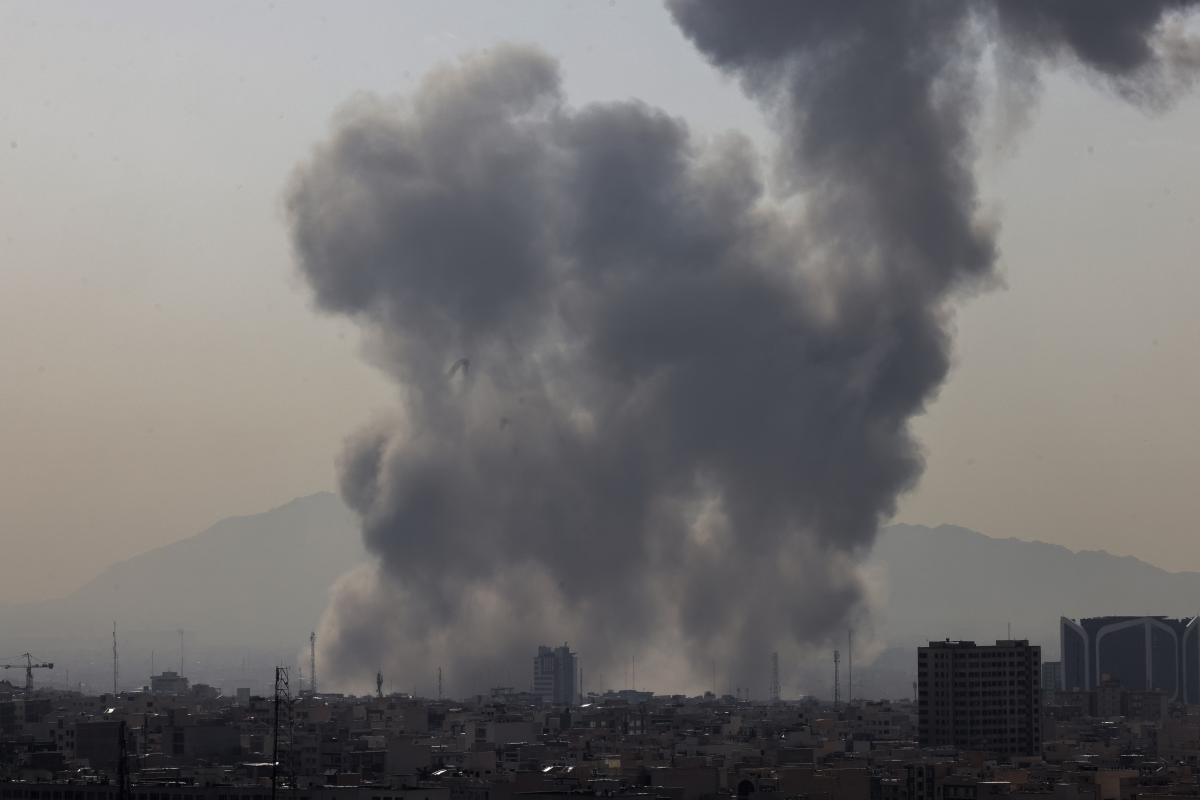
Most Democrats and a handful of Republicans sharply criticized the operation.
“The administration has not provided Congress and the American people with critical details about the scope and immediacy of the threat,” Senate Minority Leader Chuck Schumer, D-N.Y., wrote in a statement. “The administration must brief Congress, including an immediate all senators classified briefing and in public testimony, to answer these vital questions.”
“By the president’s own words, ‘American heroes may be lost,” Sen. Mark Warner, D-Va., wrote in a statement. “That alone should have demanded the highest level of scrutiny, deliberation and accountability, yet the president moved forward without seeking congressional authorization.”
A spokesperson for Warner, the top Democrat on the Senate Intelligence Committee, said he was notified last night before the strikes by Secretary of State Marco Rubio.
A U.S. official said Rubio outlined the situation on Tuesday in an hourlong briefing with the Gang of Eight.
Rubio called those eight members ahead of the strikes, connecting with seven of them. The Armed Services Committees were notified early this morning after the strikes began, according to the official.
“Everything I have heard from the administration before and after these strikes on Iran confirms this is a war of choice with no strategic endgame,” Rep. Jim Himes, D-Conn., the ranking member on the House Intelligence Committee, wrote in a statement.
The push for a war powers vote
Rep. Thomas Massie, R-Ky., a frequent Trump critic who is deeply opposed to this kind of intervention, noted the strikes were “acts of war unauthorized by Congress.”
As Trump and top officials signaled the possibility of a military action against Iran, Massie and Rep. Ro Khanna, D-Calif., were already teeing up a vote in the House this week on a resolution to curb the president’s ability to intervene without approval from Congress.
A similar bipartisan measure is also expected to come up for a vote in the Senate, sponsored by Sen. Tim Kaine, D-Va., and Sen. Rand Paul, R-Ky.

Kaine called on Congress to return immediately to vote on the resolutions, which are privileged, meaning they are guaranteed a vote.
“The lives of our troops are at risk,” Kaine told NPR’s Weekend Edition on Saturday. “We ought to come back to Washington right away to vote on this.”
More recently, the administration has been striking alleged drug boats in the Caribbean and in January, launched an operation in Venezuela to extradite its then-president, Nicolas Maduro.
A war powers resolution to pull back intervention in Venezuela earlier this year initially got enough Republican support to advance in the Senate, but enough ultimately changed their mind and the measure failed.
Backers of these war powers resolutions say that even if they are not successful, it is important for accountability that members vote on the record. The votes can also influence the president and force the public to pay attention to the debate over separation of powers.
The planned votes on curbing military intervention in Iran were already going to be narrowly-decided, but the strikes could shift the calculus for some lawmakers now that action is not hypothetical.
And unlike in the case of Venezuela, where the administration was assuring lawmakers that action would be limited, Trump is warning that “the lives of courageous American heroes may be lost, and we may have casualties. That often happens in war.”
The success of a war powers resolution is far from guaranteed.
In addition to robust Republican opposition to clipping Trump’s authority, Sen. John Fetterman, D-Pa., is among the lawmakers backing the attack, writing in a statement that Trump “has been willing to do what’s right and necessary to produce real peace in the region.”
Rep. Josh Gottheimer, D-N.J., has said a resolution would: “Restrict the flexibility needed to respond to real and evolving threats and risks, signaling weakness at a dangerous moment.”
And in recent months, Congress has signaled a desire to reassert some authority in this space, only for the legislative branch to ultimately bend to the wishes of the executive.

How could the U.S. strikes in Iran affect the world’s oil supply?
Despite sanctions, Iran is one of the world's major oil producers, with much of its crude exported to China.
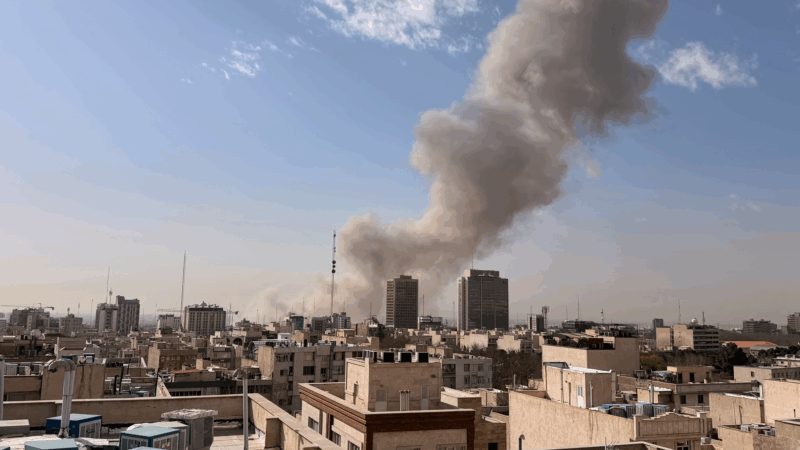
Why is the U.S. attacking Iran? Six things to know
The U.S. and Israel launched military strikes in Iran, targeting Khamenei and the Iranian president. "Operation Epic Fury" will be "massive and ongoing," President Trump said Saturday morning.
Sen. Tim Kaine calls on the Senate to vote on the war powers resolution
NPR's Scott Simon talks to Sen. Tim Kaine, D-Va., about the U.S. strikes on Iran.
Political science expert weighs in on Iran’s nuclear program in light of U.S. strikes
NPR's Scott Simon speaks to Ariane Tabatabai, the Public Service Fellow at Lawfare, about U.S. attacks on Iran and how President Trump's calls for regime change might be received there.
Week in Politics: Does Trump have political support for his actions in Iran?
We look at what President Trump's decision to attack Iran means, what kind of support he has in Iran and what this moment means for his administration.
Unlocking the secrets of an ancient plague
The first historically recorded pandemic is believed to have struck the walled city of Jirash, in what is now modern-day Jordan, in the 7th century. A new study reveals details about those who died.
