
Iran retaliates after Israel strikes Beirut and Tehran as war enters Day 7
Israel’s military said it launched a “broad wave” of strikes on Tehran targeting regime infrastructure, with additional strikes in Beirut’s southern suburbs. Iran responded early Friday with retaliatory strikes on Israel.
Since the U.S. and Israel attacked Iran, more than 1,300 people there have been killed, according to the humanitarian organization Iranian Red Crescent, including Iran’s Supreme Leader Ayatollah Ali Khamenei and more than 160 people in a strike on a girls’ school.
In retaliation, Iran has attacked Israel and launched missiles and drones in countries that host U.S. military bases, including Kuwait, Saudi Arabia, Jordan, and the United Arab Emirates.
Here are more of the key updates NPR is reporting on.
To jump to specific areas of coverage, use the links below:
Iran and Lebanon | Trump on Iran | Iran response | India Russian oil | Stranded Americans
Iran retaliates after Israel launches fresh strikes
Israel’s military said Friday it detected missiles launched from Iran toward Israel, and that its air defense systems were operating to intercept them.
The launches came after Israel said it began a new “broad-scale wave” of strikes aimed at regime infrastructure in Tehran.
U.S. Central Command said overnight the U.S. struck what it described as an Iranian “drone carrier” at sea and that the vessel was on fire.
Israel also carried out heavy strikes overnight on Beirut’s southern suburbs, known as Dahiyeah, a stronghold of the militant group Hezbollah.
Israel had issued evacuation orders ahead of the strikes, warning residents to “save your lives and leave.” Roads out of Dahiyeah were gridlocked on Thursday as families fled in cars and on foot carrying children and whatever belongings they could manage. Lebanese officials say more than more than 95,000 people have been displaced by Israeli strikes since the Iran war began.
Lebanon’s Health Ministry said Israeli strikes have killed 123 people and wounded more than 600 others since the start of the war.
The Israeli military said the Beirut strikes targeted Hezbollah infrastructure, after the group fired rockets into northern Israel earlier this week. The air force hit what it described as a headquarters used by the group’s leadership and a warehouse for drones used in attacks on Israel.
The Israeli military also said it killed a Hezbollah commander, Zaid Ali Jumaa, in Beirut, describing him as a senior figure in Hezbollah’s rocket and drone operations. It also said Israel’s navy killed a Hamas commander responsible for training operatives in Lebanon, in a strike near Tripoli – the first reported strike in that area since the war broke out.
The Lebanese army said it had pulled back from some border positions as Israeli operations expanded into southern Lebanon.
-Hadeel Al-Shalchi and Rebecca Rosman
Trump touts Iran losses and offers ‘immunity’ for surrender
President Trump on Thursday claimed Iran’s military had suffered significant losses, telling reporters that much of Iran’s navy, air defenses and missile-launch capability had been destroyed.
He also urged Iranian leaders to surrender, saying they could “accept immunity.”
Speaking ahead of a White House event honoring Major League Soccer 2025 champions Inter Miami CF, Trump said: “We’ll give you immunity, and we’ll be giving you really the right side of history, because that’s what it is.”
Trump also said he wants to be involved in selecting the next leader of Iran.
“We’re going to have to choose that person along with Iran. We’re going to have to choose that person,” Trump told Reuters on Thursday.
Trump said he saw the effort in Iran as similar to the U.S. role in replacing Venezuelan President Nicolás Maduro in January.
One potential successor to the former Supreme Leader Ayatollah Ali Khamenei, who was killed in Israeli strikes, is his son, Mojtaba Khamenei. But Trump firmly opposes that choice, telling Axios, “They are wasting their time. Khamenei’s son is a lightweight. I have to be involved in the appointment, like with Delcy in Venezuela.” Delcy Rodríguez served as vice president under Maduro and is now the country’s acting president.
“We want to be involved in the process of choosing the person who is going to lead Iran into the future, so we don’t have to go back every five years and do this again and again. We want somebody that’s going to be great for the people, great for the country,” Trump told Reuters.
Iran’s foreign minister says Iran is prepared for a U.S. ground invasion
Iran’s foreign minister, Abbas Araghchi, struck a defiant tone in an interview with NBC News on Thursday, saying Iran was prepared for the possibility of a U.S. ground invasion.
Asked if he feared U.S. ground troops, Araghchi said: “No, we are waiting for them,” adding that such a move would be “a big disaster” for the United States.
Araghchi also rejected the idea of a ceasefire or new talks with the Trump Administration, saying Iran was not asking for a ceasefire. He also denied any behind the scenes contact with U.S. officials to end the war.
The Treasury Department allows India to buy Russian crude
The U.S. Treasury Department is issuing a 30-day waiver that will allow Indian refineries to buy some Russian oil, which was previously under U.S. sanctions. India is a major buyer of crude oil from the Persian Gulf. Those supplies are currently cut off with the U.S. and Israeli led war against Iran.
It’s a significant turnaround after months of the Trump administration leaning on India’s president, Narendra Modi, to stop accepting Russian crude.
In a statement on social media, Treasury Secretary Scott Bessent wrote, “This deliberately short-term measure will not provide significant financial benefit to the Russian government as it only authorizes transactions involving oil already stranded at sea.”
Oil prices on the global market have risen about 20% in the past week to around $80 on Thursday.
“The administration is obviously afraid of much higher oil prices,” says Fareed Mohamedi, managing director at SIA-Energy International, an oil and gas consultancy. “Most administrations are quick to relax restrictions on supply because of their fear of domestic popular backlash to high gasoline prices.”
“There’s an energy crisis brewing. There’s a prospect for higher prices for the U.S. and around the world,” says Antoine Halff, chief analyst at Kayrros, a climate and environmental analytics firm.
India is particularly vulnerable to the current shortage of oil and oil products from the Persian Gulf. Around 40% of Indian crude imports come through the Strait of Hormuz.
China is less vulnerable than India to the loss of oil from the Persian Gulf because it has more oil in storage.
– Julia Simon
Frustration continues to build among Americans stranded in the Middle East
Shirley Bejarano was travelling from a vacation in Bali to attend her grandfather’s funeral in Colombia. Shortly after her connecting flight from Qatar took off on Saturday, it was forced to return, and she has been waiting in Doha ever since for the U.S. government to help her get out.
“I’m very upset at the lack of support we’re getting for trying to evacuate,” she said in an interview Thursday from her hotel. It’s especially infuriating watching other foreign nationals leaving on buses provided by their governments, she added.
Bejarano, 40, of New York, says she listened to Secretary of State Marco Rubio Tuesday say the U.S. was arranging military and charter flights and she hoped things were about to change. But she says she’s been calling an official government help line every day and the message continues to be the same.
“It’s just been the regular updates [saying] ‘Shelter in place,'” she said. “They say they’re going to help, and it’s like well, then, give me something! The help is just not coming.”
The government’s most recent email, Bejarano said, mentioned that the Saudi border was open, but did not elaborate. That, she said, just added to her frustration.
“I thought ‘is the government insinuating that I should go there?’ I just want answers. What do I do next?” she said. “I expect more from the U.S.”
In the meantime, she continues to fear for her safety.
“I’m hearing the booming sounds and seeing the explosions of the intercepting of the missiles and drones,” she said. “My heart just starts racing. It’s terrifying.”
Bejarano said her parents have been protesting at MacDill Airforce base in Tampa, Fla., with a sign saying “Bring Our Daughter Home.” Bejarano feels terrible for her mother. After her grandfather died, she wanted to be there to support her mother. Instead, her predicament — being stranded in a war zone – only added to her mother’s distress.
– Toviah Smith
Hadeel Al-Shalchi contributed to this report from Beirut, Rebecca Rosman from Paris, Julia Simon from Washington, DC and Toviah Smith from Boston.

Your Winter Paralympics primer: What, who and how to watch
Hundreds of para athletes are competing in Italy through March 15. Many Americans are defending past titles, with the U.S. sled hockey team hoping to fend off rival Canada for its fifth straight gold.
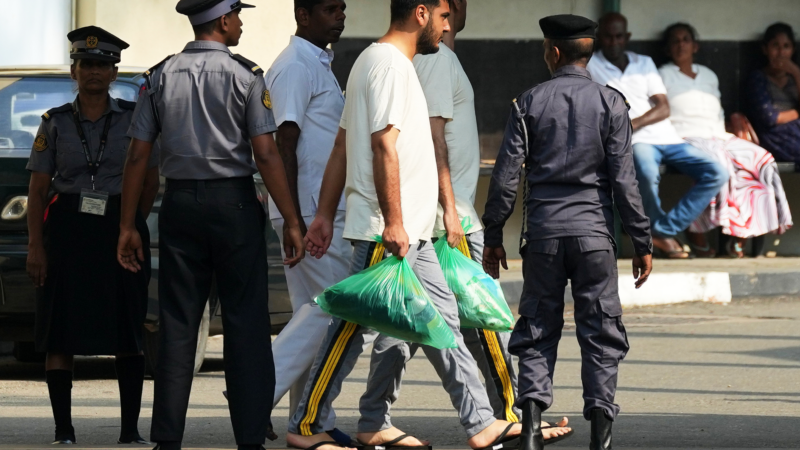
After the U.S. sinks an Iranian warship, Sri Lanka takes custody of an Iranian vessel
The move followed Wednesday's sinking of another Iranian warship by a U.S. submarine. Australia confirmed three Australians were on that submarine.
Olympian Alysa Liu has also inspired fans off the ice — in the hair salon
The gold medal-winning figure skater came to the Milano Cortina winter games with a distinctive "raccoon" hairstyle — alternating rings of dark and light hair. Now, fans are following her lead.

‘Dopamine Kids’ explains why children crave screens and helps them enjoy life instead
A mom and science writer offers an operating manual for parents grappling with kids' screen use and cravings for sweets.
From guns to ballots: FARC’s campaign for votes in Colombia
Ten years after Colombia's peace deal, former FARC commander on the election campaign trail is discovering that winning ballots can be tougher than waging war.
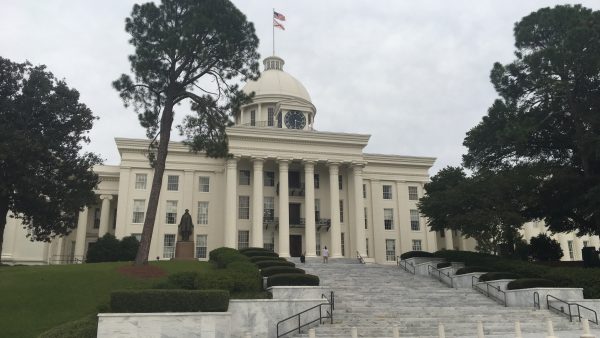
Bill to force formal utility rate hearings for the first time in more than 40 years delayed
Alabama's Public Service Commission hasn't held a formal rate hearing for utilities since 1981. A bill that would force the commission to hold such hearings is under consideration in the state legislature, although the measure was delayed in a House committee this week. We get more details on our weekly legislative update with Todd Stacy, host of Capitol Journal on Alabama Public Television.
