
Influencers push ‘parasite cleanses’ but doctors say to steer clear
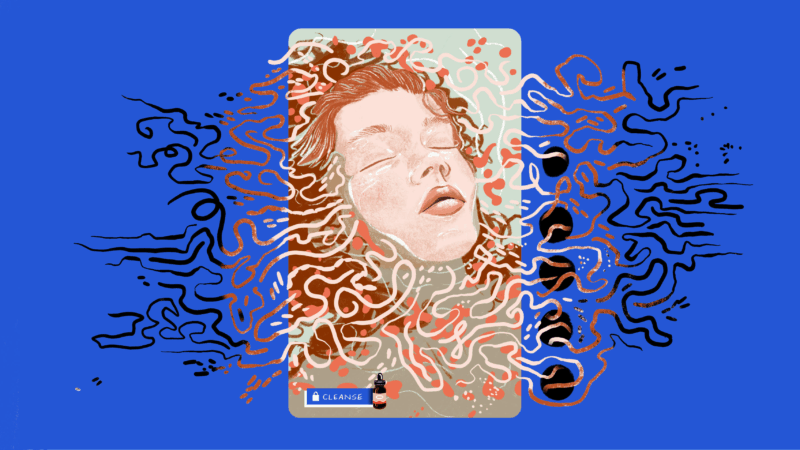
Some wellness influencers are very worried about parasites.
In online posts and videos, they suggest the organisms can be blamed for a host of symptoms — bloating, insomnia, food cravings, teeth grinding, headaches, among others. They claim that you can rid your body of these discomforts with what’s known as a parasite cleanse.
Infectious disease physicians say this trend has led more prospective patients to reach out with concerns that they have parasites. Dr. Abhay Satoskar, a pathologist and immunologist who studies parasites at the Ohio State University, says inquiries ticked up last summer after supermodel Heidi Klum said she’d done a cleanse.
One of the more prominent influencers espousing the benefits of cleanses is Kim Rogers, or “The Worm Queen” as she’s known on social media. Between TikTok and Instagram, Rogers has a million followers.
“I think 95% of us have parasites. We’ve never gone in and cleaned out,” she said during an appearance on singer Jordin Sparks’ podcast in January.
Rogers, who is not a doctor, advised Sparks that people should do a parasite cleanse three or four times a year,” especially if you have pets.” Such products are easily purchased online, including on Rogers’ website, which sells a kit for $125.
Rogers’ team declined NPR’s interview request.
But physicians warn there’s little to no evidence these holistic treatments work, and some of these methods could cause serious health issues.
The claim
Influencers say parasitic infestations — especially of the gut — are common and that people should take measures to clear them out periodically. Many advise doing so by taking herbal supplements or tinctures that induce bowel movements, which, they claim, rid the body of parasitic organisms. Some even say they have seen worms coming out of their bodies afterwards.
Other TikTokers have posted videos of attempts to cure an infestation by soaking their feet or bodies in water mixed with Epsom salt, baking soda, or essential oils.
The evidence
Parasites are organisms that live on or inside another species to survive. There are hundreds of parasites that use humans as hosts, though they’re not a huge public health issue in the U.S. compared to countries with less developed sanitation infrastructure.
That’s not to say U.S. residents never get parasitic diseases. Giardia and cryptosporidiosis are among the most common, both are spread through waterborne parasites, which people can get if they drink water directly from places like rivers or lakes. Some parasites are harmless, even for people with weakened immune systems.
As there are so many parasites, a catchall treatment like a cleanse isn’t a worthwhile cure, explains Dr. Peter Hotez, the dean of the National School of Tropical Medicine at Baylor College of Medicine. Before treating the infection people have to first figure out what parasite they have.
“No one would say you have one-stop shopping for all viruses. Right? So it’s the same with parasites,” he says.
And it’s not a good idea to self-diagnose with parasites, says Dr. Abhay Satoskar — a pathologist and microbiologist who studies parasites at The Ohio State University.
“You’re basically experimenting with yourself. Without even knowing whether you have a parasite or not,” he says.
He notes there are accurate tests to determine if someone has a parasite, as well as safe, effective treatments your doctor can prescribe you if you do. For example, the medication mebendazole starves pinworms by stopping them from absorbing glucose.
Also, the recommendation that people do multiple cleanses a year is bad medical advice , says Dr. Ihab Ahmed, an infectious disease physician at Northwestern Medicine near Chicago.
“If they’re doing this every six months, you’ve got to imagine that whatever they’re doing isn’t effective,” he says.
Though parasites are found throughout the body — the skin, blood, organs — most influencers are concerned with gut parasites, especially worms.
Such infections are relatively uncommon. Dr. Marc Schwartz, a gastroenterologist at UPMC in Pittsburgh, says that rarely are parasites to blame when a patient seeks treatment for unexplained GI issues like bloating, blood in the stool, or nausea. These symptoms can be caused by serious conditions, such as Crohn’s disease, which require different treatments. That’s why Schwartz discourages people from self-diagnosing and treating with cleanses.
On occasion, someone seeking a diagnosis will email a picture of their stool to Ahmed. This type of unsolicited correspondence is somewhat common for infectious disease doctors — Hotez calls them “turd photos.”
Not once has that person had a parasite, says Ahmed. He explains that prospective patients sometimes mistake mucus, undigested fiber and even intestinal lining as evidence of a parasitic infection, which could explain why people on TikTok believe they’ve seen worms in the stool after a cleanse.
“Unless they’re actually looking at it under a microscope, or they have the expertise in that matter, I wouldn’t trust that what they’re seeing is an actual worm,” he says.
The risks
Herbal parasite cleanse products have not been evaluated by the Food and Drug Administration, a fact that online vendors usually acknowledge, noting that their products aren’t intended to be used to diagnose, treat, cure or prevent disease.
And due to the lack of FDA oversight, some cleanse supplements might contain toxic ingredients that can cause all sorts of health issues including organ damage, says Satoskar. Another worry is these products induce bowel movements that cause diarrhea, says Ahmed, which sometimes leads to dehydration, malabsorption, nutrient deficiencies and electrolyte imbalances.
Physicians also point to the lack of clinical evidence that cleanses are effective. The same goes for cleansing with Epsom salt and milk baths.
The best way to prevent parasitic infections is to practice good hand hygiene. Also, don’t eat undercooked meat and be careful when purchasing sushi: If raw fish isn’t correctly handled when fresh or properly frozen, it can have the parasite Anisakis simplex.
Finally, some people suffer from a condition called delusional parasitosis, a mental health disorder in which they believe they are infested with parasitic organisms. Nearly two people out of 100,000 people have this diagnosis, according to a 2014 paper published in the British Journal of Dermatology. Satoskar says the inaccurate information that influencers are sharing about parasites might encourage people, including those with delusional parasitosis, to make risky health decisions.
Bottom line
If you’re dealing with a health issue, including digestive problems, talk to your doctor. It’s unlikely you have a parasite, but if you do, a cleanse won’t help. Your best bet is a FDA-approved treatment that has been clinically tested for safety and efficacy.

Trump threatens NATO allies over Strait of Hormuz help
With the Iran war entering a third week and the price of oil reaching nearly $105 a barrel on Monday, President Trump again urged NATO countries and China to help the U.S. secure the vital Strait of Hormuz.
75 years ago, a viral TV moment ignited America’s obsession with the Mafia
Crooked contracts, bribery, shady characters. In 1951, millions tuned in to watch the Kefauver organized crime hearings, showing the power of television.

Oil and gas prices are soaring. Some countries are ready with solar panels and EVs
As an energy crisis grows, some countries are more prepared because of renewable energy and electric vehicles. Pakistan reduced its reliance on imported natural gas because of the growth of solar.
As parents clamor for a treatment touted for autism, doctors hesitate to prescribe it
After the leucovorin got public attention as a potential autism treatment, families rushed to get it. Many doctors are torn about prescribing an unproven drug but don't want to lose patients' trust.

Is tech making us too obsessed with our bodies?
All this health tracking might not be actually very...healthy.There's a lot of evidence that health tracking can be good for us. Studies have shown that fitness trackers are effective at increasing physical activity, and can pretty accurately detect issues like arrhythmia. And now they're getting a promotional boost from some very influential people: Secretary of Health and Human Services Robert F. Kennedy Jr., and doctor and wellness influencer Casey Means – President Trump's nominee for surgeon general and founder of Levels Health, a company that analyzes data from continuous glucose monitors. But even as health wearables have benefits – how do they fit into the Make America Healthy Again vision for health? What does all this data really do for us – and who else could access it?Brittany is joined by Adam Clark Estes, senior technology correspondent at Vox, and Lindsay Gellman, a freelance journalist who reports on health and business, to get into it.Want more about modern health? Check out these episodes:Were Americans actually healthier in the past?The difference between losing weight & being "healthy" Exercise is more important than everSupport Public Media. Join NPR Plus.Follow Brittany on Instagram: @bmluseFor handpicked podcast recommendations every week, subscribe to NPR’s Pod Club newsletter at npr.org/podclub.

5th member of Iranian women’s soccer team gives up asylum in Australia
The player's departure shortly before midnight on Sunday leaves two of an initial seven squad members in Australia.
