
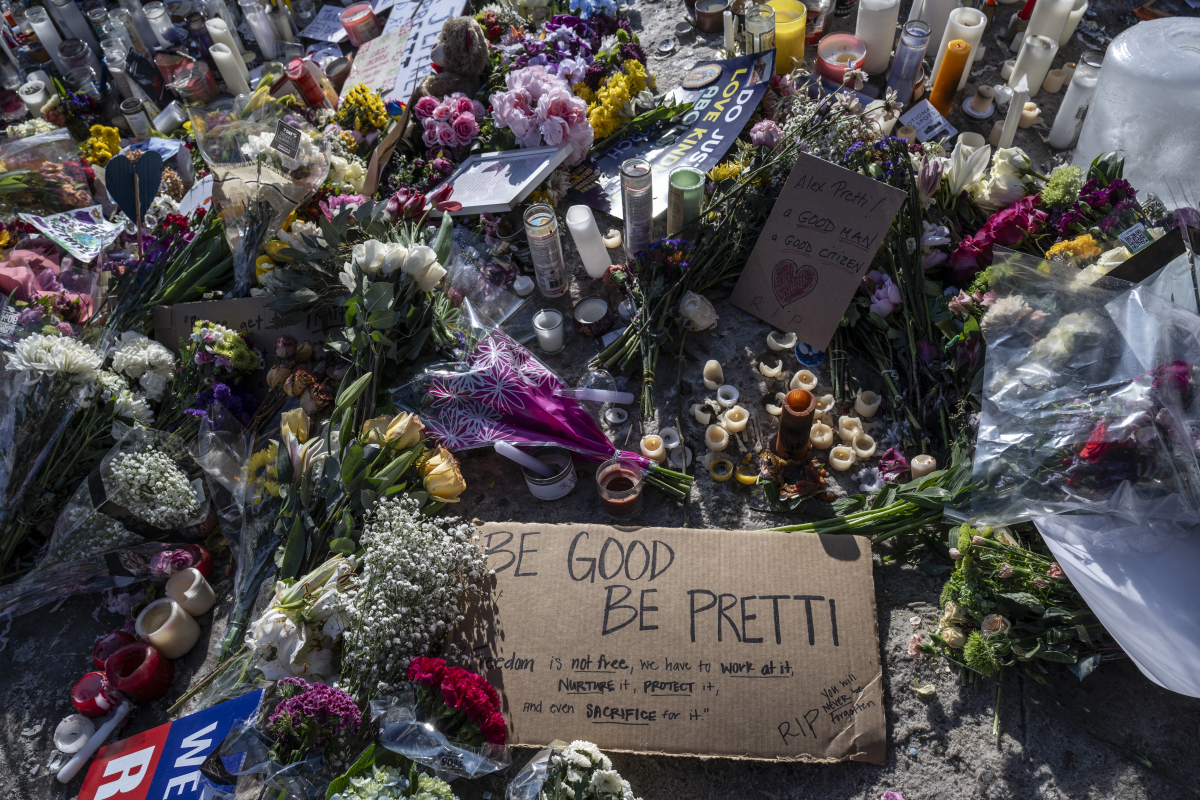
In the wake of Alex Pretti’s death, Congress appears on track for a partial shutdown
The second deadly shooting of a U.S. citizen by federal immigration officers in Minneapolis is raising the prospect of a partial government shutdown at the end of the week.
Senate Democrats say they will not vote to fund the Department of Homeland Security without new guardrails for immigration enforcement.
But that opposition may also torpedo the larger $1.3 trillion dollar spending package needed to keep large swaths of the federal government operational past Friday night.
“The appalling murders of Renee Good and Alex Pretti on the streets of Minneapolis must lead Republicans to join Democrats in overhauling ICE and CBP to protect the public,” Senate Minority Leader Chuck Schumer, D-N.Y., wrote on Sunday. “People should be safe from abuse by their own government.”
Democrats were already raising alarms about the conduct of immigration officers before the latest killing in Minneapolis on Saturday.
Last week, all but seven House Democrats voted against the funding bill covering homeland security, which includes money for Immigration and Customs Enforcement and Customs and Border Protection.
At the time, a few Senate Democrats also pledged to vote against the funding when it reached them this week, though the response across the Capitol was far from the near-unified opposition in the House.
That is because the House sent the DHS funding over to the Senate tied together with billions in spending for defense, health, transportation and other federal agencies, in part to expedite the process as Congress races to meet a Friday deadline to keep the government fully open.
“The hard truth is that Democrats must win political power to enact the kind of accountability we need,” Sen. Patty Murray, D-Wash., the top Democrat on the Senate appropriations committee, wrote in a statement last week saying she would vote for the total package.
After Pretti’s shooting on Saturday by a Border Patrol agent, Murray said she would join her Democratic colleagues in opposing the funding.
Congress faces Friday deadline to avert a partial shutdown
The timeline was already tight once a winter storm delayed the first Senate votes of the week until Tuesday night. But the renewed debate over immigration enforcement is complicating the task more.
Schumer wants to cleave the DHS measure from everything else. The other remaining spending measures have overwhelming bipartisan support. Democrats want to continue negotiating the DHS funding bill without shutting down large parts of the government.
The funding measure needs to reach a 60-vote threshold to pass, meaning some Democratic support is needed for it to clear the Senate. But disentangling different parts of the legislation requires buy-in from Republicans, and so far, GOP leadership has not indicated that they are willing to separate the funding bills.
Senate Majority Leader John Thune’s communications director, Ryan Wrasse, wrote on X on Monday that the Senate will proceed as planned to consider all the funding bills together.
“A government shutdown, even a partial one, does not serve the American people well,” he wrote. “Hopefully Senate Democrats, who are actively engaged in conversations, can find a path forward to join us before this week’s funding deadline hits.”
Sen. Susan Collins, R-Maine, the appropriations committee chair, told The New York Times over the weekend, “I’m exploring all options. We have five other bills that are really vital, and I’m relatively confident they would pass.”
Collins, who is up for reelection and whose state is also a target of immigration raids by the Trump administration, is among the Republicans who have expressed fresh concerns about the tactics, calling for an investigation.
A handful of Republicans have called for congressional hearings or offered sharper criticism.
“My support for funding ICE remains the same,” Sen. Pete Ricketts, R-Neb., wrote in a statement. “But we must also maintain our core values as a nation, including the right to protest and assemble.”
Even if Democrats could convince Republicans to agree to separate DHS funding from the rest, that would mean the legislation needs approval again in the House, which is on recess until Feb. 2. It is unlikely that House Speaker Mike Johnson, R-La., would call members back to Washington early, increasing the risk of a partial shutdown.
Why Democrats are willing to risk another shutdown
Before this weekend, few lawmakers expressed appetite for another shutdown after a record 43-day one this fall. For weeks, Democrats withheld their votes from a short-term funding measure to reopen the government without a deal to extend expiring health insurance subsidies.
Eventually, a handful of Democrats joined with Republicans to reopen the government, with the promise of a vote on the subsidies. That vote failed in December. The deal included the passage of three bipartisan spending packages for veterans, agriculture and other areas through the end of September 2026 and a short-term extension for everything else through Jan. 30.
Congress has already passed several more full-year funding bills through September, but the measures still awaiting final passage in the Senate account for 75% of annual federal discretionary spending.
But even Democrats who ultimately voted with Republicans to end the last funding stalemate now say they will vote against the DHS funding despite the risk of another shutdown.
“We have bipartisan agreement on 96% of the budget,” Sen. Catherine Cortez-Masto, D-Nev., wrote in a statement. “We’ve already passed six funding bills. Let’s pass the remaining five bipartisan bills and fund essential agencies while we continue to fight for a Department of Homeland Security that respects Americans’ constitutional rights and preserves federal law enforcement’s essential role to keep us safe.”

Holding up the DHS funding bill would not halt the administration’s immigration crackdown. Last summer, Congressional Republicans allocated $75 billion for ICE over four years in President Trump’s “One Big Beautiful Bill.”
Democrats say they do not want to give ICE the roughly $10 billion base funding that is on the line now. But more so, Democrats see this as rare leverage in the minority to extract policy changes.
Democrats already negotiated to include $20 million in funding for officer-worn body cameras, plus more funding for oversight and a reduction in funding for enforcement and removal operations and detention bed capacity. But most Democrats said this did not go far enough.
Democrats want more sweeping reforms to reign in the tactics, such as prohibiting ICE from deploying excessive force and explicitly preventing them from raiding places of worship, hospitals and schools. Republicans previously rejected these demands.
The DHS funding bill also includes funding for the Transportation Security Administration, the U.S. Coast Guard and the Federal Emergency Management Agency.
But Democrats are betting that the American public is on their side. A recent New York Times poll found that a majority of respondents said the federal immigration tactics have gone too far.
Nearly $1.3 trillion in federal funding is at stake
The funding fight over DHS is the latest dispute over funding in Congress. Last year, the Trump administration moved to rescind billions in federal funding appropriated by Congress for foreign aid and public broadcasting — and proposed a budget slashing nondiscretionary funding by some 20%.
Instead, the final legislation keeps federal nondiscretionary spending essentially flat. For example, the administration called for cutting the Centers for Disease Control and Prevention budget by 50%. Under the bipartisan health spending bill, the agency’s funding would remain roughly unchanged.
Bill Hoagland, senior vice president of the Bipartisan Policy Center and a former longtime appropriations committee staffer, said this is striking considering Congress has mostly followed Trump’s lead.
“Congress is starting to show a little bit of backbone,” Hoagland said. “I think there is increasing recognition of the need to have Congress exert its power of the purse.”
Hoagland also notes that Congress is nearly a quarter of the way into the fiscal year, so once lawmakers greenlight the remaining funding, it will not be too long before the appropriations process begins again.
Transcript:
LEILA FADEL, HOST:
The second deadly shooting of a U.S. citizen by federal immigration officers in Minneapolis is raising the prospect of a partial government shutdown.
MICHEL MARTIN, HOST:
Most Senate Democrats say they will not vote to fund the Department of Homeland Security without additional guardrails for immigration enforcement, but that opposition may also stop a $1.3 trillion spending package needed to keep large portions of the federal government open past Friday night. In a few minutes, we’ll ask Democratic Senator Chris Murphy what he plans to do. But first, let’s get the background.
FADEL: NPR congressional reporter Sam Gringlas joins us now. Hi, Sam.
SAM GRINGLAS, BYLINE: Hey, Leila.
FADEL: So how did this second killing in Minneapolis change the state of play in Congress?
GRINGLAS: So Democrats had already been raising alarms about the conduct of immigration officers. Last week in the House, all but seven Democrats voted against the Homeland Security funding bill, which includes money for Immigration and Customs Enforcement and Customs and Border Protection. Some Senate Democrats pledged at the time to do the same thing, but not as many, because the Senate has been set to vote on the funding measures as one mega-package. So a vote against Homeland Security funding would also be a vote against spending bills for defense, health and more that have overwhelming bipartisan support. Then after this second shooting, Senate Minority Leader Chuck Schumer announced that Senate Democrats will not provide the votes if the DHS funding is included. And in the Senate, these bills cannot pass without some Democratic support.
FADEL: OK, so if Senate Democrats withhold support, will that stop the crackdown we’re seeing?
GRINGLAS: So Republicans in Congress already gave ICE an extra $75 billion last summer. So Democrats withholding their votes this week is not going to stop the crackdown, but they say they don’t want to hand over the 10 billion or so more dollars that’s on the line now. Here’s Minnesota Democratic Senator Amy Klobuchar on NBC’s “Meet The Press.”
(SOUNDBITE OF TV SHOW, “MEET THE PRESS”)
AMY KLOBUCHAR: When they’re killing two constituents in my state and they’re taking 2-year-olds out of the arms of their mom, no, I am not voting for this funding.
GRINGLAS: This DHS funding bill also includes money for disaster relief and the Coast Guard, but Democrats are betting the public opinion is on their side here. And Senate Democrats who voted last fall to end the government shutdown, they say they, too, are now willing to vote no on this funding, despite the risk of a shutdown.
FADEL: So Senate Democrats do have some leverage. What do they want?
GRINGLAS: Democrats already secured more funding for officer body cameras and oversight, but they had wanted a lot more, like banning the agency from deploying excessive force. Schumer wants to peel off DHS funding so lawmakers can keep negotiating and approve funding for everything else to avoid a more sweeping shutdown. But spinning off the DHS funding will take buy-in from Republican leadership.
FADEL: Is there buy-in from Republican leadership? What are they saying?
GRINGLAS: Well, the appropriations chair, Republican Senator Susan Collins of Maine, told The New York Times she is exploring all options. But this is really getting down to the wire, in part because of the snowstorm and because the House would have to sign off again, and they are in recess. Speaker Mike Johnson appears unlikely to call members back. Now, more broadly, a few Republican senators are calling for an independent investigation and hearings. Republican Senator Bill Cassidy of Louisiana said the credibility of ICE and DHS are at stake. And with the midterms ahead, I will be watching whether we see more daylight on this between Republican lawmakers and President Trump.
FADEL: NPR congressional reporter Sam Gringlas. Thank you, Sam.
GRINGLAS: Thanks, Leila.
Democrat Taylor Rehmet wins a reliably Republican Texas state Senate seat, stunning GOP
Democrat Taylor Rehmet won a special election for the Texas state Senate on Saturday, flipping a reliably Republican district that President Donald Trump won by 17 points in 2024.

Trump says feds won’t intervene during protests in Democratic-led cities unless asked to do so
President Donald Trump said Saturday that he has instructed Homeland Security Secretary Kristi Noem not to intervene in protests occurring in cities led by Democrats unless local authorities ask for federal help.

U.S. intervention in Venezuela divides Houston
In nearly two dozen interviews, Houstonians expressed everything from admiration and relief to skepticism and dread following the seizure of leader Nicolás Maduro.
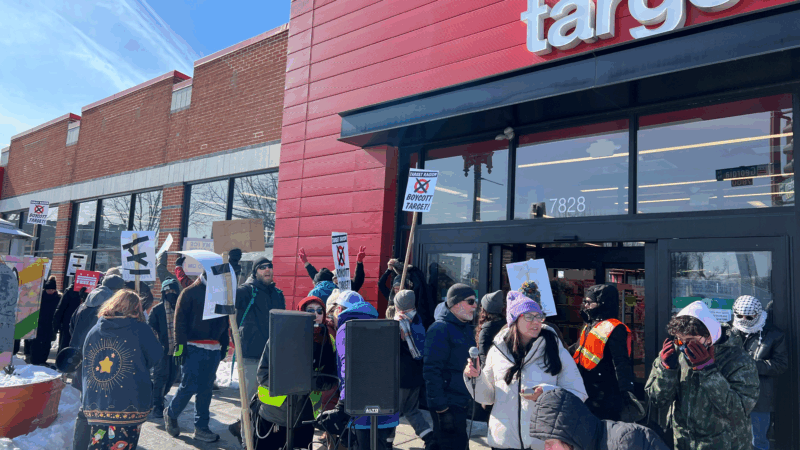
Anti-ICE protesters call for national action against federal immigration tactics
Hundreds of groups hold protests against federal immigration operations, calling for an end to ICE surge. Demonstrators challenge Minneapolis-based retailer Target.

Mine collapses in eastern Congo, leaving at least 200 dead
The collapse happened Wednesday due to heavy rains at the rebel-controlled Rubaya mines. Congo is a major supplier of coltan, which contains a key component in the production of smartphones.

Don Lemon and Georgia Fort vow to continue reporting following arrests tied to anti-ICE protest
The two independent journalists face federal charges related to the interruption of a church service in Minnesota earlier this month. Lemon and Fort say they were there to cover a protest.
