
In the shadow of the Olympics, migrants search for a welcome in Milan
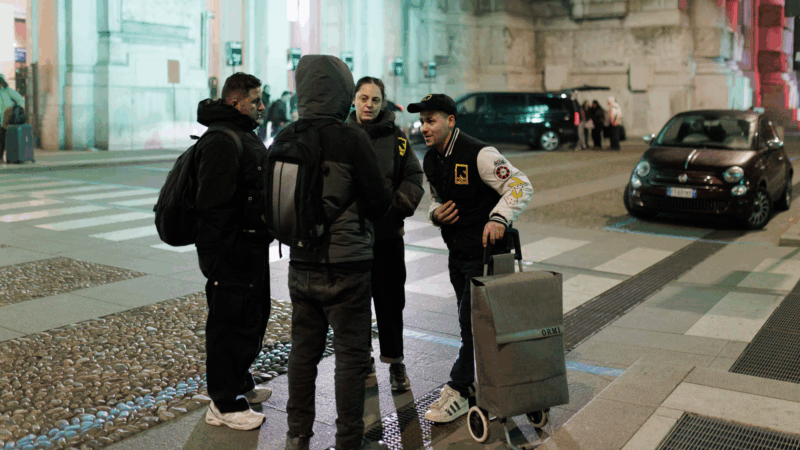
MILAN — Three Afghan men stand together in the freezing fog outside of Milan’s central train station on a recent night — their first moments in Italy. It took two of them a year of clandestine border crossings and journeys in smugglers’ vans to get to this country where they will claim asylum.
The third Afghan man fled to here from Germany, where he had lived and learned the language for three years, before the government hardened its stance on irregular migration and allowed deportations of asylum seekers from Afghanistan and Syria.
As Europe’s political climate darkens against refugees, asylum seekers and economic migrants, with governments including that of Italian Prime Minister Giorgia Meloni focusing resources on limiting new arrivals, Milan is taking a stand for a different approach. The city, led by a mayor from a center-left political party, provides services and programs to try to integrate the people arriving into society.
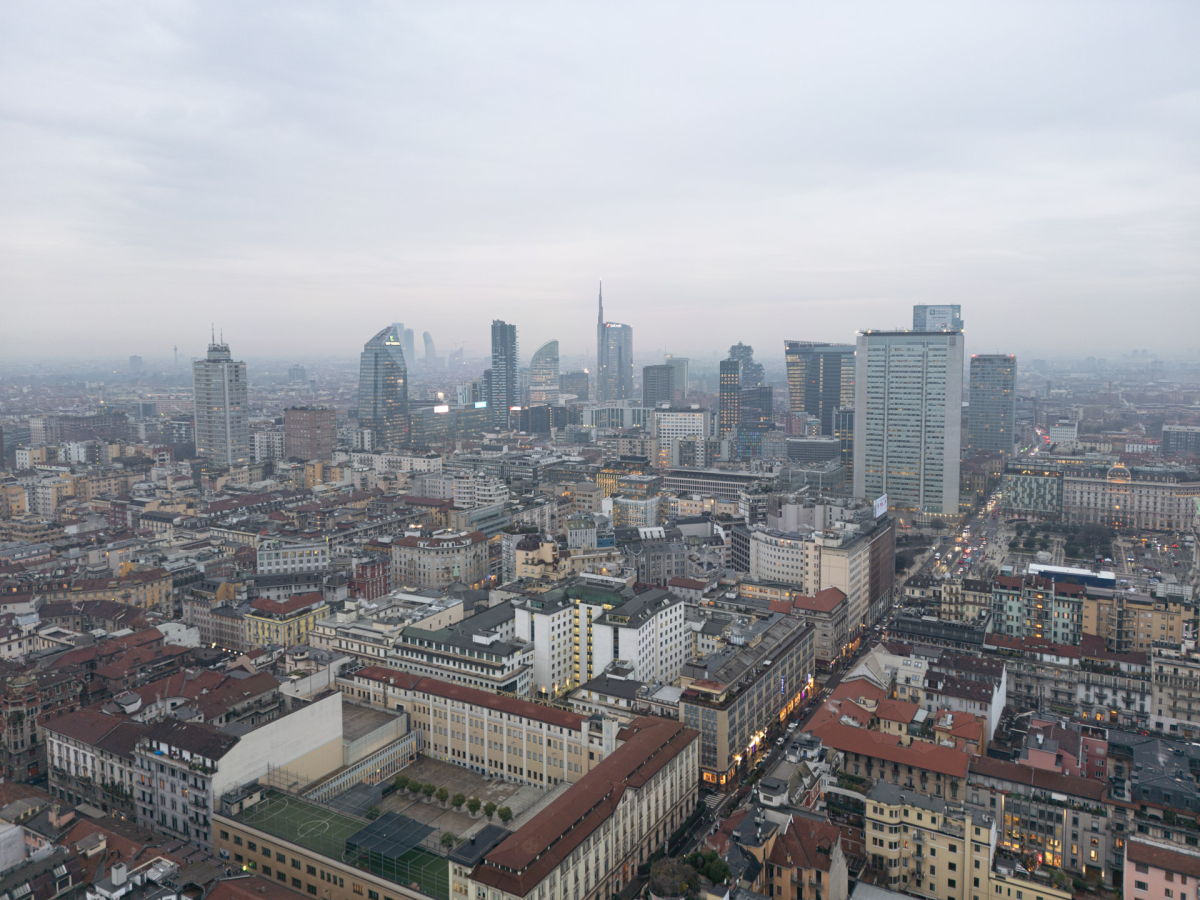
“Milan is and wants to be an open city — open to the world and to change,” says Lamberto Bertolé, Milan’s commissioner for health and welfare. “This idea of Europe as a fortress that is closing is pointless because people find ways to enter anyway.”
Meloni’s government is spending tens of millions of euros to fund the Tunisian and Libyan coast guards to try to prevent irregular migration across the Mediterranean Sea to Italy. These patrols sometimes use violent tactics to stop the smugglers’ boats, endangering those on board. Many migrants are placed in squalid detention centers in Libya where the United Nations and human rights groups have documented the widespread use of torture and abuse.
The Italian government is also seeking ever greater restrictions on charities performing search and rescue missions to help migrants in the Mediterranean Sea.

These efforts have reduced the number of people arriving in Italy by sea compared to 2023. But the United Nations refugee agency, UNHCR, finds that some 66,316 people still came to the country this way last year.
Bertolé in Milan says the government is leaving city councils to cope with the reality of migration in Italy. It has made it harder for certain migrants to access social integration programs, and has limited funds for the shelters. For example, Bertolé says Milan’s city council has had to find housing and care for nearly 1,000 more unaccompanied migrant children than the state provides places for.
A survey from Italy’s National Institute of Statistics in 2021 found that while foreign nationals made up about 9% of Italy’s population, they made up almost 38% of those registered as experiencing homelessness.
“The Meloni government’s policies push migrants to the margins of a society and this marginalization creates more strain within that society,” Bertolé says. “This only generates more fear, which encourages the government to try to close its borders more. So it’s a vicious circle.”
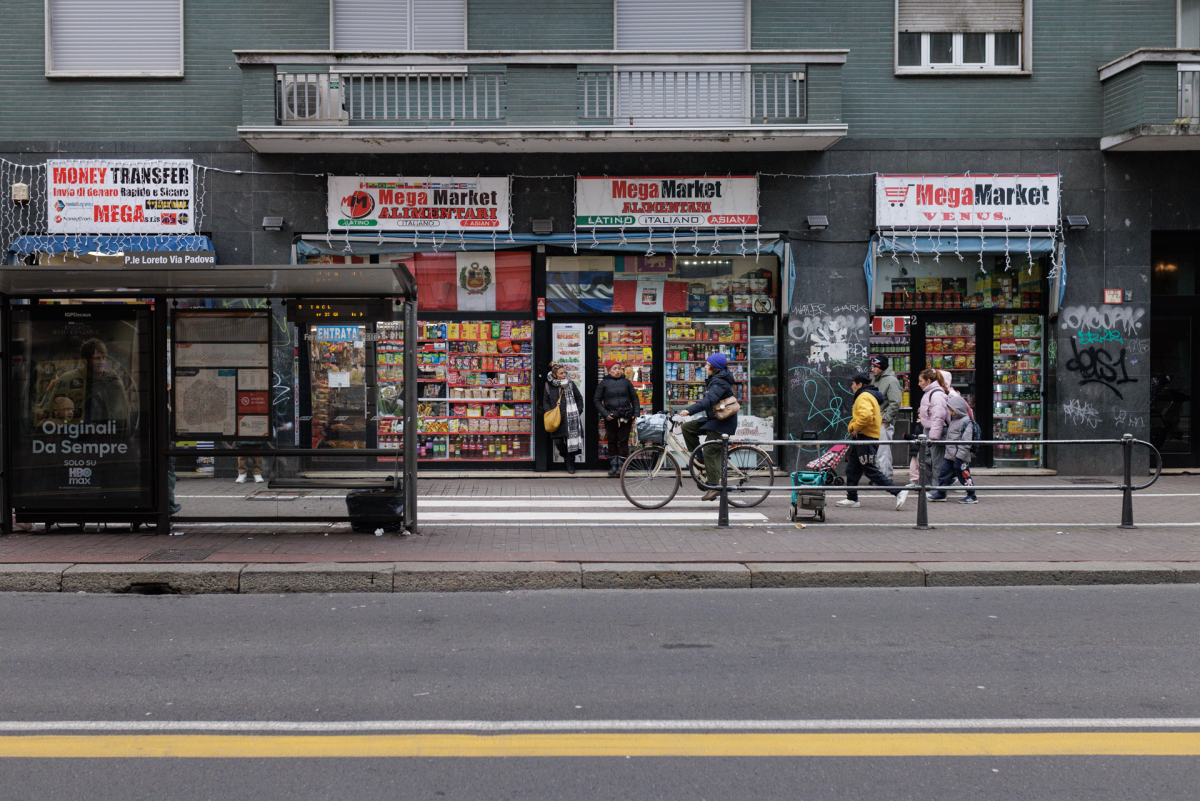
In Milan, the primary site of the Winter Olympics, where visitors paid as much a 1,400 euros for some of the sporting events, homelessness is evident, with many people sheltering from the cold temperatures at night in wall nooks and outdoor seating areas of closed restaurants. This is despite a city program offering temporary shelter in cold periods.

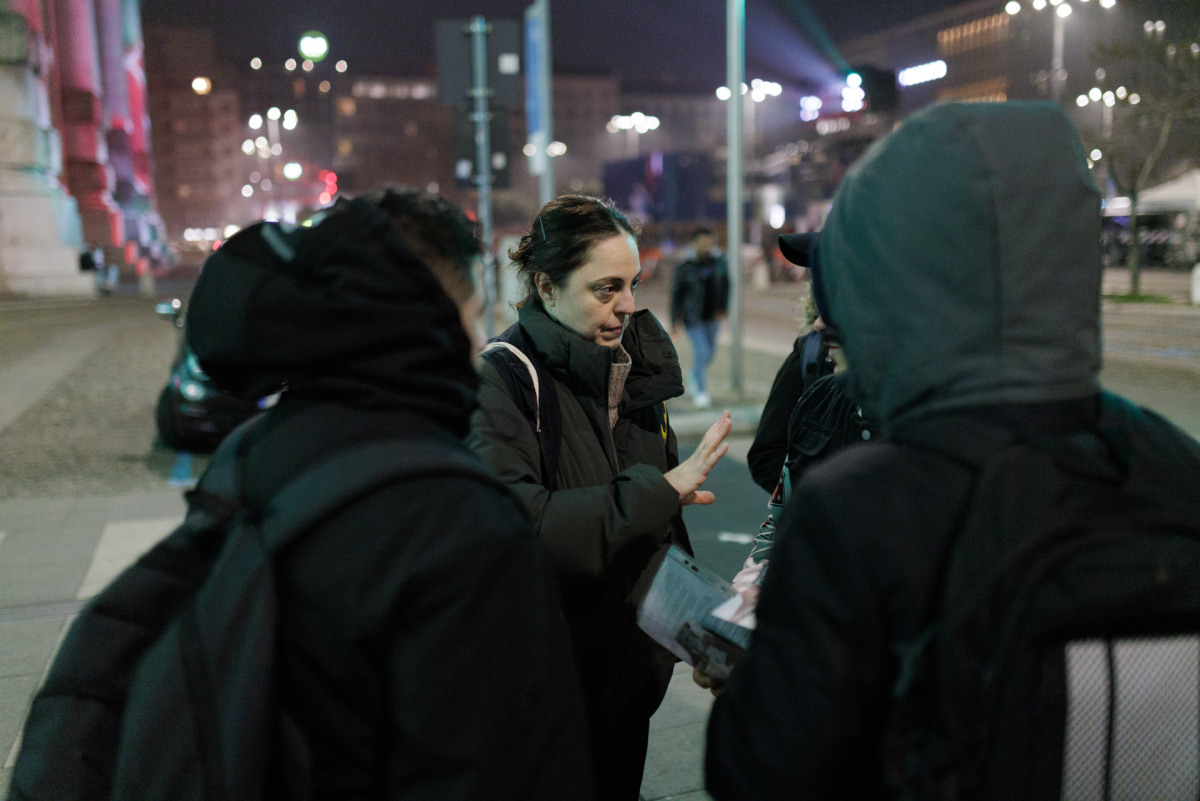

When Diletta Tanzini, protection field officer with the International Rescue Committee, a nongovernmental aid organization, and translator Islam Abdelkarim Ramadan meet the three Afghan men newly arrived at Milan’s central station during a regular night walk to help migrants, they give them cups of hot tea and warm gloves, and provide directions to a welcome center where they could find shelter. “This center is a big gift from the city council,” says Tanzini.
Across town, in the southern outskirts of Milan, the municipality also funds Casa dell’Accoglienza Enzo Jannacci, a residential facility for more than 500 people that houses both migrants and Italians in need. It also helps migrants access state health care services in Italy and enroll children into local schools as their asylum claims are processed. “The objective is to help people build their own autonomous path,” says Anna Pepe, the center’s director.
In a classroom there, art teacher Albania Teresa cuts out large squares of painting paper and passes them to students. In the room are migrants from Peru, El Salvador, Afghanistan and Nigeria. An eclectic mix of African, Latin American and Western music blasts out from a speaker, and 9-year-old Yacob from Tunisia sings a rap in the Italian he has learned into NPR’s microphone.

For some in the room this is a second attempt at settling in a European country. A Nigerian woman, who asks only to be identified as Leila, fearing that speaking to the media could affect her asylum claim, says she spent five years in Germany with her two children — now ages 8 and 5. Her 8-year-old son is in the class with her and becomes clearly frustrated as Teresa, the art teacher, addresses him in Italian, a language he doesn’t yet understand.
In Germany, she and her son had “integrated,” Leila explains, saying she had been learning German and training to become a nurse. But last year, when the country implemented stricter asylum measures, she watched friends get deported and feared this would happen to her and her children, too. She had spent years trying to come to Europe and had eventually crossed the Mediterranean in a smuggler’s boat from Libya while pregnant with her daughter, and with her son, then a toddler, by her side.


“Imagine, after taking a very long time to get to your dream country and, to be told that you will be deported back to your home country after fighting for years to get here,” she says. “It’s too painful because you fought to be here.”
Leila says she came to Milan because she heard from friends about this center and the help she and her children could receive.
By leaving Germany and claiming asylum in Italy, she’s starting again. But this time, she hopes, she and her children will eventually settle.
Asked how she feels about doing this in a political climate in Europe where migrants are increasingly unwelcome, she replies: “I wasn’t given an option in heaven to choose the country to be born into. Everyone has a vision to have a better life. And I am still trying to have that better life.”
Transcript:
EMILY KWONG, HOST:
The Winter Olympics in Italy comes to an end this weekend. For nearly three weeks, the Game’s host cities have embraced the global spotlight. But Milan, one of those host cities, is in the midst of another battle over the future of immigration in the country. While Italian Prime Minister Giorgia Meloni is doing all she can to keep migrants out, Milan is standing up to her policies. NPR’s Ruth Sherlock reports.
UNIDENTIFIED ANNOUNCER: (Speaking Italian).
RUTH SHERLOCK, BYLINE: It’s late on a night of freezing fog in Milan, and Diletta Tanzini, protection field officer with the International Rescue Committee, the IRC, and a translator are at the city’s central train station. They’re armed with a giant flask of tea, power banks and information to help migrants who’ve just arrived to Italy.
DILETTA TANZINI: (Speaking Italian).
SHERLOCK: Tanzini says, “people come here after crossing mountain ranges from the Balkans or the Mediterranean Sea in smugglers’ boats from Africa.”
TANZINI: (Speaking Italian).
SHERLOCK: “By the time they reach Milan,” she says, “they sometimes have nothing left, not so much as a backpack of personal possessions.”
TANZINI: (Speaking Italian).
SHERLOCK: Tanzini passes hot drinks to three men who stand outside the train station looking cold and uncertain of where to go next.
UNIDENTIFIED PERSON #1: Afghanistan. Nice to meet you.
TANZINI: Nice to meet you.
SHERLOCK: They’re from Afghanistan, and these are their first moments in Italy.
UNIDENTIFIED PERSON #1: (Non-English language spoken).
UNIDENTIFIED INTERPRETER: They’ve been traveling for one year to get here. And they arrived today.
SHERLOCK: Nobody in our group speaks Dari or Pashto, but one of the Afghan men communicates through the IRC’s Arabic translator.
UNIDENTIFIED PERSON #1: (Non-English language spoken).
UNIDENTIFIED PERSON #2: (Non-English language spoken).
SHERLOCK: “This journey involved cars, smuggler vans full of refugees,” he says.
TANZINI: (Speaking Italian).
SHERLOCK: Tanzini passes them gloves to protect from the cold and gives them information about a welcome center where they could soon find shelter. There are still procedures before they can access it, so they may have to spend tonight on the street, but there is at least somewhere where they could eventually stay.
TANZINI: (Speaking Italian).
SHERLOCK: “And this is a big gift by Milan Council,” Tanzini says. Even as Europe’s political climate darkens against refugees with the rise of right-wing parties in many countries, including Italy, Milan is trying to provide more services for migrants, even as the government cuts funds.
LAMBERTO BERTOLE: (Speaking Italian).
SHERLOCK: (Speaking Italian).
BERTOLE: (Speaking Italian).
I reached Lamberto Bertole, the health and welfare commissioner for Milan City Council, by phone, as he dashes between appointments.
BERTOLE: (Through interpreter) Milan is and wants to be an open and inclusive city. To close our borders and think that we can stop the flow of people and run a propaganda campaign against them is totally myopic.
SHERLOCK: The Meloni government funds the Libyan and Tunisian coast guards, both entities with documented human rights abuses, to try to stop the migrant boats coming from North Africa. But Bertole argues people from less fortunate countries will always find ways to come, and the difficulty of using legal routes means people take dangerous and clandestine journeys. And once in Italy, they then work in the black, meaning, he says, the state loses out on revenue from hundreds of thousands of possible taxpayers.
BERTOLE: (Through interpreter) The politics against migration are preventing Italy from properly handling the issue here. And this is a perverse decision because it pushes migrants to the margins of society, and this marginalization creates more strain within that society. And this only generates more fear, which encourages a government to try and close its borders more. So it’s a vicious circle.
SHERLOCK: He says Milan wants to help migrants get set up for a new life in Italy.
ANNA PEPE: Ciao.
TANZINI: Buongiorno. Buongiorno.
PEPE: Ciao.
SHERLOCK: To see this for ourselves, the council gives rare permission for us to go inside Casa dell’accoglienza Enzo Jannacci, a center that provides shelter for both migrants and Italians in need. The IRC and other organizations also run programs there.
PEPE: (Speaking Italian).
SHERLOCK: Anna Pepe, the center’s director, says they also try to assist migrants with the long bureaucracy of their asylum claims and help enroll them into the state health care system and their children into schools.
PEPE: (Speaking Italian).
SHERLOCK: “The goal is to assist people in building their own autonomous path,” she says.
UNIDENTIFIED TEACHER: (Speaking Italian).
SHERLOCK: At a classroom in the center, an art teacher cuts out a large square of painting paper.
(SOUNDBITE OF CUTTING PAPER)
SHERLOCK: The room fills with people from all over the world, migrants from Peru, El Salvador, Afghanistan. Everyone here is going through a lot. And this class – it’s a chance to relax.
(SOUNDBITE OF SONG, “FOR YOU”)
KHAID: (Singing in non-English language.)
SHERLOCK: There’s African music, songs from Latin America, all kinds.
UNIDENTIFIED PERSON #3: I’m the dancer in the house.
UNIDENTIFIED PERSON #4: (Laughter).
SHERLOCK: And this very talented kid, 9-year-old Yacob (ph) from Tunisia, who’s already learned to rap in Italian.
YACOB: (Rapping in Italian).
SHERLOCK: The people I speak with here tell me that in Italy, they want to become photographers, lawyers and, like Leila (ph) from Nigeria, nurses.
LEILA: Everyone has a vision to have a better life. And I am still trying to have the better life (laughter).
SHERLOCK: Like everyone here, Leila doesn’t disclose her last name, fearing that speaking publicly could affect her asylum claim. She’s here with her 8-year-old son, a happy kid in a Spider-Man top, with a Spider-Man backpack, who spends time in the class painting – you guessed it – Spider-Man.
UNIDENTIFIED CHILD: It did look like the real Spider-Man.
SHERLOCK: Leila spent years trying to get to Europe. She eventually crossed the Mediterranean Sea while pregnant and with her son, then a toddler, by her side in a crowded smuggler’s boat from Libya. She then spent five years in Germany trying to get residency papers.
LEILA: I also integrated. I integrated for – I was doing a nursing training.
SHERLOCK: Nursing training – but Germany’s policy towards migrants hardened, and she watched friends be deported. She feared this would happen to her too.
LEILA: You imagine after taking a very long time to get to your dream country and be told that you will be deported back to your home country after fighting for years to get here.
SHERLOCK: Oh. It’s too painful. Yeah.
LEILA: It’s too painful because you fought to be here, and you aspired for a better life.
SHERLOCK: I ask how it feels to come to a country whose government is trying to keep people like her out.
LEILA: It’s nobody’s fault you were born in Africa. You just want a dream. I wasn’t given an option in heaven to choose the country to be born into. So yeah, I am born in Africa. So you just have to strive to get to where you ought to be.
SHERLOCK: Leila came to Milan because she said she heard from friends about this center and the help that she and her children could receive. In claiming asylum, she’s starting again. But this time, she hopes she and her children will have a good job and a good education and get to become integrated members of Italy’s society. Ruth Sherlock, NPR News, Milan.

BAFTAs apologize after guest with Tourette syndrome uses racial slur during ceremony
A man with Tourette syndrome shouted a racial slur and other offensive remarks during the BAFTA awards ceremony Sunday. The BBC did not edit out his outbursts in its delayed broadcast.

‘Everything was in pieces:’ Lindsey Vonn describes grueling surgery on broken leg
In a recent video, the Olympic skier credits her surgeon with saving her leg from potential amputation.
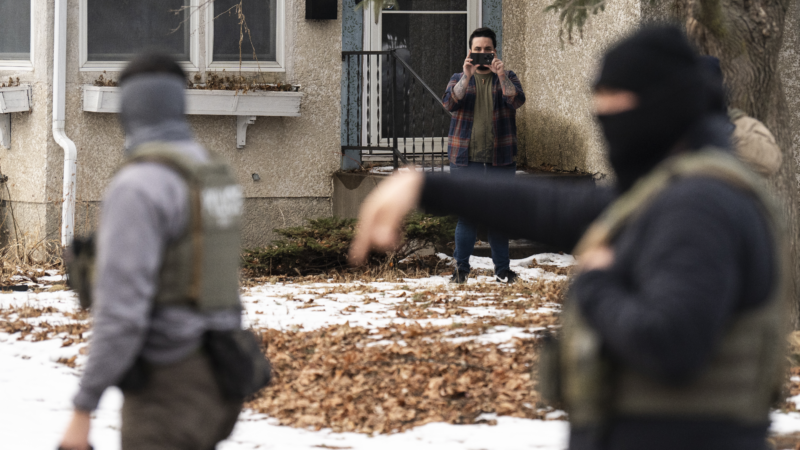
A new lawsuit alleges DHS illegally tracked and intimidated observers
Observers watching federal immigration enforcement in Maine who were told by agents they were "domestic terrorists" and would be added to a "database" or "watchlist" are now part of a new federal class action lawsuit.
Kate Hudson on regret, rom-coms and finding a role that hits all the notes
Hudson always wanted to sing, but feared it would derail her acting career. Now she's up for an Oscar for her portrayal of a hairdresser who performs in a Neil Diamond tribute band in Song Sung Blue.
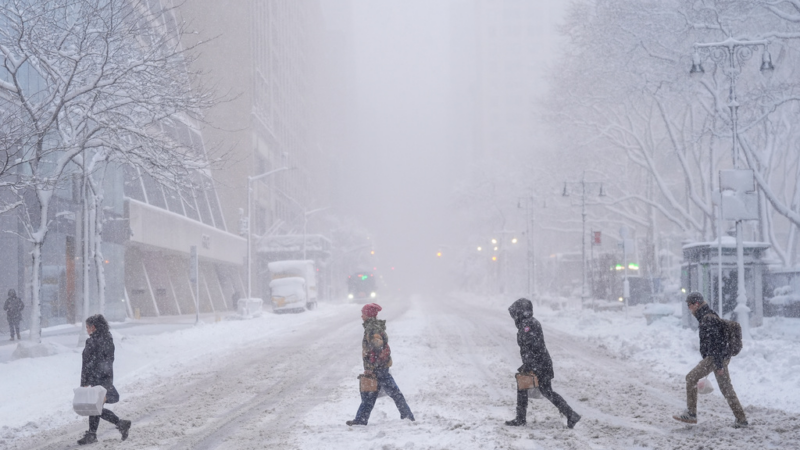
A powerful winter storm is roiling travel across the northeastern U.S.
Forecasters called travel conditions "extremely treacherous" and "nearly impossible" in areas hit hardest by the storm, and air and train traffic is at a standstill in many parts of the region.
U.K. arrests ex-ambassador to the U.S. on suspicion of misconduct over Epstein ties
Police have arrested Peter Mandelson, a veteran Labour Party politician who served as British ambassador to the U.S., as part of an investigation into his ties with Jeffrey Epstein.
