
In lawsuit, Minnesota accuses Trump administration of ‘weaponizing’ Medicaid funding
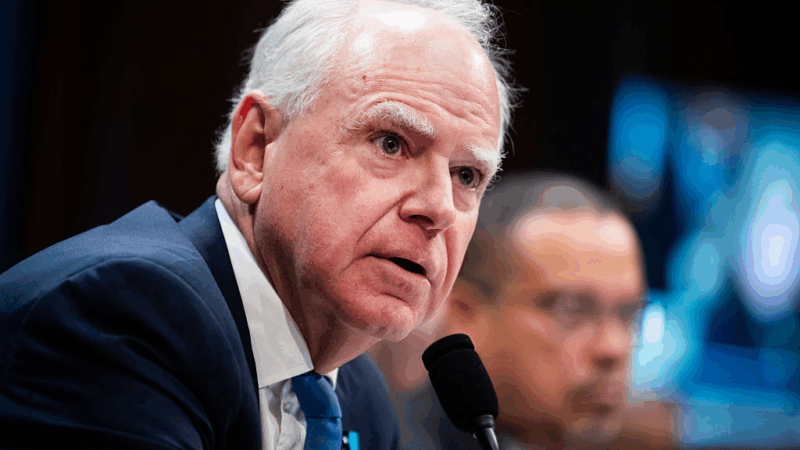
Minnesota filed a federal lawsuit against the Trump administration this week, saying the federal government has “weaponized Medicaid against Minnesota as political punishment.”
At issue is approximately $250 million that the state spent on Medicaid last summer. The administration said it is holding off on matching that money amid allegations of fraud.
Medicaid is the public health insurance program for low-income people. It’s a state and federal partnership, and for every dollar spent in Medicaid by a state, the federal government matches that money.
Last week, the day after President Trump announced a “war on fraud” headed by Vice President JD Vance, he and administrator of the Centers for Medicare and Medicaid Services Dr. Mehmet Oz addressed Minnesota’s Medicaid funds at a press conference.
“We have decided to temporarily halt certain amounts of Medicaid funding that are going to the state of Minnesota in order to ensure that the state of Minnesota takes its obligations seriously to be good stewards of the American people’s tax money,” Vance explained.
Minnesota’s Deputy Health Commissioner John Connolly said he was stunned by that announcement.
“Minnesota has been acting aggressively to combat fraud,” he told reporters in a press briefing this week. “The narrative that additional punitive funding deferrals are necessary to ensure that we are serious about this work does not reflect what we have done.”
Connolly said that, in fact, the state submitted a corrective action plan to the federal government and have been anxiously awaiting feedback on it for weeks. “We are adhering to the timelines, the milestones, the deliverables and we are on schedule with those,” he said.
Last year, federal prosecutors charged several people in Minnesota with Medicaid fraud, and suggested fraudulent charges in Minnesota may have amounted to billions of dollars since 2018, a statement Governor Walz characterized as “speculating,” MPR News reported. Connolly said the real number was in the tens of millions.
The complaint, which asks the courts to temporarily block the deferral of funds, points out that in 2025 its Medicaid payment error rate was 2%, far below the national average of 6%. It argues that Minnesota is being politically targeted.
Connolly also noted that the federal government’s attempt to cut back on Medicaid funding for the state actually started earlier in the year when the federal government told Minnesota it would withhold $2 billion because the state was “substantially out of compliance with federal requirements” to address fraud, waste, and abuse. The state is in the process of appealing that determination, Connelly said.
“To be clear, this deferral is separate and in addition [to] the previously announced $2 billion withholding,” he added. “But to Minnesotans, functionally, it means that federal funding cuts to Medicaid are now here.”
Why Minnesota?
Right wing politicians and media have been hammering Minnesota for months, alleging it has fraud-ridden social services. The attacks have led the state to post its own fraud fact check page.
But health policy experts say these actions by the federal government to withhold and defer funding break precedent with how fraud is normally handled.
“Of course there is fraud against the Medicaid program, not just in Minnesota, but in every state, just like there’s fraud against the Medicare program, and fraud against commercial insurers,” Andy Schneider of the Georgetown Center for Children and Families told reporters this week.
“If you’re serious about dealing with it, you have to have a collaboration between the federal government and the state,” he said, adding that that’s not what’s happening in this case.
He said that these actions are “totally unprecedented.”
Speaking at the same press event, Jocelyn Guyer of the consulting firm Manatt Health called the withholding of funds “punitive.”
A spokesperson for the federal Centers for Medicare and Medicaid Services tells NPR that the agency “does not comment on litigation.”
Medicaid beneficiaries fear the consequences
In announcing the funding deferral last week, Vice President Vance suggested that people who rely on Medicaid won’t be directly affected by this move.
“The providers on the ground in Minnesota have actually already been paid — the state has paid those providers the money,” he said. “What we’re doing is we are stopping the federal payments that will go to the state government until the state government takes its obligations seriously to stop the fraud that’s being perpetrated against the American taxpayer.”
Schneider says the state might be able to cover this unexpected hole in the budget with its own funds for now, but what will happen long term is less clear.
Connolly of the Minnesota Department of Health called the potential impact “catastrophic.”
“The state would face significant cash flow pressures that could disrupt payments to providers, strain hospitals and long term care facilities, jeopardize services for vulnerable populations and destabilize care for more than a million Minnesotans, half of whom are children,” he said.
Autism Society of Minnesota’s executive director Ellie Wilson told Minnesota Public Radio last week that the families who rely on Medicaid are scared by the talk of these sudden funding cuts.
“I need people to understand — the impacts that are happening are extremely real and extremely dangerous,” she said. “We have seen cases of deaths. We have seen cases of homelessness caused by services being dropped too quickly.”
Transcript:
SCOTT DETROW, HOST:
Minnesota sued the Trump administration this week over Medicaid funding. The state argues the White House’s attempt to hold back hundreds of millions of dollars fits a pattern of, quote, “political punishment against the state.” NPR’s Selena Simmons-Duffin explains.
SELENA SIMMONS-DUFFIN, BYLINE: Medicaid is the public health insurance program for low-income people. It’s a state and federal partnership. For every dollar spent in Medicaid by a state, the federal government matches that money. Last week, Vice President Vance announced the federal match for about $250 million spent by Minnesota last summer is being temporarily halted because of fraud allegations.
(SOUNDBITE OF ARCHIVED RECORDING)
JD VANCE: …The state of Minnesota, in order to ensure that the state of Minnesota takes its obligations seriously to be good stewards of the American people’s tax money. Now, what is this going to mean? What this means…
SIMMONS-DUFFIN: Back in Minnesota, Deputy Health Commissioner John Connolly was stunned by that announcement. He spoke to reporters earlier this week.
(SOUNDBITE OF ARCHIVED RECORDING)
JOHN CONNOLLY: Minnesota has been acting aggressively to combat fraud, and the narrative that additional punitive funding deferrals are necessary to ensure that we are serious about this work does not reflect what we have done.
SIMMONS-DUFFIN: Connolly says that, in fact, the state submitted a Corrective Action Plan to the federal government and have been anxiously awaiting feedback on it for weeks.
(SOUNDBITE OF ARCHIVED RECORDING)
CONNOLLY: So we are adhering to the timelines, the milestones, the deliverables, and we are on schedule with those.
SIMMONS-DUFFIN: Now the state is suing the Trump administration in federal court over the deferral of Medicaid funding. The complaint says that Minnesota is being politically targeted and points out its Medicaid fraud rate is only 2%, way below the national average of 6%. Health policy experts say these actions by the federal government are shocking.
(SOUNDBITE OF ARCHIVED RECORDING)
JOCELYN GUYER: I wouldn’t describe it as efforts to address fraud. Those are done in the context of partnerships between the federal government and the states.
SIMMONS-DUFFIN: Jocelyn Guyer of the consulting firm Manatt Health spoke with reporters this week.
(SOUNDBITE OF ARCHIVED RECORDING)
GUYER: These actions are unprecedented, both for the punitive nature and the magnitude of the losses.
SIMMONS-DUFFIN: Connolly of the Minnesota Department of Health says that this move could cause cash flow problems that could be catastrophic.
(SOUNDBITE OF ARCHIVED RECORDING)
CONNOLLY: It could jeopardize services for vulnerable populations and destabilize care for more than a million Minnesotans, half of whom are children.
SIMMONS-DUFFIN: It’s too early to know exactly who would be affected or how, but Autism Society of Minnesota’s executive director, Ellie Wilson, told Minnesota Public Radio that Medicaid beneficiaries are scared.
(SOUNDBITE OF ARCHIVED RECORDING)
ELLIE WILSON: I need people to understand the impacts that are happening are extremely real and extremely dangerous. We have seen cases of deaths. We have seen cases of homelessness caused by services being dropped too quickly.
SIMMONS-DUFFIN: A spokesperson for the Federal Centers for Medicare and Medicaid Services tells NPR that the agency does not comment on litigation.
Selena Simmons-Duffin, NPR News, Washington.
(SOUNDBITE OF MUSIC)
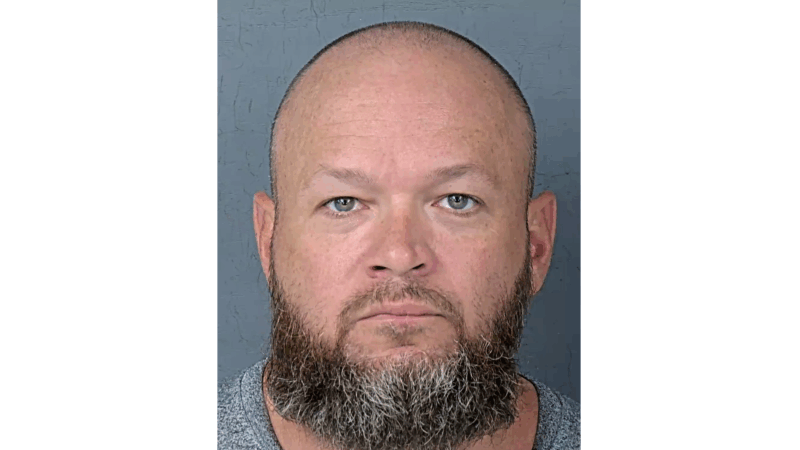
A Jan. 6 rioter pardoned by Trump was sentenced to life in prison for child sex abuse
Since receiving presidential pardons, dozens of former Capitol rioters have gotten into more legal trouble. In Florida, Andrew Paul Johnson was sentenced to life in prison for child sex abuse.

President Trump, Pam Bondi sued over sale of TikTok assets
The case, filed in a federal court in Washington, D.C., accuses the Trump administration of ignoring legislation designed to stop the spread of Chinese propaganda — and instead helping to broker a partial sale to businessmen close to Trump.
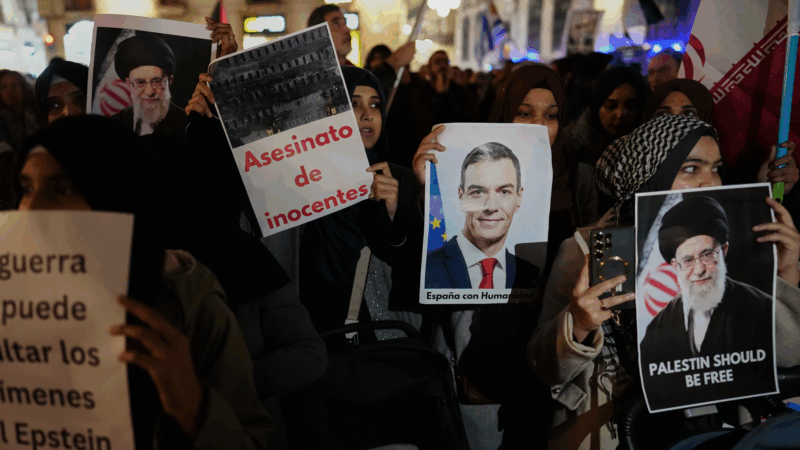
A rift between Spain and Trump widens over Spanish opposition to the Iran war
The Spanish government reiterated it would not let U.S. forces use two joint military bases in Spain as the U.S.-Israeli war in Iran escalates, widening a rift with the Trump administration.
Blackpink, modern K-pop’s trailblazing group, tries to find its way home
A new mini-album finds the world's biggest girl group in a tight spot: competing with its own legacy.
If you loved ‘Sinners,’ here’s what to watch next
So you loved best picture nominee Sinners. What should you watch next? We asked our audience to share their recommendations. They suggested Near Dark, The Wailing and other vampire horror films.
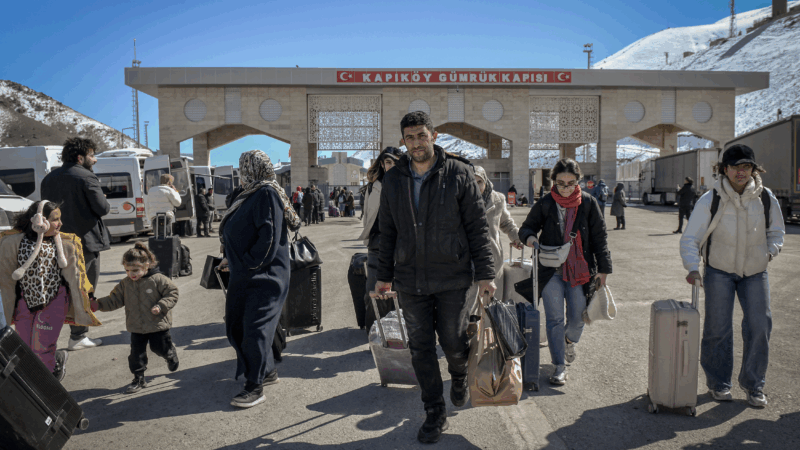
U.S-Israeli strikes continue across Iran, Iranian drones hit Azerbaijan
The U.S. and Israel said they conducted new strikes inside Iran overnight, targeting ballistic missile launchers. Iran claimed it struck a U.S. oil tanker in the northern Persian Gulf.
