
In Florida, Venezuelans worry about the potential loss of temporary protected status
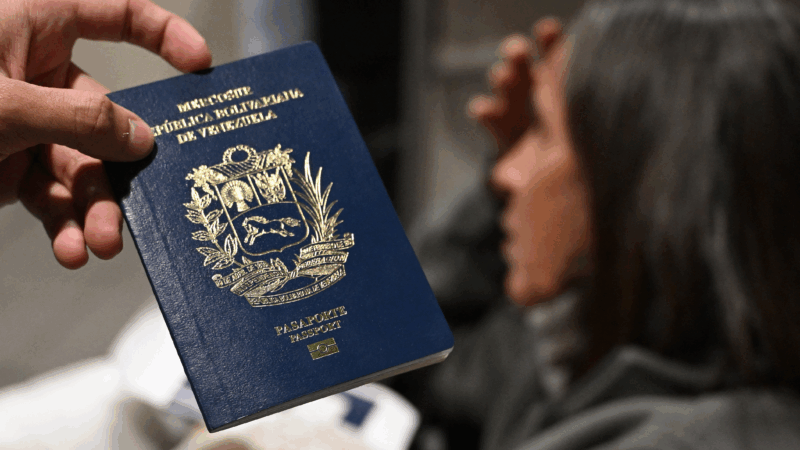
DORAL, Fla. — Venezuelans living in the U.S. are shocked and devastated by a U.S. Supreme Court decision handed down Monday.
It immediately strips Temporary Protected Status, known as TPS, from hundreds of thousands of Venezuelans. A legal fight over the Trump administration order ending TPS is now playing out in lower courts. But Venezuelans living in Florida are worried they may be deported back to a country mired in economic and political turmoil.
Cecilia Gonzalez Herrera came to the U.S. from Venezuela with her parents eight years ago after her family faced political persecution from the administration of authoritarian leader Nicolás Maduro. “Both of my parents were very vocal against the Maduro regime. My dad was an attorney. My mom was a political science specialist.”
Gonzalez is one of the plaintiffs who challenged an order issued in January by the Trump administration ending TPS for about 350,000 Venezuelans. A U.S. District judge in San Francisco put the order on hold while he heard the case and an appeals court agreed with that decision.
TPS is a federal program that protects people from countries ravaged by war or natural disasters from deportation, and grants them work permits. It was created in the 1990s, to offer assistance to Salvadorans fleeing El Salvador’s civil war. Currently, nearly a million people from 17 countries have TPS. According to the Department of Homeland Security, Venezuelans have received TPS due to “the severe humanitarian emergency the country continues to face due to political and economic crises under the inhumane Maduro regime.”

In an unsigned order, the Supreme Court intervened, stripping TPS immediately from a group of Venezuelans whose status expired in April. For those people, Adelys Ferro, executive director of the Venezuelan-American Caucus says, there may be immediate consequences. She says, “Because of that, their work permits that are linked to their TPS are expired. Because of that, their driver’s licenses are also expired, unless they have some other immigration benefit.”
Florida is home to the largest population of Venezuelans in the U.S., a group that has grown dramatically in recent decades as people fled the regimes of authoritarian presidents Hugo Chávez and Maduro.
Gonzalez lives in central Florida and is part of a group of some 250,000 Venezuelans whose temporary protected status expires in September. Along with her parents, she applied for political asylum when she arrived in the U.S. If she loses TPS, she says she and many other Venezuelans will press their case for asylum. “Which…means that we will be in this limbo,” she says. “We have been waiting eight years…waiting for an interview to be called. Which is a reality for many other Venezuelans who have also filed for political asylum.”
In its court filings, the Trump administration says TPS is no longer needed for Venezuelans because economic and political conditions have improved there. Ferro says that’s simply not true. And she says a travel advisory issued just last week by the U.S. State Department confirms it. She says, “Secretary of State Marco Rubio, through his department, published a travel warning for U.S. citizens going to Venezuela and being in Venezuela and asked them to leave the country immediately.”
The advisory warns, “Do not travel to or remain in Venezuela due to the high risk of wrongful detention, torture in detention, terrorism, kidnapping, arbitrary enforcement of local laws, crime, civil unrest, and poor health infrastructure,” adding, “Do not travel to Venezuela for any reason.”
Trump carried Florida and Miami-Dade County in the November election with help from Venezuelan-Americans and other Hispanic voters.
Gonzalez says there is some remorse among Venezuelan-Americans who voted for Trump, some of whom now see his decision to lift TPS as a betrayal. It’s a reminder, she says, that elections matter. “During the campaign,” she says, “Trump was very open about his plans for immigration, including Venezuelans. Some Venezuelans who supported him may now look surprised and be like, ‘I didn’t know he meant us,’ or ‘I didn’t (think) he was going to come for us.’ Well, he meant it. And he’s doing it.”
Despite its impact on Florida’s large Venezuelan community, reaction to the Supreme Court order and Trump’s push to lift TPS has been muted among Republican elected officials in the state. Maria Elvira Salazar, a member of Congress from Miami who has positioned herself as an advocate of Venezuelans and a Trump supporter said she was “deeply disappointed” with the court’s decision.
NPR’s Jasmine Garsd contributed to this story.
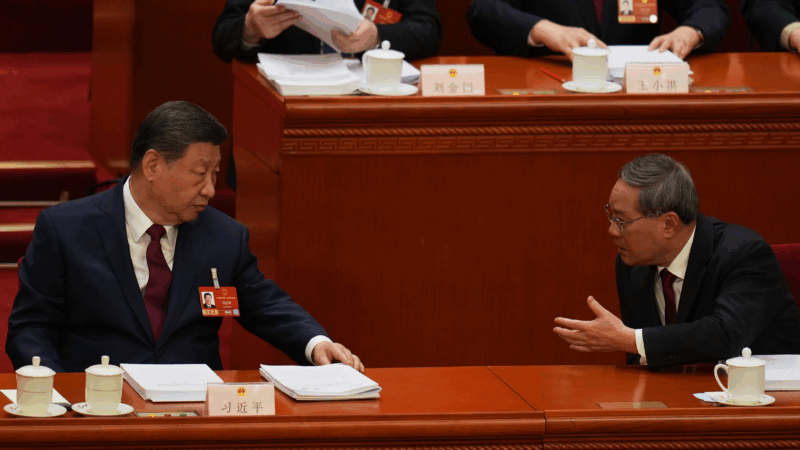
China sets a lower economic growth target of 4.5% to 5% for 2026 as challenges loom
China has signaled continuity rather than change for its economy, setting a slightly lower target for growth this year in the midst of a property slump and other headwinds at home and growing uncertainty abroad.
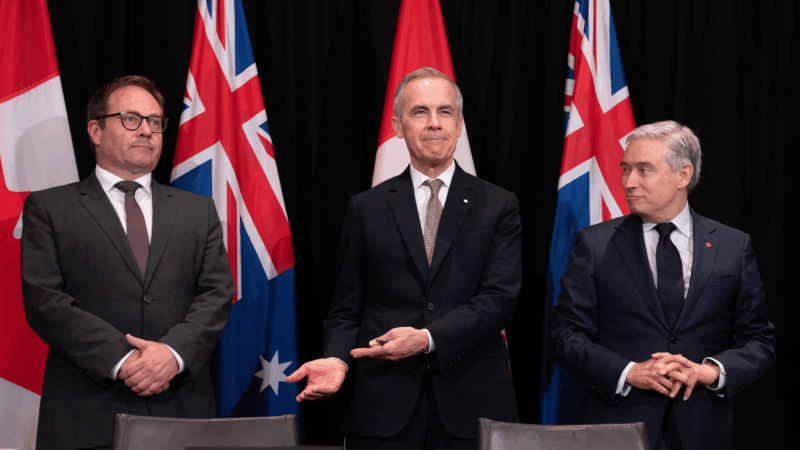
Carney says he backs strikes on Iran ‘with some regret’ as world order frays
Canadian Prime Minister Mark Carney says he supports the strikes on Iran "with some regret" as they represent an extreme example of a rupturing world order.
Iranian civilians are now fleeing the relentless bombing for neighboring Turkey
As the U.S. military broadens its strikes in Iran, traumatized Iranians are reaching the border with Turkey.
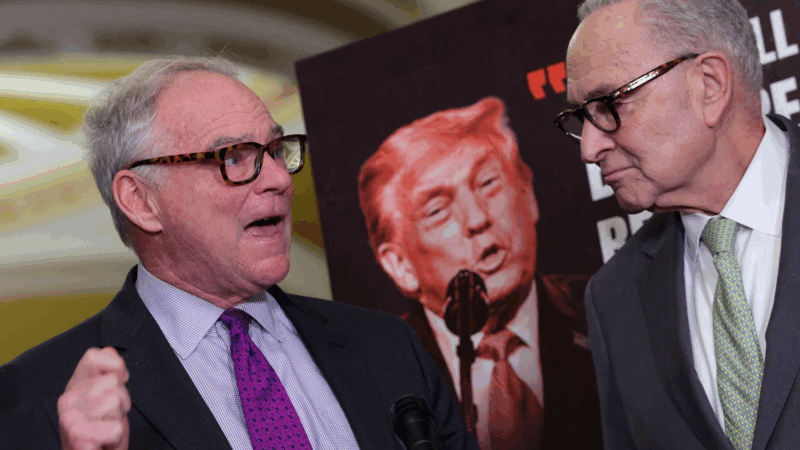
A split Senate votes against measure to constrain Trump’s authorities in Iran
Democrats in the Senate were facing an uphill climb Wednesday in their push to restrain President Trump's ability to wage war against Iran.
WATCH: How traffic dried up in the Strait of Hormuz since the Iran war began
The effective closure of the Strait of Hormuz is "about as wrong as things could go" for global oil markets. Iran achieved it not with a naval blockade, but with cheap drones.
As Mississippi waits to spend opioid settlement funds, children and families suffer
Mississippi will receive more than $400M to fight the opioid epidemic. So far, officials haven't directed it toward programs that support addiction recovery.
