
In China, AI is no longer optional for some kids. It’s part of the curriculum
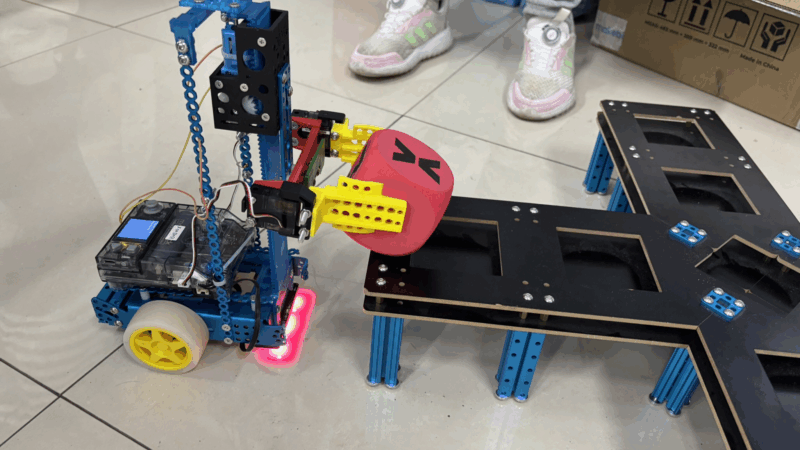
In an elementary school classroom in Beijing’s university district, 11-year-old Li Zichen was demonstrating a small robot. It’s a remote-controlled vehicle that lifts and moves blocks and that can be programmed using artificial intelligence. It’s a small project, but it got him thinking big — about the rovers that China sent to Mars and the Moon.
“If a rover comes across a crater in front of it, for instance, it can’t decide what to do after communicating with Earth,” he says, because sending signals across space takes too long. “It must decide on its own. So I think AI is very important for the nation’s deep space exploration.”
Meanwhile, Li’s classmate, Song Haoyue, has used artificial intelligence as a graphic design tool to help her make a poster for a competition.
“I used Wukong, an AI image software, to create drawings,” she said. She had it render a poster about a mythical bird that tries to fill in the ocean, one pebble at a time — a parable about perseverance.
Debate about artificial intelligence in U.S. schools has simmered for years, with some highlighting the risks of AI in schools — like it stunting cognitive or social development — and others concerned about it exacerbating a growing digital divide.
In China, the authorities have taken a stand.
Wang Le, Zichen and Haoyue’s computer skills teacher at Beijing University of Posts and Telecommunications Affiliated Primary School, a public school, said that the Ministry of Education has enacted a new framework. “They require integrating AI courses into the information technology curriculum,” she said.

Starting in the fall, every student in elementary and middle school in Beijing, and several other districts, began learning about AI. Third graders learn the basics. Fourth graders focus on data and coding. By fifth grade, students are learning about “intelligent agents” and algorithms.
It’s about preparing kids for life ahead, Wang said. And another thing: “It’s about enhancing the country’s competitiveness by securing a future pool of skilled professionals.”
“Keji xingguo,” she said. It’s a political slogan that means: “Build a strong nation through science and technology.”
This slogan encapsulates perhaps the ruling Communist Party’s biggest dream: creating a country that is technologically advanced and self-sufficient. AI has been labeled essential for national security and economic competitiveness. The government aims for China to become a global leader in AI within the next four years.
But while the state’s main goal with the AI-in-schools policy is to develop a pool of talent, the parents of the kids — like all parents — are thinking about their children’s futures.
In a tiny, sixth floor walk-up apartment, Li Yutian, Zichen’s father, expressed full-throated support of his child’s interest in robotics and computers. He says he recently took his son to a Xiaomi factory to see what automation looks like in practice. Xiaomi makes some of China’s best-selling cellphones, gadgets and cars.
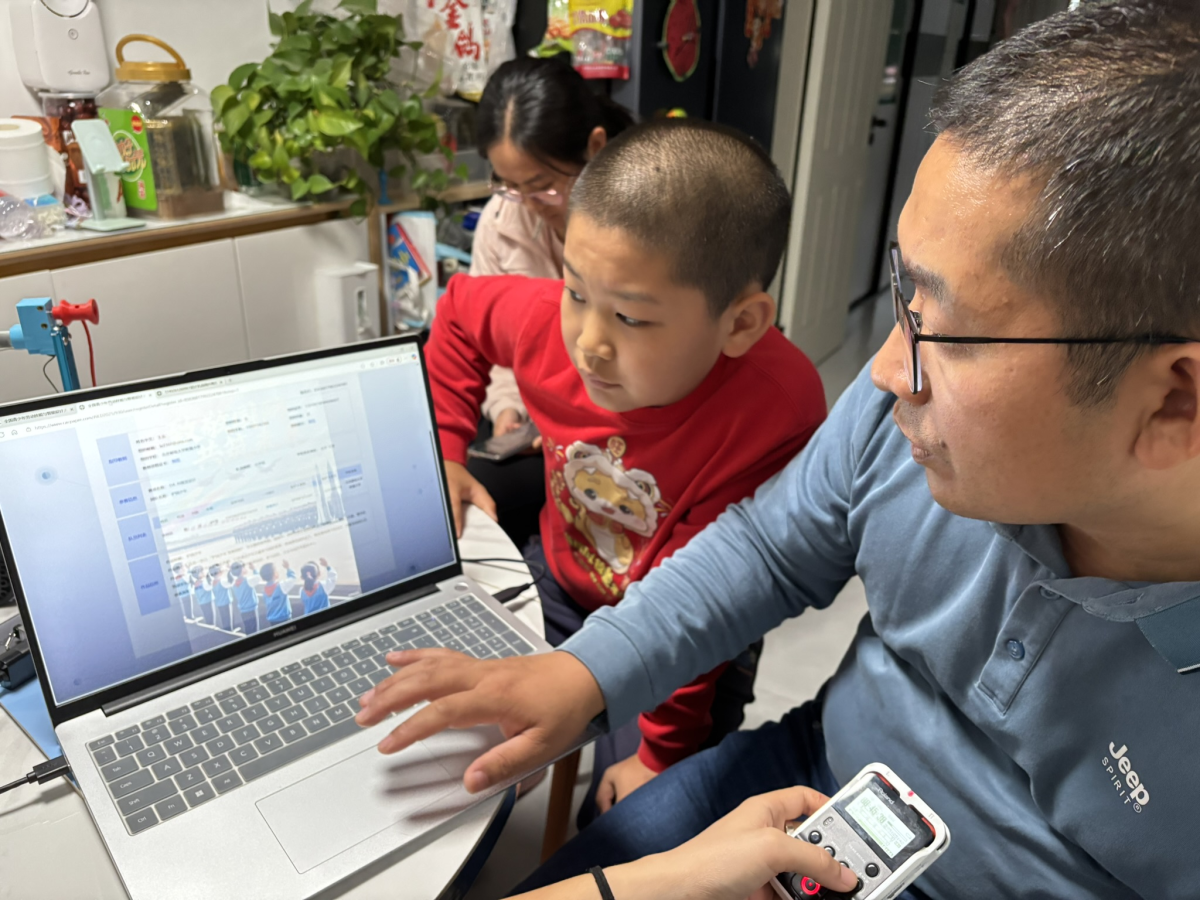
The two talked on the way home, with the father telling his son Zichen he would need to find work that AI cannot do and differentiate himself to survive. “I said, ‘In the future, if you want mechanical-type work you might, for example, do things like maintenance on robots, or program them and guide them, rather than competing with them,'” he recalled.
Around dinner tables in China, there is debate about some of the same issues Americans are grappling with as kids increasingly use AI: issues like becoming over-reliant on the technology, and stunting their problem-solving skills. Li Yutian thinks China’s tough internet restrictions will help stave off some of the worst risks of AI — like kids getting exposed to violent content.
But sheltering children from this technology is not the way to go, he thinks. “I’ve always believed that not embracing it may be the greatest risk of all,” he said.
Song Zefeng, the father of the girl who made the poster with AI, agrees — for the most part.
“It depends on the level,” he said. “For fifth and sixth grades, at elementary school level, over-exposure is not appropriate.”
Kids this age shouldn’t be online much anyway, he said. But Song thinks having AI be a mandatory part of the curriculum is a smart move.
“The development of AI itself is quite certain, but the biggest uncertainty lies in what society will actually look like in the future,” he said.
He thinks if his daughter can be inspired by what she’s learning in class, maybe she’ll be in a better position to figure out what role she can play in an AI-dominated future — and to weather the coming change.
NPR producer Jasmine Ling contributed to this story.

Bam! Heat’s Adebayo scores 83 points, 2nd only to Wilt Chamberlain in NBA history
Bam Adebayo had a night for all time on Tuesday, with a point total second to only Wilt Chamberlain in the NBA record books.

Prosecutor says Rihanna, family were home when woman charged with attempted murder fired
Rihanna, her partner A$AP Rocky, their three children and her mother were all at home when a woman now charged with attempted murder is alleged to have fired at the property, a prosecutor said.
Senate Democrats ramp up pressure campaign for public hearings on war with Iran
Congressional Democrats are demanding transparency in the form of public hearings from Trump administration officials on the timeline and objectives of the war in Iran.

Ivey commutes death sentence of inmate whose accomplice fired fatal shot
Charles “Sonny” Burton was sentenced to death for the killing of Doug Battle during a 1991 robbery. However, another man shot Battle when Burton had left the building.
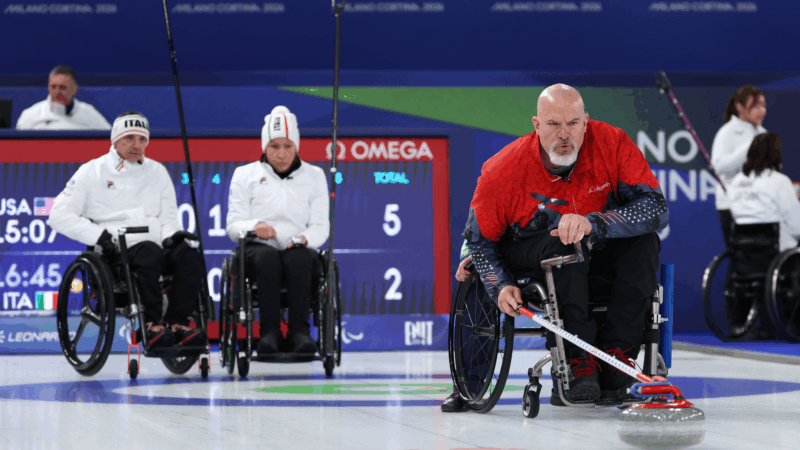
Wheelchair curler Steve Emt’s path from drunk driver to three-time Paralympian
Steve Emt and Laura Dwyer represent the U.S. in the Paralympics' new mixed doubles wheelchair curling event. They could bring home Team USA's first wheelchair curling medal ever.
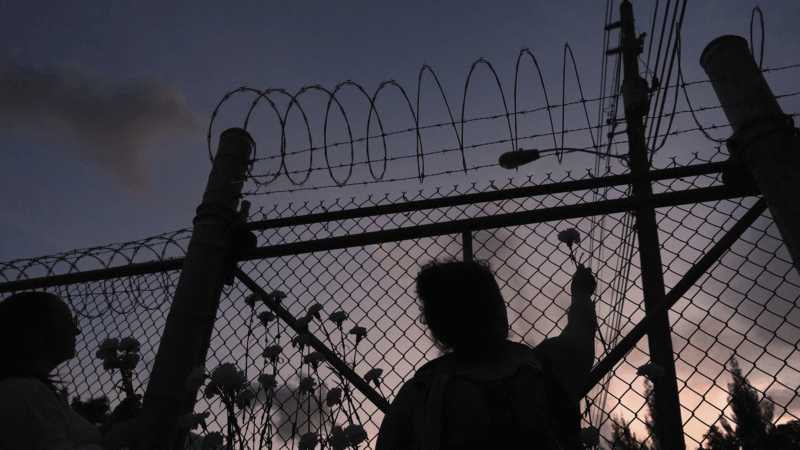
Immigration detention on track for deadliest fiscal year since 2004
Twenty-three people have died since October in ICE custody, as advocates warn about overcrowding and health care access.
