
In Beirut, Lebanon’s cats of war find peace on university campus
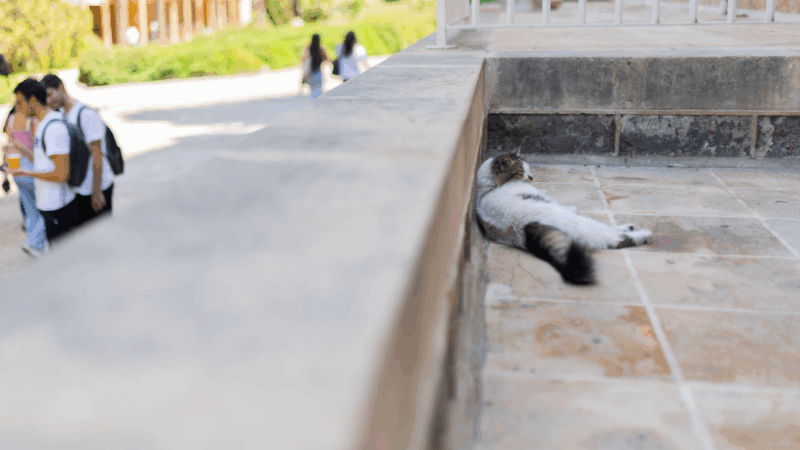
BEIRUT — There are several things that make the American University of Beirut unique. Among them are its 160-year-old liberal arts education in the center of the Middle East. There is its seaside location in a cosmopolitan capital. But hands down, the college’s most unusual feature is its campus cats — as many as 1,600 of them.
The cat rescue started during the Lebanese civil war in the 1980s when animals sought shelter from street fighting in the 1980s on its campus in the downtown Hamra area. It has evolved into a continuing program to care for cats abandoned during more recent wars.
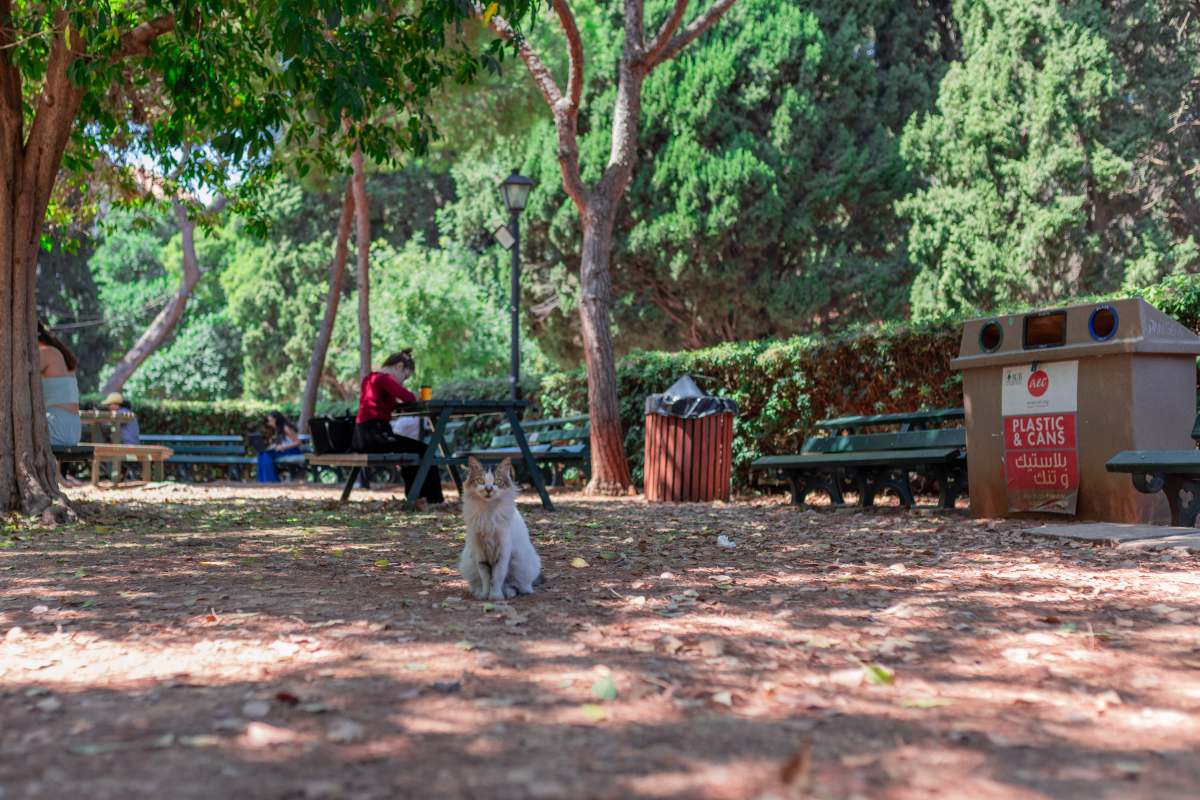
“There were serious, severe street battles around here, around the university and in Hamra and everywhere. So the cats flocked to AUB en masse because this seemed like protection for them. And they stayed,” says AUB staff member Henry Matthews of the civil war era.
Beirut has seen more than its share of war — the latest was a year of fighting between the Lebanese militant group Hezbollah and Israel that began in late 2023. Israel is still launching attacks. In between people fleeing their homes and a severe financial crisis, many abandoned their pets.
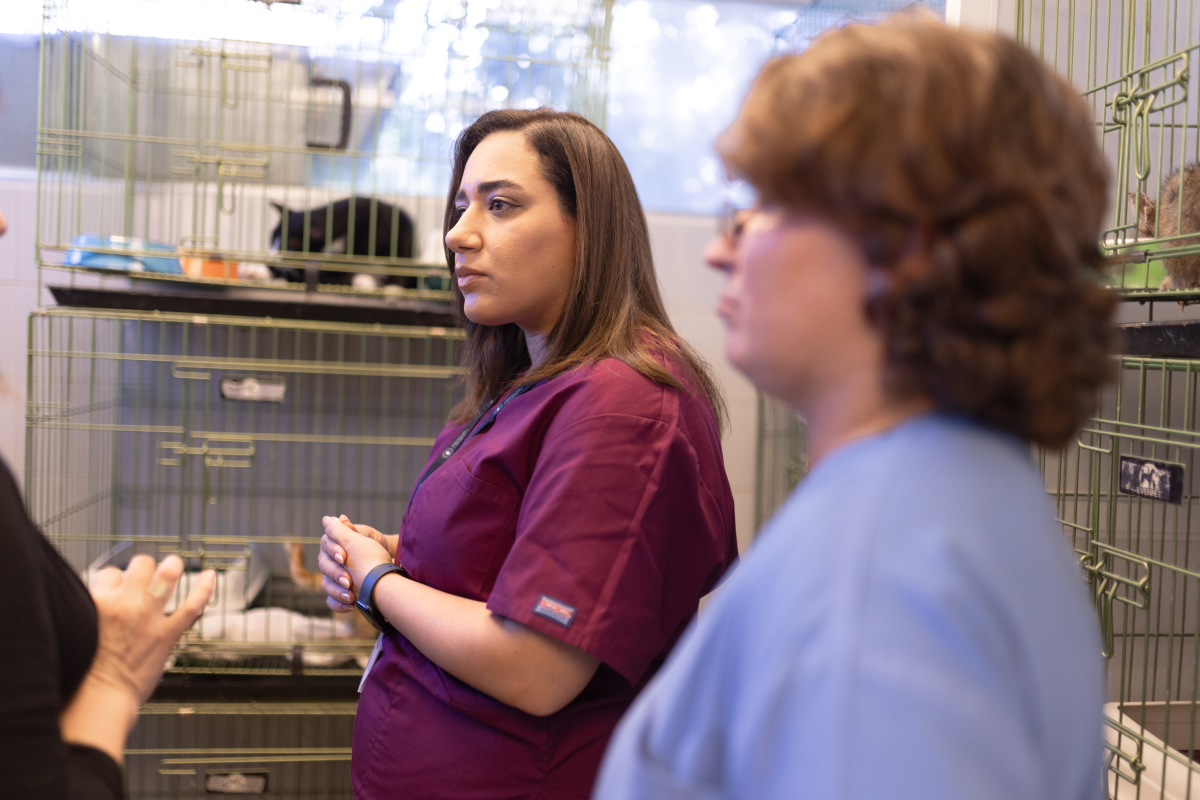
“Many people dumped their cats because they don’t have any home for them,” says veterinarian Rana Bou Khalil, who runs two clinics teeming with cats.
Bou Khalil, who says AUB is a magnet for pet owners who believe their cats will be taken care of if they leave them near the campus, says she has spayed or neutered 1,000 cats in the past two years. From a feline population of 800 a little over a year ago, Bou Khalil says she estimates there are now between 1,200 and 1,600. The exact number, of course, is difficult to determine.
(Tamara Saade for NPR)

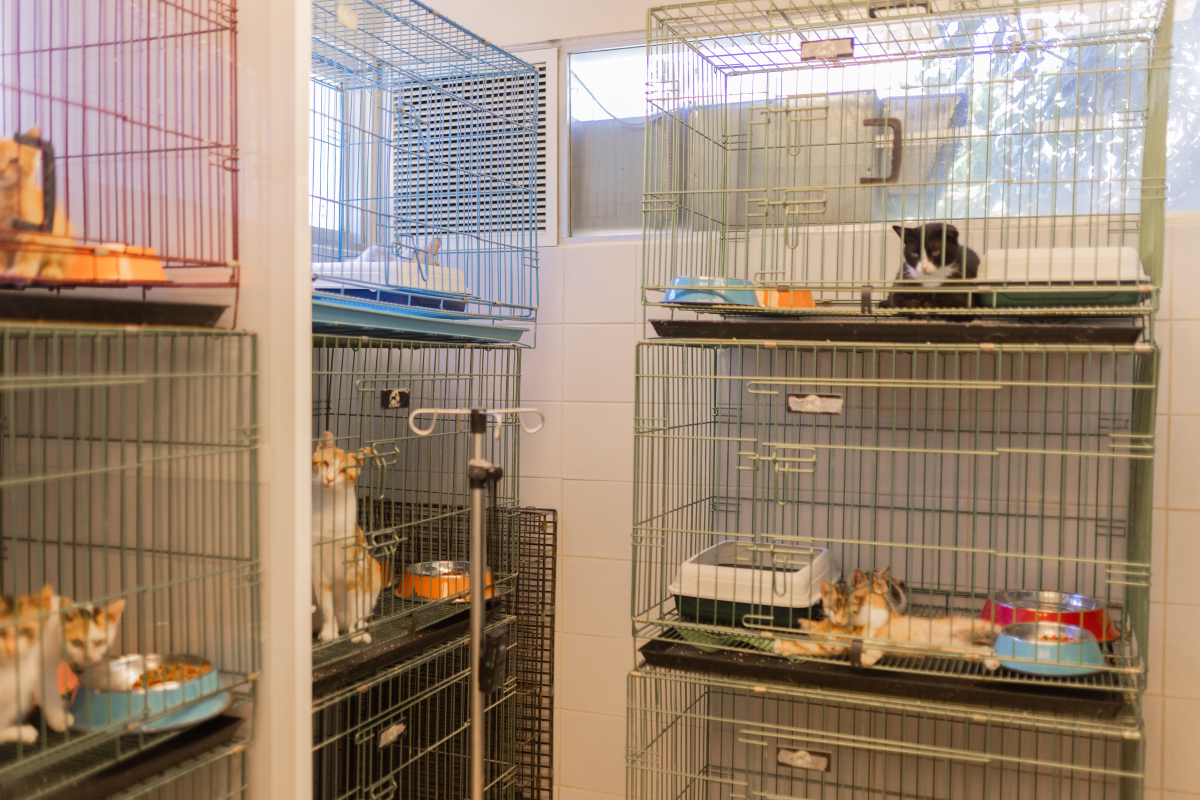
Each one that can be brought to the clinic is sterilized and vaccinated. On the day NPR visits, Bou Khalil is treating a sick kitten left on the sidewalk outside the university gate and the latest in a series of blind cats left by their owners.
There are wire cages with litters of kittens and others with elderly cats. Some are feral but most seem to have been house cats — including purebreds. Some have the long silky fur of Persian cats; others the trademark ears of Scottish folds.
A caretaker spends an hour a day pouring out dry cat food into bowls around the sprawling campus gardens. The clinic tries to adopt out rescued cats but with so many animals being abandoned it barely makes a dent in the feline population.
Not just about cats

The university says cat care does not affect funding for students. It relies partly on donations for their care.
The animals are part of an unusual ecosystem among college campuses. AUB has about 10,000 students. Established in 1866 first as a missionary school, it owns huge tracts of land in downtown Beirut, with extensive gardens rolling down to the Mediterranean Sea.

The university is listed as a leader in the region in environmental sustainability, including water management and renewable energy. Trees planted over many years — with a bird population that Matthews says generally live too high up to be at risk from the cats — shade large parts of the campus.
Matthews says working with the wider community has been part of AUB’s mandate from the start. He sees the university’s cat population as part of that.
“Most importantly, it teaches the students and the community to be kind to others,” he says. “Especially those who are weaker than you, smaller or more helpless than you.”
Now you see them, now you don’t

With so many cats, it might seem that the campus would be overrun with them. But the feral ones steer clear of humans, while the former house cats have roughly 10,000 students to spread their affection.
Imagine one of those find-the-hidden-object puzzles, except these are cats given sanctuary on the sprawling campus.

There are cats peeking out between the leaves, cats the same color as the windowsills they are sitting on, cats lying among the flower beds.
Love them or hate them

And then there are the bolder ones — the kind that go up to students in the hope of getting bites of their sandwiches. The ones that perch on outdoor tables demanding to be petted. The outlaw cats are the ones that sneak into dorm rooms and classrooms, sometimes jumping up onto chairs while classes are in session.
“I was in a class when suddenly, I just felt something rubbing in my leg,” says Ali Itani, a freshman. “I just looked. I saw a girl screaming. It turned out to be a cat. And she was afraid of cats.”
“I get that they add some, you know, life and warmth to the campus but they do get very annoying sometimes,” says Lara Moukaddam, a first-year student. “They can just walk into class and get up on a chair and you can’t do anything about it.”

The cats are not supposed to be in classrooms or dorms. But students are not allowed to evict them. Instead, the administration is notified to gently remove them.
Along with the normal stress of dealing with classes and being away from home for the first time, many of the Lebanese students are grappling with the almost ever-present threat of war.
Layla Shahrur, a computer science student, is from southern Lebanon, where Israeli airstrikes are continuing. She says cats are a calming presence when things are overwhelming.
“People are still stressed and afraid,” she says. “If you are stressed about something and you go out and pet cats or any other animal, they help you get out of your stress zone.”

At the entrance to the university is an inscription of a Bible verse, although the university has been secular for more than a century. It refers to purpose and spiritual wealth.
“It applies for anybody if you read it,” says Mimi Touma, an AUB press officer. “‘Let them have life and have it more abundantly.’ Don’t we all want this?”
Even cats.
Transcript:
SCOTT DETROW, HOST:
In Lebanon, a historic university offers not just an education in the heart of Beirut, but an unusual sanctuary for cats abandoned during war and economic hardship. NPR’s Jane Arraf and Jawad Rizkhallah bring us this report on the American University of Beirut, or AUB, and its 1,600 campus cats.
(SOUNDBITE OF CATS MEOWING)
JANE ARRAF, BYLINE: You don’t have to love cats…
(SOUNDBITE OF CAT MEOWING)
ARRAF: …To attend college here, but it helps. There are so many cats.
(SOUNDBITE OF CAT MEOWING)
ARRAF: AUB veterinarian Rana Bou Khalil says with a huge increase in abandoned pets over the last year, she thinks there’s somewhere between 1,200 and 1,600 cats on campus.
RANA BOU KHALIL: We sterilized up to 1,000, and we are continuing the program.
ARRAF: That’s in less than two years. They also vaccinate them before releasing them onto the sprawling campus.
(SOUNDBITE OF CAT SNEEZING)
ARRAF: Some need extra help.
(SOUNDBITE OF CATS MEOWING)
KHALIL: This is a sick kitten left on the gate, and we’re trying to save her. We have the blind one left on campus.
(SOUNDBITE OF CATS MEOWING)
ARRAF: There are house cats – all kinds, some of them purebred – and feral cats. There are elderly cats and kittens.
KHALIL: The highest number was abandoned during the war. Many people dumped their cats because they don’t have any home for them.
ARRAF: That was the year-long war between the Lebanese militant group Hezbollah and Israel in 2024. Caring for the cats, though, began decades ago during Lebanon’s civil war. AUB staff member Henry Matthews tells us…
HENRY MATTHEWS: There were serious, severe street battles around here, around the university and in Hamra and everywhere. So the cats flocked to AUB en masse because this seemed like a protection for them. And they stayed.
UNIDENTIFIED PERSON: (Non-English language spoken).
ARRAF: The university, established in 1866, says cat care does not affect funding for students. It relies partly on donations.
(SOUNDBITE OF CAT MEOWING)
ARRAF: The clinic adopts out the ones it can, but it barely makes a dent in the population. Fortunately, this is a huge campus full of trees and gardens rolling down to the Mediterranean Sea.
(SOUNDBITE OF WHISTLING)
ARRAF: On a previous visit, we go along with caretaker Mohammad Kamal as he calls to hiding cats and pours food into bowls around campus.
MOHAMMAD KAMAL: I feed them every day around 9:30, 10, like this.
(SOUNDBITE OF KIBBLE BEING POURED)
ARRAF: About 45 pounds of cat food a day. It takes him about an hour. Despite that, there are always a few cats hanging around outdoors at lunchtime…
(SOUNDBITE OF KIBBLE BEING SCOOPED)
ARRAF: …Hoping students will share their sandwiches.
Here’s more cats. There’s a white and tabby, with a ring tail, licking their lips, and a lovely, long-haired, orange and white sweetheart.
(SOUNDBITE OF CAT MEOWING)
ARRAF: Most of the cats are nocturnal, so you don’t see a lot of them during the day. AUB’s green spaces give them lots of places to hide. Even people who say they don’t like the cats seem to tolerate them, like Hiyam Ghannam, a teaching adviser.
HIYAM GHANNAM: It’s sometimes frustrating. Sometimes they come to the library. They study with us. So yeah, they come to classes.
ARRAF: Layla Shahurur, a computer science student from South Lebanon, where Israeli airstrikes are continuing, says people are still afraid and having cats around helps.
LAYLA SHAHRUR: If you were stressed about something and, like, you go out, you know, you pet cats or, like, any other animal, they help you get out of your stress zone.
ARRAF: According to some students, though, the cats do take liberties.
ALI ITANI: Actually, yesterday, I was in a class. Suddenly, I just felt something rubbing on my leg. I just looked. I saw a girl screaming and turned out to be a cat, and she was afraid of cats.
ARRAF: That’s Ali Itani, a freshman. Cats aren’t supposed to be in classrooms or dorms, but they don’t really follow rules.
(SOUNDBITE OF CAT MEOWING)
ARRAF: Henry Matthews says their presence teaches students to be kind to other beings who are smaller and more helpless than they are. We go around meeting more students and cats with Mimi Touma, a press officer.
MIMI TOUMA: Hi, Kato. She’s so pretty.
ARRAF: I asked her about the inscription at campus entrance. It’s from a Bible verse, although the university has long been secular. It refers to spiritual wealth.
TOUMA: It applies for anybody if you read it. Let them have life and have it more abundantly. Don’t we all want this?
ARRAF: Even cats, she says.
(SOUNDBITE OF CAT MEOWING)
ARRAF: Jane Arraf, NPR News, Beirut.

Paul McCartney’s decade of transformation: From Beatles breakup to John Lennon’s murder
Man on the Run shows McCartney's effort to define himself outside The Beatles' shadow: "Paul making this documentary was a way of coming to terms with that whole period," says director Morgan Neville.

A Biden-era rule sought to stabilize child care. Why Trump wants it gone
The Trump administration has proposed repealing a Biden-era rule that required states to change how they pay out child care subsidies, citing the potential for fraud.
Greetings from Southwest Papua, which has some of the world’s richest marine biodiversity
The Raja Ampat islands in Indonesia's Southwest Papua province are a marine biodiversity hotspot and a divers' paradise.
Families remember U.S. reservists killed in Kuwait, members of an Iowa logistics unit
Four U.S. soldiers were killed in the Iran war on Sunday and IDed Tuesday by the Pentagon; two soldiers haven't yet been publicly identified. Their unit kept troops supplied with food and equipment.
Why supporting a shelter for women is now ‘kind of radioactive’
That's how researcher Beatriz Garcia Nice describes the new U.S. stance under the Trump administration to programs addressing gender-based violence.

Telehealth abortion is in the courts. Share your experience.
Mifepristone is facing another major legal challenge.
