
In a win for Democrats, court allows California’s redistricting plan to proceed
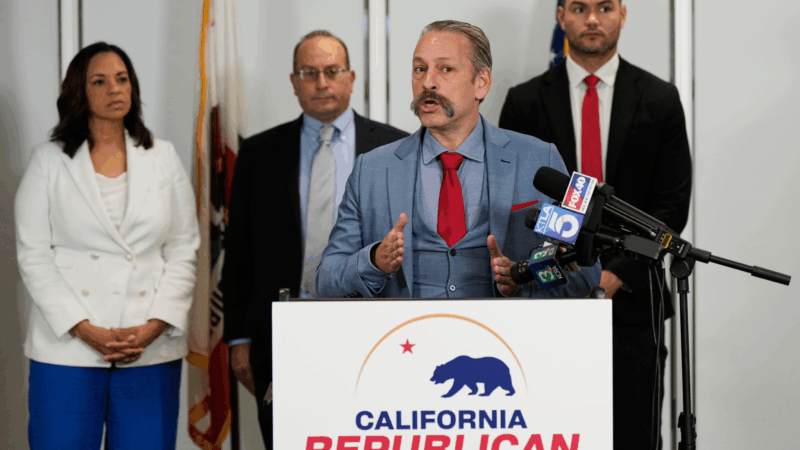
A federal court has upheld the new congressional map approved by California voters last month, giving Democrats a chance to counter the nationwide redistricting effort led by President Trump and his Republican allies.
The court challenge to the redistricting plan had been brought by the California Republican Party and the U.S. Department of Justice. The court found that the new district map did not violate laws against racial gerrymandering.
The Republicans argued that the new map was motivated by a desire to increase the voting power of Latinos. The court, in a two-to-one ruling, rejected that claim, noting that voters approved the measure, called “Proposition 50” and there was no evidence they acted on racial grounds.
“The evidence presented reflects that Proposition 50 was exactly what it was billed as: a political gerrymander designed to flip five Republican-held seats to the Democrats,” wrote U.S. District Judge Josephine L. Staton in the majority opinion.
The court denied the Republican plaintiffs’ request the court issue an injunction blocking the redistricting as the case proceeds to a final judgement. The Republicans could still appeal the ruling.
Usually states redistrict early in the decade after the decennial census. But Trump set off a mid-decade redistricting race as he tries to prevent Democrats from taking control of the House. This summer he pushed Texas Republicans to redraw that state’s districts, potentially helping the GOP win five House seats in 2026. Missouri and North Carolina have each redistricted to help the GOP in one seat.
After the Texas redistricting, California’s Democratic Gov. Gavin Newsom vowed to respond by redrawing the map in his state. At his urging, lawmakers put the matter on the ballot and California voters approved a redistricting plan there in a special election Nov. 4. That measure passed with 64 percent of the vote.
For Democrats, it’s been about confronting Trump
For Democrats who supported California’s redistricting measure, it was not as much about redrawn lines as it was an ideological battle. Supporters largely viewed it as an opportunity for the blue state to push back against the Trump administration. Newsom argued the approach was necessary to counter the GOP-led redistricting effort in Texas and “fight fire with fire” and boost Democrats’ chances ahead of the 2026 midterm elections.
The Republican-led lawsuit against the measure contended it violated the law by disproportionately giving the state’s Latino voters a stronger voice over other racial voting blocs.
In a dissenting opinion, Judge Kenneth Lee, who was appointed by President Trump in 2018, said the designer of the map, hired by the Democrats, had publicly said that he was aiming to boost Latino voting power.
“The Democratic supermajority in the California state legislature wanted to curry favor with Latino groups and voters—and to prevent Latino voters from drifting away from the party,” Lee wrote.
The majority ruling rejected that argument, finding that it was not the mapmaker or even the legislature that held the deciding power but rather the voters on the proposition and that it was debated by proponents and opponents as a partisan move.
In her opinion, Staton, appointed to the bench by President Obama, found a “mountain of evidence produced by Defendants that the voters intended to enact a partisan gerrymander.”
“Republicans’ weak attempt to silence voters failed,” wrote Newsom in a statement. “California voters overwhelmingly supported Prop 50 – to respond to Trump’s rigging in Texas – and that is exactly what this court concluded.”
Overall, the redistricting race is close with Republicans on track to tilt a couple or few more seats their way than Democrats have. Indiana Republicans refused to follow Trump’s lead last month and redistrict there. But Florida Gov. Ron DeSantis has vowed to lead his state in drawing a new map that will favor the GOP.
Meanwhile, Virginia Democrats have started the redistricting process to favor their party in that state. Currently, the House stands at 218 Republicans and 213 Democrats and if Democrats take control, they could slow Trump’s agenda or launch investigations into his administration.
Laura Fitzgerald covers California politics for CapRadio. Larry Kaplow is with NPR.

Trump’s ballroom project can continue for now, court says
A US District Judge denied a preservation group's effort to put a pause on construction

NASA lost a lunar spacecraft one day after launch. A new report details what went wrong
Why did a $72 million mission to study water on the moon fail so soon after launch? A new NASA report has the answer.

Columbia student detained by ICE is abruptly released after Mamdani meets with Trump
Hours after the student was taken into custody in her campus apartment, she was released, after New York City Mayor Zohran Mamdani expressed concerns about the arrest to President Trump.

These major issues have brought together Democrats and Republicans in states
Across the country, Republicans and Democrats have found bipartisan agreement on regulating artificial intelligence and data centers. But it's not just big tech aligning the two parties.
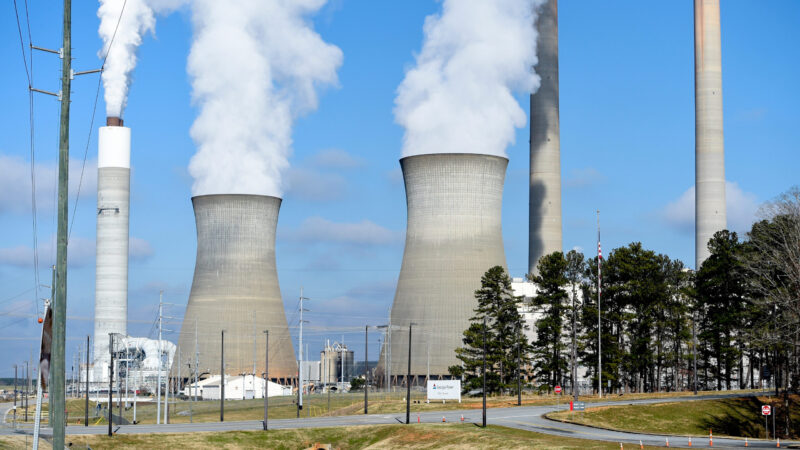
Feds announce $4.1 billion loan for electric power expansion in Alabama
Federal energy officials said the loan will save customers money as the companies undertake a huge expansion driven by demand from computer data centers.
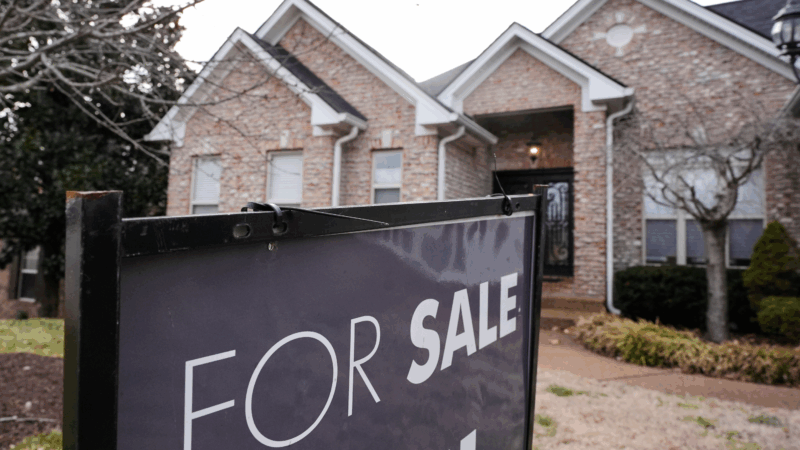
Mortgage rates fall below 6% for the first time in years
The average home loan rate has dropped below 6% for the first time since 2022. Will that help thaw the frozen housing market?
