
How the use of AI and ‘deepfakes’ play a role in the search for Nancy Guthrie

The search for Nancy Guthrie continues after she disappeared from her home in Tucson, Ariz. two weekends ago, and imposter kidnappers have swarmed.
Law enforcement has said they’ve received several ransom notes from people claiming to have the mother of Today show co-host Savannah Guthrie. Savannah and her siblings, Annie and Camron, have been posting videos to social media pleading for Nancy Guthrie, 84, to be returned home, and have asked for proof of life before any ransom is paid.
“We are ready to talk. However, we live in a world where voices and images are easily manipulated,” Savannah Guthrie said in one video and asking for proof that her mother was still alive.
As artificial intelligence becomes more advanced and commonplace, it can be difficult to know what’s real and what’s not, which has complicated the search for Nancy Guthrie, according to law enforcement. But just how difficult is it?
AI can ‘make up just about anything’
Before the days of artificial intelligence, proof of life could be easily established by having a hostage take a picture holding a newspaper of the day, or talking on the phone, said Joseph Lestrange, who worked in law enforcement for 32 years and now trains law enforcement agencies on identifying artificially generated content.
Now, someone can ask a language learning model to mimic someone’s voice or likeness in photos, videos and audio, known as “deepfakes.” The models can also devise fake documents, like passports, Lestrange said.
“You give it the right prompts, it can pretty much make up just about anything,” Lestrange said.
At federal agencies, digital evidence is usually sent to digital forensics labs. Examiners there can judge the authenticity of a piece of evidence using clues such as its location data or pixels. The tools they use are “very effective,” Lestrange said, but it takes time for them to draw conclusions.
“Time is usually of the essence in these kidnapping cases, especially in the current case we’re talking about, where the poor woman has some health problems,” he said. “So these investigators are really in a challenging situation at this point.”
Local and state agencies also may not have access to the same kind of tools, while scams are becoming more complex, and fast, Lestrange said.
Lestrange said some agencies are more willing than others to embrace how artificial intelligence is used. This can start to be corrected if emerging AI companies collaborate with law enforcement to “develop products that make sense,” so law enforcement isn’t “just relying on the vendors to tell them what they need,” he said.
How to protect yourself from AI scams and deepfakes
Although artificially generated content and deepfakes rely on digital tools, human interference and judgement is still a good way to tell if something is off, said Eman El-Sheikh, the associate vice president of the University of West Florida Center for Cybersecurity.
“First, calm down and slow down, because a lot of times scammers will try to create a fake sense of urgency in order to get their way before the other people can figure out that this is a fake,” she said.
While on the call, you can say something that you know your loved one is likely to respond to in a certain way. Or you can hang up and call your loved one directly to verify the issue, El-Sheikh said.
People who use social media should avoid publishing sensitive information, such as passwords, addresses and phone numbers, she said. It’s also important to keep details regarding your home private, such as when you’re leaving the house, or that you live alone.
Also, make sure to review the privacy settings on your apps, and toggle the permissions according to your comfort level, she said.
“It’s very important for everybody in the digital world to be very intentional about what information they say online, and about protecting their privacy.”
But Lestrange notes that anything you post or share about yourself online can be used against you, even if you’re careful.
“It’s really a very different world today,” he said.
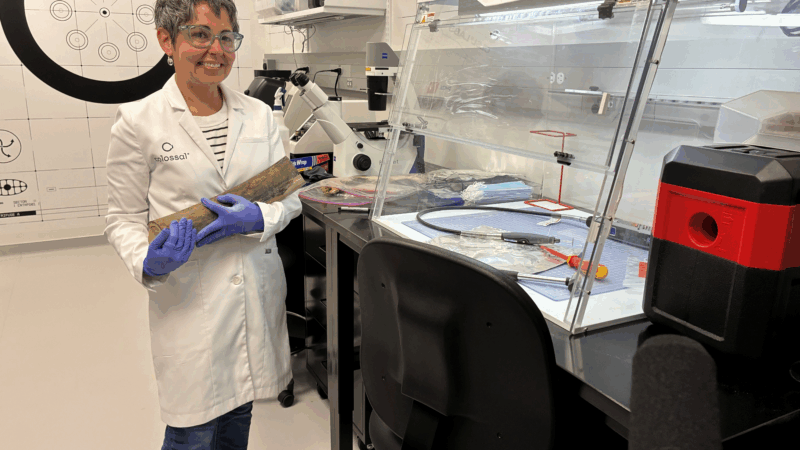
Colossal Biosciences breeds controversy while trying to revive mammoths
A Texas biotech company is trying to bring mammoths and other extinct creatures back to life. The science is as intriguing as the ethical questions are thorny.
Mundane, magic, maybe both — a new book explores ‘The Writer’s Room’
Why are we captivated by the spaces where where authors write? Katie da Cunha Lewin set out to explore "The Hidden Worlds That Shape the Books We Love."
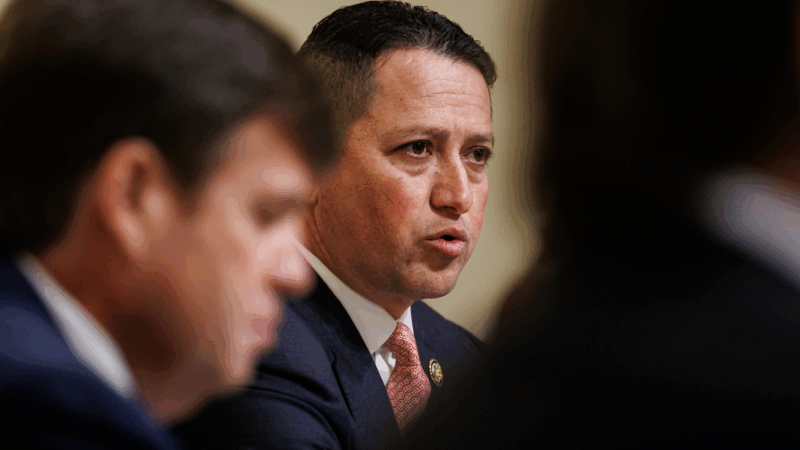
GOP Rep. Tony Gonzales heads to a runoff in Texas amid a new ethics probe in the House
Texas Republican Rep. Tony Gonzales has faced increasing pressure from his party to resign or drop out of his race after allegations of an affair with a staffer.
Satellite images show Iran school strike hit more targets than earlier reported
The images suggest that precision munitions struck other buildings, including a clinic that was also inside the complex.
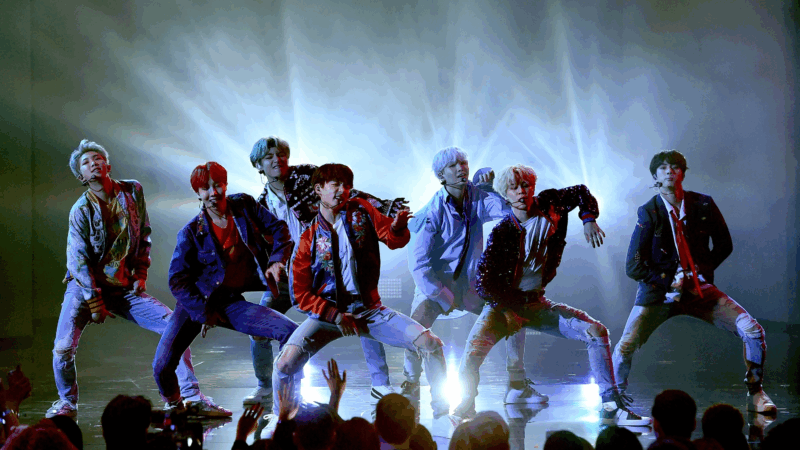
As live music becomes more inaccessible, most fans stay watching through screens
Now that it is becoming harder and harder to get a ticket to your favorite artist's show, watching indirectly is becoming a popular compromise. What is gained and lost in a tiered concert hierarchy?

Paul McCartney’s decade of transformation: From Beatles breakup to John Lennon’s murder
Man on the Run shows McCartney's effort to define himself outside The Beatles' shadow: "Paul making this documentary was a way of coming to terms with that whole period," says director Morgan Neville.
