
House Republicans hope Trump can tamp down rebellion around their signature bill
House Republican leaders have struggled for weeks to persuade holdouts within their own party to back a massive bill meant to advance much of President Trump’s domestic agenda. On Tuesday, Trump will travel to Capitol Hill for a meeting that will test his ability to bend the Republican Party to his will.
It’s rare for one single bill to contain the bulk of a president’s legislative agenda, but Trump has insisted that Republicans in Congress pass tax cuts, spending cuts, deregulation and a boost in border security funding in what he calls “one big, beautiful bill.”
Writing legislation that meets those demands has exposed rifts within the GOP-led House and Senate that threaten to derail the bill entirely.
After a handful of Republican members tanked a budget committee vote on Friday, House GOP leaders spent the weekend negotiating with holdouts to get closer to consensus.
Late Sunday night, that same committee advanced the bill — with the original holdouts voting “present.”
Texas Republican Rep. Chip Roy said he voted present “out of respect for the Republican Conference and the President to move the bill forward.”
Roy and his fellow Freedom Caucus members left the vote saying that while progress was made, they need to see more concessions in order to support the bill in votes later this week.
Pressure from Pennsylvania Avenue
Trump may be coming to Capitol Hill on Tuesday, but House leadership has long praised him for being involved and available throughout the legislative process.
“Every step of the way, when there were questions, when there were final decisions that had to be made, [President Trump] was always one phone call away,” House Majority Leader Steve Scalise, R-La., told reporters last week. “And he’ll continue to be.”
Trump has promised he would extend the tax cuts from his first term and add new ones, including no tax on tips, no tax on overtime and no tax on Social Security. These cuts have added to the cost of the bill.
He has been less opinionated on specifics about how to pay for the bill or how long provisions should last — and he hasn’t taken sides in the debate between House GOP factions.
Trump and GOP leaders have to convince three main groups to support the bill by House Speaker Mike Johnson’s self-imposed deadline of Memorial Day:
- Hard-line fiscal hawks who are demanding deficit reduction
- Members who want to protect access to Medicaid, the federal-state health insurance program for people with disabilities and low-income adults
- Blue state Republicans who are pushing to lift the cap on the deduction for state and local taxes (SALT)
Members of the Freedom Caucus say the bill doesn’t result in significant enough deficit reduction. They secured some concessions — namely the acceleration of the implementation of work requirements to Medicaid — but that has frustrated members who worried that the existing House could threaten coverage for more than 8.6 million people enrolled in the program, and could become a major issue in the midterm elections next year. The SALT advocates are also fundamentally at odds with the hard-line cost-cutting group.
Two former Trump aides who spoke on condition of anonymity because they were not authorized to describe private conversations described Trump as being very persuasive in one-on-one conversations, calling him the “ultimate closer” who makes it hard for members to say no.
Trump recently stepped up the pressure on holdouts in his party on social media, calling on his party to unite behind the bill — and warning holdouts to get behind it.
“We don’t need “GRANDSTANDERS” in the Republican Party,” Trump said in the post.
British Columbia to make daylight saving time permanent
The Canadian province is permanently ending the biannual time shifts for more light at the day's end. But research shows daylight saving increases health risks.
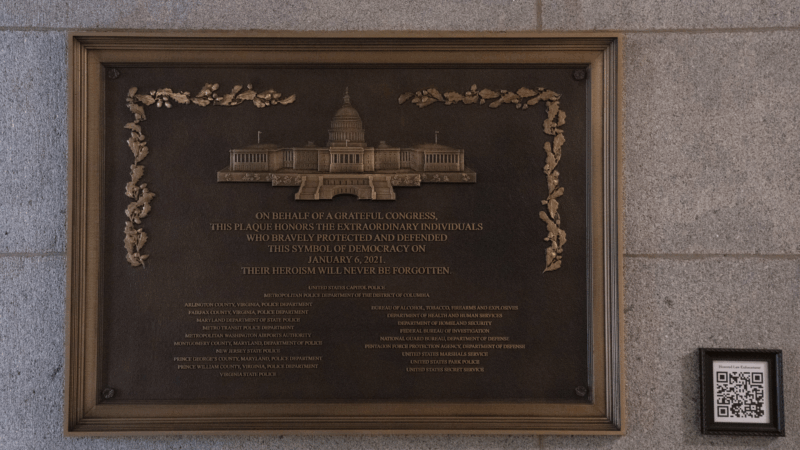
Jan. 6 plaque honoring police officers is now displayed at the Capitol after a 3-year delay
Visitors to the Capitol in Washington now have a visible reminder of the siege there on Jan. 6, 2021, and the officers who fought and were injured that day.

Authorities searching debris after suspected tornadoes kill 6 in Michigan, Oklahoma
A 12-year-old boy is reported to be among the dead following powerful storms that stretched across the middle of the country.

Opinion: The immorality of betting on war
Traders on prediction markets bet on nearly anything. One made more than half a million dollars betting on the U.S. strike against Iran. But should people wager on human suffering?
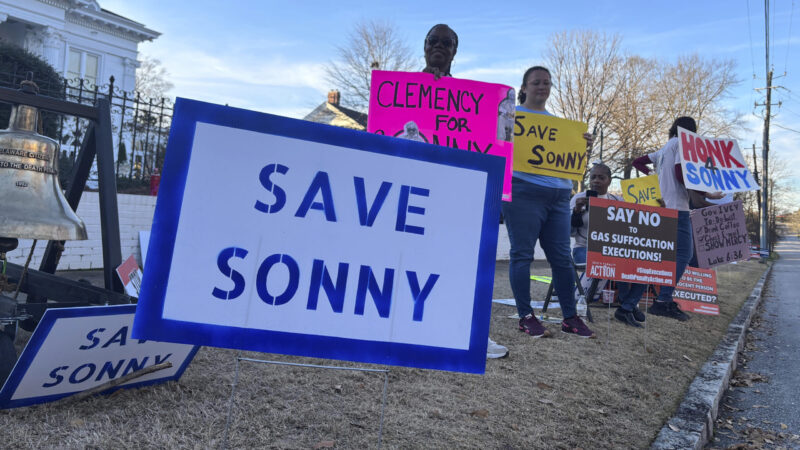
Alabama man facing execution for deadly robbery asks for clemency as he didn’t kill victim
Charles “Sonny” Burton is scheduled to be executed March 12 for his role in a 1991 robbery in which a man was fatally shot. His supporters and attorney are asking the governor for clemency, arguing that his life should be spared because Burton didn’t fire the gun or witness the killing.

Curling had its moment at the Olympics and now Paralympics. It sparked a curling bonanza in America
Hundreds of people become interested in curling every four years and the 2026 numbers already show that boom.
