
Highlighting Indigenous stories from across NPR’s network
Good morning. You’re reading the Up First newsletter. Subscribe here to get it delivered to your inbox, and listen to the Up First podcast for all the news you need to start your day.
Uplifting Indigenous stories
For Indigenous Peoples’ Day, the Up First newsletter is recognizing the work NPR’s member stations do to uplift Indigenous voices. NPR network member stations are independent and locally operated. They determine their own schedules and base their reporting on the needs and interests of their communities, many of which feature large Indigenous populations.
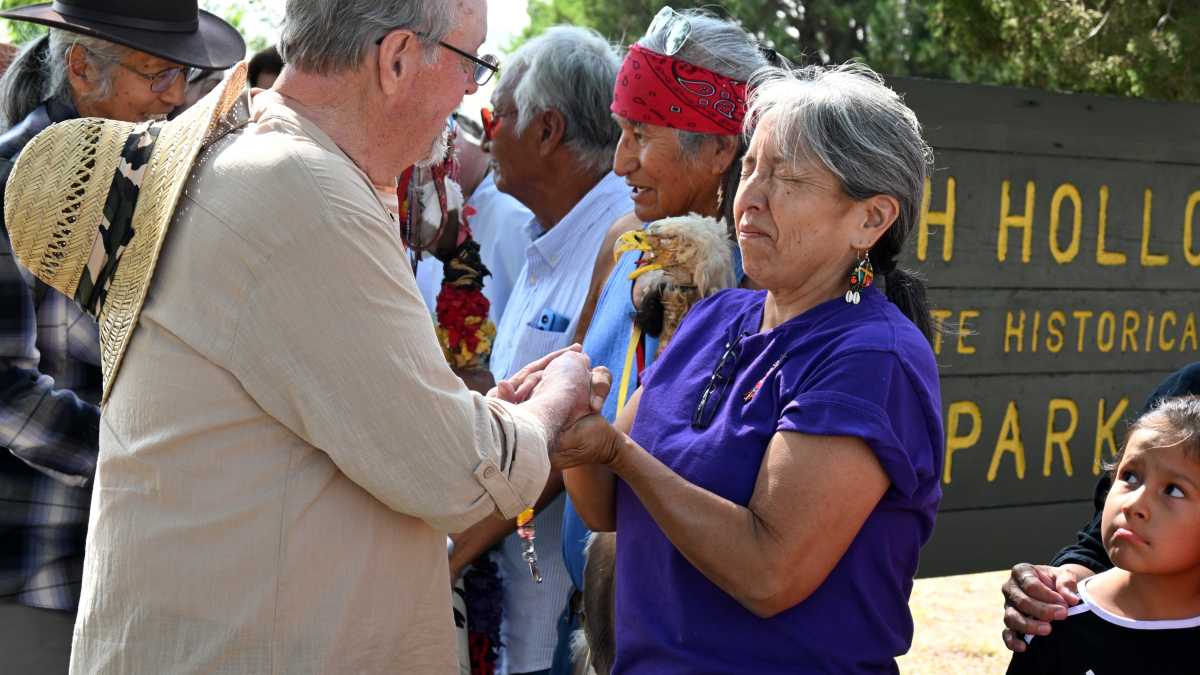
Lily Hope, a Lingít master weaver, is using the popular Labubu dolls to raise awareness of Chilkat and Ravenstail weaving. She has dedicated her life to reviving this craft. So far, Hope has assisted hundreds of Alaska Native individuals in establishing their own weaving practices. (via KTOO)
For her senior thesis, Natalie Zenk researched a Native American statue that had been in Cornell College’s art collection for more than a century. But her project quickly shifted when she discovered its origins were from the Etowah Indian Mounds, a Mississippian burial site in Georgia, hundreds of miles from where the college is located in Iowa. (via Iowa Public Radio)
One hundred and seventy years ago, the U.S. Army massacred a Lakota village near Lewellen, Neb., and soldiers took dozens of the Lakota people’s belongings. The historic possessions were later donated to the Smithsonian Institution. After serious negotiations, these items have now been returned to the descendants of the tribe. (via Nebraska Public Media)
Andre StrongBearHeart Gaines-Roberson Jr. is a Nipmuc cultural steward who teaches traditional Indigenous arts and advocates for Indigenous communities to have access to and manage conservation land. His efforts have brought attention to the declining supply of Atlantic white cedar trees in Nipmuc territory. These cedar saplings are essential for constructing the traditional dwellings of Eastern Woodlands tribes. (via WBUR)
President Trump’s recent Pentagon DEI directive has resulted in the erasure of some Native American war heroes’ legacies from military history records. Although some previously removed photos and stories have been restored, this three-part series by KJZZ’s Gabriel Pietrorazio focuses on the impact of the administration’s actions on the families and descendants of Arizona icons Ira Hayes, Lori Piestewa, and the Navajo Code Talkers.
Have five minutes of your time to spare? Our Living Lands is a weekly radio segment that examines how climate change affects the health, culture, and environment of Indigenous communities. It is led by a three-person Indigenous team, in collaboration with the Mountain West News Bureau, Koahnic Broadcast Corporation and Native Public Media.
Indigenous Peoples’ Day Listens

Common Land: Delves into the history, science and politics behind the creation of one particular patch of protected common land.
- 🎧 Show producer Matt Podolsky attempts to hike the Appalachian Trail with his 65-year-old mom, Candy. The two face extreme weather, illness and injury as they trek 2,200 miles from Georgia to Maine. Along the way, Podolsky shares stories of remarkable people, intriguing history, and the modern challenges facing the Appalachian Trail — all as the iconic footpath marks its 100th anniversary.
The Evergreen: Listen to this audio portrait of the Pacific Northwest that showcases stories of the people, places, communities and cultures that make up the region.
- 🎧 Central Oregon’s High Desert Museum’s exhibit, “Sensing Sasquatch,” is interactive, multidimensional and includes larger-than-life installations. Visitors are encouraged to interact with the artwork through touch and smell. The exhibit showcases Native American interpretations of the being known as Sasquatch, Bigfoot or “the big guy.” In this episode, hear from three of the artists — Charlene Moody, Frank Buffalo Hyde and Philip Cash Cash — who co-curated the exhibit.
Curious City: This WBEZ podcast answers listeners’ questions about the Chicagoland region. Including the public in the storytelling makes the journalism more transparent and interconnected.
- 🎧 Chicago histories usually start in 1830. But Native Americans were already settled in the region long before that. This episode explains what some history books miss.
Code Switch: The podcast explores how race affects every part of society — from politics and pop culture to history, food and everything in between. This podcast makes all of us part of the conversation — because we’re all part of the story.
- 🎧 On this episode, Native journalist Rebecca Nagle discusses her book, By the Fire We Carry: The Generations-Long Fight for Justice on Native Land. The book alternates between the history of Native displacement in the U.S. and a Supreme Court decision that rectifies some of its sins.
Throughline: Each episode travels beyond the headlines to answer the question, “How did we get here?” Sound and stories bring history to life and put you in the middle. From ancient civilizations to forgotten figures, hosts Rund Abdelfatah and Ramtin Arablouei take you directly to the moments that shaped our world.
- 🎧 The word “reservation” implies the land is “reserved” specifically for Native Americans. But most reservation land actually isn’t owned by tribes. Instead, it’s mixed into private farmland, federal forests, summer camps and even resorts. That’s evident for the Leech Lake Band of Ojibwe in northern Minnesota. The tribe owns only a small portion of its reservation land. But just northwest of Leech Lake is Red Lake, one of the only reservations in the country where the tribe owns all of its land. In this episode, a road trip through Leech Lake and Red Lake to tell a tale of two tribal nations, the moments of choice that led them down very different paths, and what the future looks like from where they are now.
The Internet Says it’s True: Forgotten history, bizarre tales and facts that seem too strange to be true: Host Michael Kent asks listeners to tell him something strange, bizarre or surprising that they’ve recently learned, and he gets to the bottom of it. Every episode ends with a game show-style quiz game with a celebrity guest.
- 🎧 In 1957, an amazing discovery was made: a Viking Penny dating back to 11th century Norway. The find itself was rare but not unheard of. What made it so remarkable? The penny was unearthed on the eastern shore of Maine in the U.S. Hear about the founder’s incredible story.
This newsletter was edited by Suzanne Nuyen.

Between Megan Moroney and Ella Langley, country women rule the charts
It's a big week for women in country music — and, it turns out, for women whose songs are favored by women in figure skating.
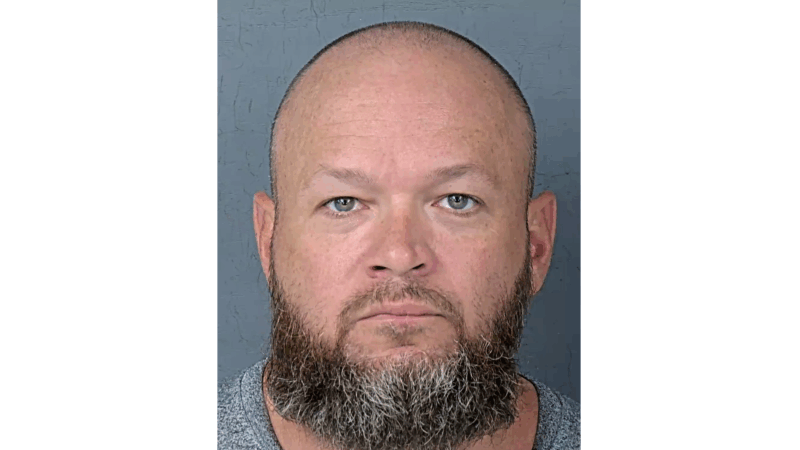
A Jan. 6 rioter pardoned by Trump was sentenced to life in prison for child sex abuse
Since receiving presidential pardons, dozens of former Capitol rioters have gotten into more legal trouble. In Florida, Andrew Paul Johnson was sentenced to life in prison for child sex abuse.
President Trump, Pam Bondi sued over sale of TikTok assets
The case, filed in a federal court in Washington, D.C., accuses the Trump administration of ignoring legislation designed to stop the spread of Chinese propaganda — and instead helping to broker a partial sale to businessmen close to Trump.
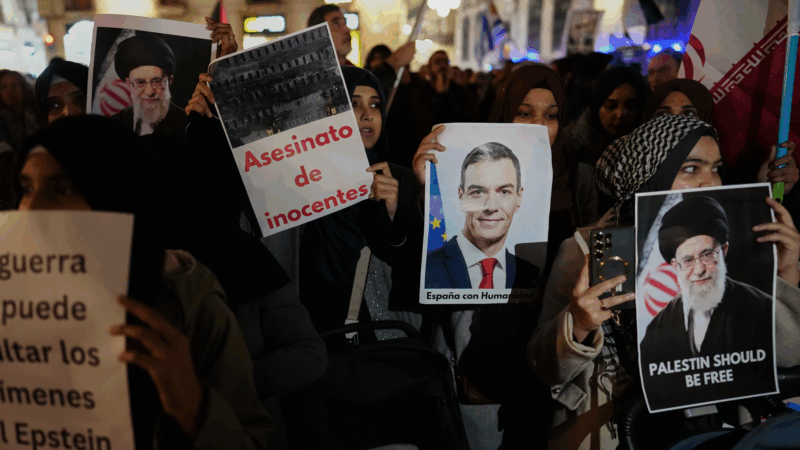
A rift between Spain and Trump widens over Spanish opposition to the Iran war
The Spanish government reiterated it would not let U.S. forces use two joint military bases in Spain as the U.S.-Israeli war in Iran escalates, widening a rift with the Trump administration.
Blackpink, modern K-pop’s trailblazing group, tries to find its way home
A new mini-album finds the world's biggest girl group in a tight spot: competing with its own legacy.
If you loved ‘Sinners,’ here’s what to watch next
So you loved best picture nominee Sinners. What should you watch next? We asked our audience to share their recommendations. They suggested Near Dark, The Wailing and other vampire horror films.
