
He’s the first African musician to get a Grammy Lifetime Achievement Award
On December 19, the first African musician ever awarded a Grammy Lifetime Achievement Award was announced.
The honor goes to Fela Kuti, the Afrobeat pioneer and activist who died in 1997. He joins an elite group of legends like The Beatles, Johnny Cash, John Coltrane, Aretha Franklin, Jimi Hedrix, Bob Marley and Frank Sinatra — all recognized for making “creative contributions of outstanding artistic significance to the field of recording.”
“Fela Kuti’s music was a fearless voice of Africa — its rhythms carried truth, resistance and freedom, inspiring generations of African musicians to speak boldly through sound,” says the legendary Senegalese singer Youssou N’ Dour.
Nicknamed the “Black President” for his role as a political and cultural leader, Fela is one of the rarified artists who’s recognized by a single name. He saw huge success as a pioneer of the Afrobeat genre, with its multilayered and shifting syncopation, psychedelic horns and chants. But he was never nominated for a Grammy during his lifetime — although his musician sons, Femi and Seun, and grandson Made, have received eight nominations collectively.
A really big sound
Fela embraced a massive sound. His band often swelled to more than 30 members (including backup singers and dancers) and featured two bass guitars and two baritone saxophones. He himself played saxophone, keyboards, guitar, drums and trumpet (his first instrument as a child). His emphasis on complex polyrhythms and the inclusion of traditional African instruments like the talking drum were revolutionary at the time — a rebellion against the dominance of Western pop and a marked effort to forge a post-colonial African identity.
From the start of his career, Fela aimed to reach a larger and Pan-African audience by singing almost exclusively in Nigerian Pidgin English (rather than his mother tongue, Yoruba, which doesn’t translate throughout most of the continent).

He did not play by the rules of the music biz. He expressed disdain for party tunes and love songs. He’d release as many as seven albums in a single year. And he refused to perform songs live once they’d been recorded.
His music broke new ground with songs that could stretch to 45 minutes. One of his most famous albums, Confusion, was composed of a lone tune broken into two sides, Confusion Pt. I and Confusion Pt. II — the first half entirely instrumental.
BCUC (Bantu Continua Uhuru Consciousness) from Soweto, South Africa, the incendiary live band and 2023 winner of the WOMEX Artist Award, sent a statement to NPR: “Fela is our spiritual muse and if he didn’t pursue music without boundaries of song length and speaking his truth — even when it was putting his life in danger — we wouldn’t have had the guts to be ourselves without fear or favor.”
A political awakening — and repercussions
During a 10-month stay in Los Angeles in 1969, Fela befriended members of the Black Panther Party. Afterward, his music grew political. He became an outspoken opponent of Nigeria’s military dictatorship and of South African apartheid.
The year following his 1976 album Zombie’s scathing indictment of the Nigerian government, The New York Times reported that a force comprising 1,000 Nigerian military members burned Fela’s Lagos home and recording compound (including all his instruments and master recording tapes). Fela was beaten unconscious, and his mother, Funmilayo Ransome-Kuti, was thrown from an upstairs window and later died from the resulting injuries.
That album, Zombie, was inducted into the Grammy Hall of Fame last year, becoming only the fourth record by an African artist among the 1,165 releases.
In 1979, Fela unsuccessfully ran for president of Nigeria. His political activism added to his high profile — and controversial history. He was arrested many times by Nigerian President Muhammadu Buhari’s military junta, including at Lagos airport while departing for a U.S. tour. He was sentenced to five years in prison and held for over a year. Amnesty International classified him as a “prisoner of conscience.” Fela was freed only after the Buhari regime was overthrown in August 1985.
Musical life after death
Fela succumbed to complications from AIDS in 1997. His older brother, Olikoye Ransome-Kuti, a pediatrician and AIDS activist who served as health minister for Nigeria, spread the word that Fela’s death was AIDS-related. According to Ransome-Kuti, Fela had believed that “all doctors were fabricating AIDS, including myself.”
Following that news, one of the nation’s largest daily papers reported that condom sales surged in Nigeria. Fela’s passing marked a turning point in bringing greater consciousness about the epidemic across Africa. It is estimated that over one million people attended his funeral.
Since his death, his music has carried on. A tribute album, Red Hot + Riot: The Music and Spirit of Fela Kuti, was released in 2002, featuring such artists as Sade, D’Angelo, Nile Rodgers, Questlove and Taj Mahal. Profits went to organizations working to raise AIDS awareness. And in 2009, Jay-Z and Will Smith produced Fela!, a Broadway musical about Fela’s life that earned 11 Tony Award nominations.
For today’s African musicians and worldwide, he is both a legend and an inspiration.
Tunde Adebimpe, the Nigerian American actor (Rachel Getting Married, Twisters) and lead singer for Grammy-nominated band TV on the Radio, told NPR: “Fela for me is the chapter heading in my musical education. He is the originator who showed us music as a power move calling out corruption. Music that questions your psyche and health, worries for your ecosystem, gut checks your self-worth and pride, and keeps you lifted. And it moves nyash [ass].”
Four-time Grammy-nominated Malian singer Salif Keita puts it this way: “Brother Fela was a great influence for my music. I loved him very much. He was a brave man. His legacy is undisputed.”
Ian Brennan is a Grammy-winning music producer (Tinariwen, Parchman Prison Prayer, The Good Ones, West Virginia Snake Handler Revival) who has recorded over 50 records by international artists across five continents. He is the author of 10 books. His latest is Missing Music: Voices From Where the Dirt Roads End.
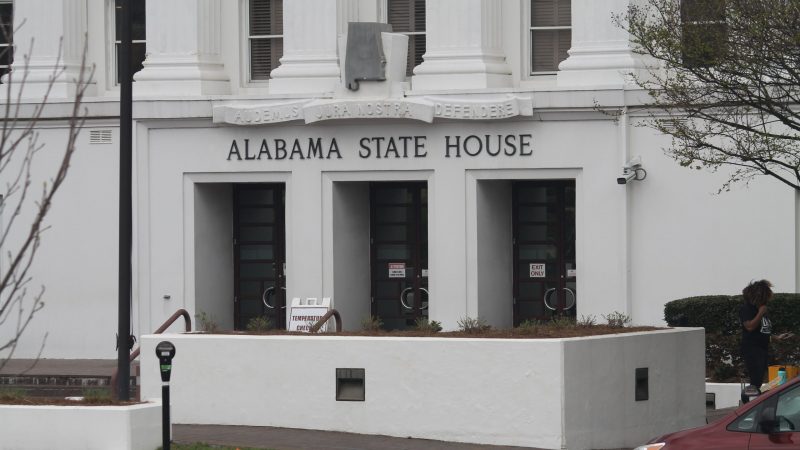
Bill making the Public Service Commission an appointed board is dead for the session
Usually when discussing legislative action, the focus is on what's moving forward. But plenty of bills in a legislature stall or even die. Leaders in the Alabama legislature say a bill involving the Public Service Commission is dead for the session. We get details on that from Todd Stacy, host of Capitol Journal on Alabama Public Television.

My doctor keeps focusing on my weight. What other health metrics matter more?
Our Real Talk with a Doc columnist explains how to push back if your doctor's obsessed with weight loss. And what other health metrics matter more instead.
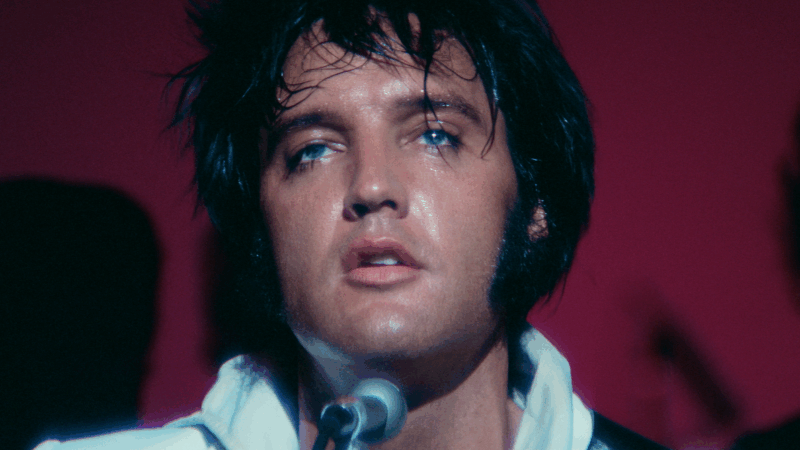
Baz Luhrmann will make you fall in love with Elvis Presley
The new movie is made up of footage originally shot in the early 1970s, which Luhrmann found in storage in a Kansas salt mine.
Forget the State of the Union. What’s the state of your quiz score?
What's the state of your union, quiz-wise? Find out!

A team of midlife cheerleaders in Ukraine refuses to let war defeat them
Ukrainian women in their 50s and 60s say they've embraced cheerleading as a way to cope with the extreme stress and anxiety of four years of Russia's full-scale invasion.

SNL mocked her as a ‘scary mom.’ In the Senate, Katie Britt is an emerging dealmaker
Sen. Katie Britt, Republican of Alabama, is a budding bipartisan dealmaker. Her latest assignment: helping negotiate changes to immigration enforcement tactics.
