
Hegseth: ‘We didn’t start this war but under President Trump we’re finishing it’
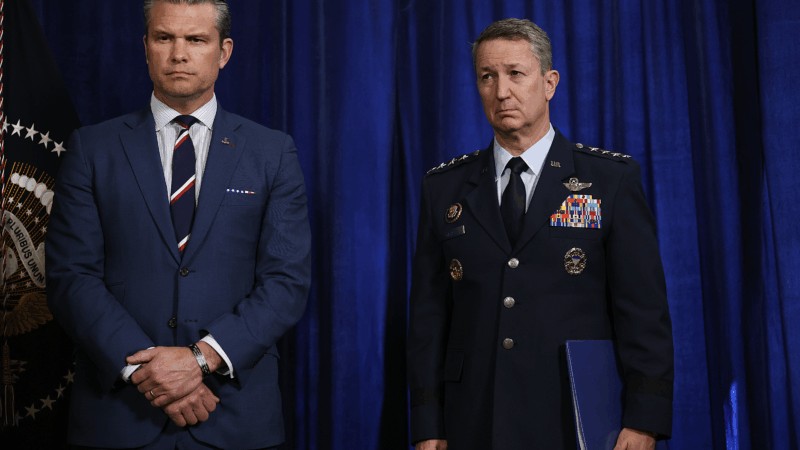
Pentagon chief Pete Hegseth said Monday the U.S.-Israeli action against Iran was in response to the Islamic republic’s years-long targeting of the U.S. military and interests around the world.
“We didn’t start this war but under President Trump we’re finishing it,” he said.
The remarks are the administration’s first in public to reporters since the U.S.-Israeli military operations against Iran began Saturday despite weeks of talks designed to stave off a conflict. That operation – and Iran’s retaliation – has resulted in the death of Iran’s supreme leader and some of its senior leadership, embroiled other Middle Eastern nations in the conflict, and led to the deaths of four American service members in Kuwait.
“This is not a so-called regime change war, but the regime sure did change,” Hegseth said. “And the world is better off for it.”
Gen. Dan Caine, chair of the Joint Chiefs of Staff, told reporters that the military objective in Iran “will be difficult to achieve, and in some cases, will be difficult and gritty work.”
“We expect to take additional losses, and as always, we will work to minimize losses,” Caine said.
Hegseth said the U.S. goal in Iran was to “destroy the missile threats, destroy the navy, no nukes.” He rejected the notion that the conflict would be prolonged or would engage in nation-building.
Caine said the mission was “to protect and defend ourselves, and together with our regional partners, prevent Iran from the ability to project power outside of its borders.”
The chairman of the Joint Chiefs said some of the work was the result of “months, and in some cases, years, of deliberate planning and refinement.”
He said the initial phase targeted Iranians’ command and control infrastructure, naval forces, ballistic missile sites and intelligence infrastructure, “leaving the adversary without the ability to see, coordinate or respond effectively.”
Trump told The New York Times on Sunday that combat operations will continue for “four to five weeks” if necessary – until all U.S. objectives are achieved. He did not elaborate on what those objectives were.
The president has released two prerecorded video messages since the conflict began.
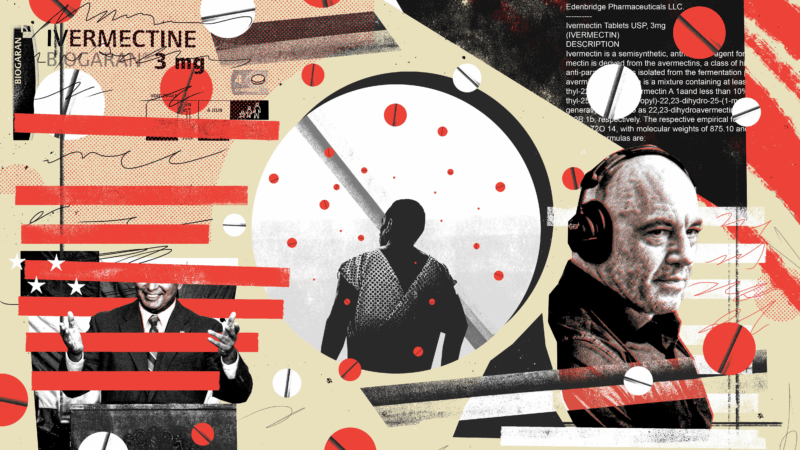
Ivermectin is making a post-pandemic comeback, among cancer patients
The anti-parasitic drug became a household name during the COVID-19 pandemic, and it is now being embraced as an alternative treatment for cancer. It is as politically polarizing as ever.
Rep. Adam Smith on the U.S. strikes on Iran and the debate over Trump’s war powers
NPR's Leila Fadel asks Democratic Rep. Adam Smith of Washington, the ranking member on the House Armed Services Committee, about President Trump's unilateral authorization to strike Iran.
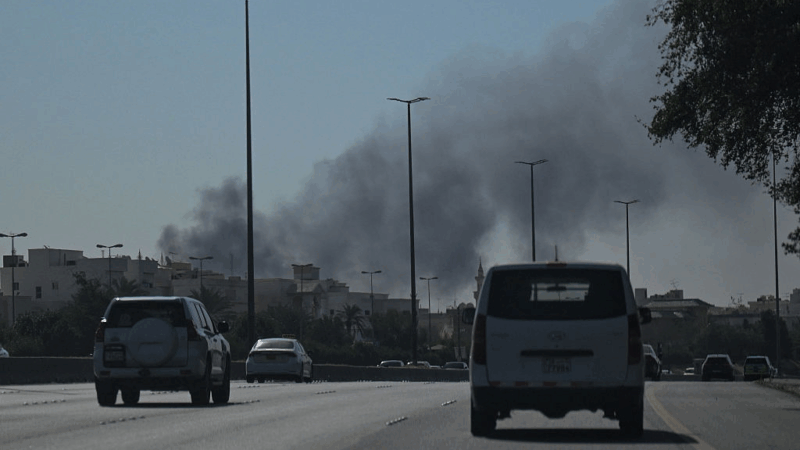
Iran war widens, threatening to engulf Lebanon
The war over Iran engulfed more of the Middle East and beyond on Monday as Lebanon's militant group Hezbollah responded to the killing of Iran's spiritual leader with its first attack on Israel in more than a year.
Peer pressure can make this clownfish change its stripes
Tomato clownfish, in response to an unpredictable world, appear capable of adjusting when they lose their stripes based on cues from other fish and their habitat, a new study in PLOS Biology finds.

Hezbollah strikes Israel as American and Israeli planes pound Iran
Iran and Iranian-backed militias fired missiles at Israel and Arab states, apparently hitting the U.S. Embassy compound in Kuwait, while Israel and the United States pounded targets in Iran on Monday.

Lesley Manville says her stage and screen careers ‘feed each other’
The decorated British actress discusses her new film Midwinter Break, her role in Oedipus on Broadway and how she balances stage and screen.
