
Health officials slash the number of vaccines recommended for all kids
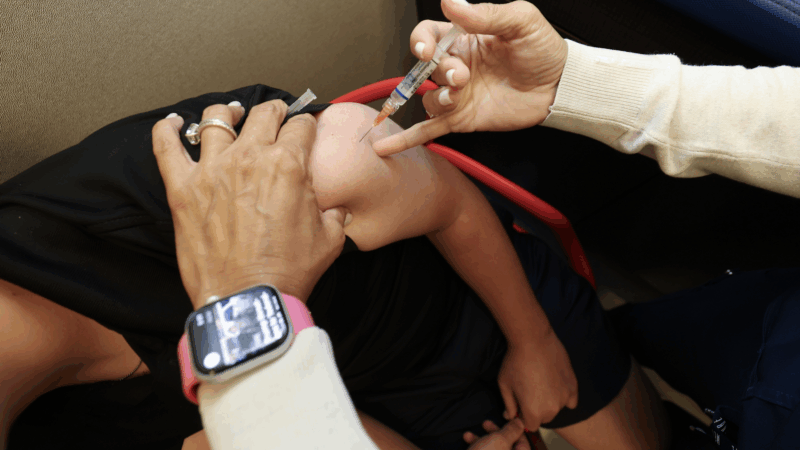
In an unprecedented change, the Centers for Disease Control and Prevention is reducing the number of vaccines routinely recommended for all children from 17 to 11.
On the new schedule, vaccines that had previously been recommended for all children — such as those for rotavirus, hepatitis A and B, meningitis, and seasonal flu — are now more restricted. They are recommended only for those at high risk or after consultation with a health care provider, a category called “shared decision-making.”
Health Secretary Robert F. Kennedy Jr. has long questioned the safety and effectiveness of many childhood vaccines. With this overhaul, the administration is taking a dramatic step to pare down the schedule of immunizations routinely recommended for all children.
The revamp follows a presidential memorandum that directed the Department of Health and Human Services and the CDC to compare the list of vaccines recommended for children in the U.S. with those in “peer, developed countries.” That memo came out Dec. 5, the same day that vaccine advisers voted to drop the recommendation that all newborns receive a hepatitis B vaccine the day of birth.
The advisers also heard presentations then from a senior Food and Drug Administration official on the merits of the vaccine schedule in Denmark, which recommends fewer vaccines than the U.S., and from a trial attorney who specializes in vaccine lawsuits, on the history of the childhood vaccine schedule.
“President Trump directed us to examine how other developed nations protect their children and to take action if they are doing better,” Kennedy said, in a press release about the changes. “After an exhaustive review of the evidence, we are aligning the U.S. childhood vaccine schedule with international consensus while strengthening transparency and informed consent. This decision protects children, respects families, and rebuilds trust in public health.”
The changes to the schedule came after a “comprehensive scientific assessment” comparing U.S. policy to that of 20 other countries, said a senior administration health official who briefed reporters on the condition of anonymity. The assessment was authored by Martin Kulldorf, chief science officer at a unit of HHS who served briefly as chair of the CDC’s vaccine advisory committee last year, and Tracy Beth Høeg, acting director of the FDA’s Center for Drug Evaluation and Research.
The changes were made without formal public comment or input from vaccine makers, officials confirmed, circumventing the typical process in which many stakeholders, including the CDC’s Advisory Committee on Immunization Practices, weigh in on the benefits and risks of any changes to the vaccine schedule.
“Eliminating vital U.S. childhood vaccine recommendations without public discussion of the potential impacts on children in this country, or a transparent review of the data on which the changes were based, is a radical and dangerous decision,” said a statement by epidemiologist Michael Osterholm, of the Vaccine Integrity Project and director of the University of Minnesota’s Center for Infectious Disease Research and Policy. “This wildly irresponsible decision will sow further doubt and confusion among parents and put children’s lives at risk.”
Senior HHS officials at the briefing cited “a drop in vaccine uptake of routine vaccinations for children,” including declining measles vaccination rates, as evidence of declining public trust in vaccines. They said the changes were intended to increase public confidence in the vaccine schedule.
As no vaccines were taken off the schedule, only shifted in status, they said the vaccines would still be free and available to anybody who wants them, covered by insurance through the process of shared clinical decision-making — if a patient (or guardian) and their health care provider decide together they should get it.
HHS officials also said they would be embarking on placebo-controlled trials looking at the timing of vaccines and their long-term effects. Trials have already begun at CDC, and are being initiated at FDA and the National Institutes of Health, they said. The officials did not provide specifics on the cost or timing of these trials, but anticipated that the trials would require follow-up for “many, many years” and take “quite some time.”
See the Oscars red carpet looks
Stars are arriving for the Academy Awards. The show starts at 7 p.m. ET, 4 p.m. PT on ABC and Hulu.
Selection Sunday is here. Here’s what to know ahead of March Madness
Brackets for the men's and women's NCAA basketball tournaments are set to be revealed. Duke is expected to be the men's top overall seed. The undefeated UConn Huskies will likely lead the women's.
Snow and wind batter parts of US, with threat of thunderstorms and tornadoes
A broad and erratic patchwork of severe weather rumbled across much of the U.S. on Sunday, dumping heavy snow in the Upper Midwest while damaging high winds swept across the Plains.

Crew of fatal US military crash included Alabama father recently deployed
The six U.S. service members who died in the crash of a U.S. military refueling aircraft included an Alabama father who had just been promoted and deployed. The U.S. government released the identities of the deceased service members Saturday.

Israeli soldiers fire on family car in occupied West Bank, killing 4
Israeli soldiers fired on a car carrying a family in the northern West Bank, killing four people including two children, the Palestinian Authority's Health Ministry said.

U.S. military names six killed in plane crash as Iran war enters third week
The conflict in the Middle East has entered a third week, with Israel announcing a barrage of new strikes on western Iran on Sunday, while the U.S. defense department released the names of six service members who died when their military refueling aircraft crashed.
