
Guns are the leading cause of death of kids and teens, and state laws matter

States with permissive gun laws experienced a rise in pediatric deaths from firearm injuries between 2011 and 2023, whereas states with stricter laws did not. That’s according to a new study published in JAMA Pediatrics.
“We know that the leading cause of death in children is firearm injuries,” says Dr. Maya Haasz, an emergency medicine doctor and researcher at the University of Colorado, who wasn’t involved in the new study. In a policy brief from 2021, she and her colleagues found that a child or teen is killed in the U.S. every 2 hours and 48 minutes.
The new study offers a window into ways to prevent these deaths, says Haasz, and she called that “exciting.”
“This doesn’t mean we should change all our laws at once,” Haasz says, “but perhaps if we could look at these laws and see which ones are effective, then we could start moving towards safety.”
A pivot point in 2010
The researchers of the new study looked at firearm deaths of children 17 and under in the period after a 2010 landmark Supreme Court case — McDonald vs. Chicago — ruling that said state and local governments must comply with the Second Amendment. Chicago’s law banning ownership of handguns was struck down, but cities and states could still regulate guns. That led to states across the country changing their gun laws, says study author Dr. Jeremy Faust, an emergency medicine professor at Harvard Medical School and a physician at Mass General Brigham.
“There is just this flurry of activity and it’s in both directions,” says Faust. “You have states like Alabama or Louisiana and Texas, that are enacting much more aggressive laws in terms of freedom of access, freedom of carry laws about concealed carry in churches, laws about stand-your-ground, other things that make it just easier to get a firearm quickly and to carry.”
And states like California passed stricter gun regulations.
“Things like safety requirements, safety training requirements,” Faust says, “or where places instituted waiting periods or background checks to make sure that they didn’t have a violent criminal offense in their recent past.”
Faust and his colleagues grouped states into three buckets based on their gun laws: most permissive, permissive and least permissive.
Then they looked at the overall pediatric firearm deaths in the three groups from 2011 to 2023 compared to the decade prior. States with the most permissive gun laws had more than 6,000 excess deaths than they would have expected based on the earlier time period.
“We would have predicted 9,056 deaths in 13 years, when in fact, there were 15,085 deaths,” says Faust. That’s “a 67% relative increase.” The excess deaths included both homicides and suicides.
The states in the middle group, with laws considered permissive, also saw an increase in deaths — they had 1,500 more deaths than expected.
Together, these two groups of states had more than 7,000 excess deaths of children and teens due to guns. “And that’s over 500 deaths per year,” notes Faust.
These are children “who should be alive. They should be around. These are not deaths that should have occurred. They are preventable.”
The study “adds more robust evidence,” supporting that states with more lenient gun laws have more pediatric deaths from gunshots, says Dr. Chethan Sathya, a pediatric surgeon and director of the Center for Gun Violence Prevention at Northwell Health in New York. He wasn’t involved in the new study.
Next steps
But states vary widely in the kinds of gun laws they have — whether they are strict or lenient, he adds. So, the next step for researchers is to look at which specific laws can really help prevent gun deaths in kids and teens.
“We really have to ask ourselves the question: What really worked in the states that had lower deaths?” says Sathya.
For example, past studies have shown that “child access prevention laws” are effective in preventing injuries and deaths, notes Haasz. These are laws that say “it is not legal for you to allow a child to access a gun,” she says. “And so that might mean that you have to lock up your gun at home. That might mean that you just can’t leave it on the table. And depending on the state, there’s varying degrees of punishment [for breaking the law].”
“Those laws have been shown to decrease suicides and unintentional injuries in children,” she says.
That kind of research into specific laws would help prevent not just gun deaths, notes Sathya, but also the larger number of non-fatal gunshot injuries in this age group.
“In this study, for every fatality they captured, there are going to be countless more kids in those states that had non-fatal injuries and their lives are going to forever be altered,” Sathya says.

Mideast clashes breach Olympic truce as athletes gather for Winter Paralympic Games
Fighting intensified in the Middle East during the Olympic truce, in effect through March 15. Flights are being disrupted as athletes and families converge on Italy for the Winter Paralympics.

A U.S. scholarship thrills a teacher in India. Then came the soul-crushing questions
She was thrilled to become the first teacher from a government-sponsored school in India to get a Fulbright exchange award to learn from U.S. schools. People asked two questions that clouded her joy.

Sunday Puzzle: Sandwiched
NPR's Ayesha Rascoe plays the puzzle with WXXI listener Jonathan Black and Weekend Edition Puzzlemaster Will Shortz.
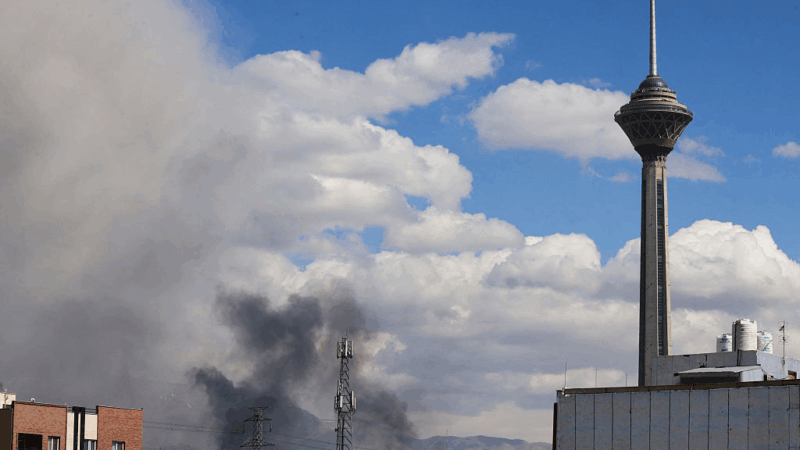
U.S.-Israeli strikes in Iran continue into 2nd day, as the region faces turmoil
Israel said on Sunday it had launched more attacks on Iran, while the Iranian government continued strikes on Israel and on U.S. targets in Gulf states, Iraq and Jordan.

Trump warns Iran not to retaliate after Ayatollah Ali Khamenei is killed
The Iranian government has announced 40 days of mourning. The country's supreme leader was killed following an attack launched by the U.S. and Israel on Saturday against Iran.
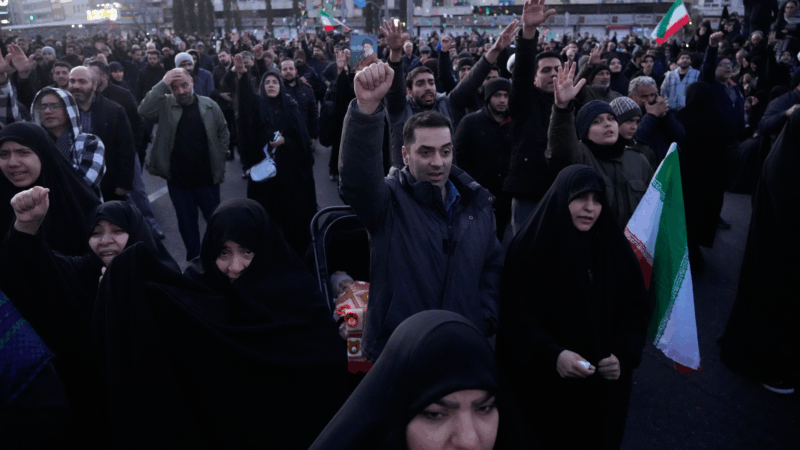
Iran fires missiles at Israel and Gulf states after U.S.-Israeli strike kills Khamenei
Iran fired missiles at targets in Israel and Gulf Arab states Sunday after vowing massive retaliation for the killing of Supreme Leader Ayatollah Ali Khamenei by the United States and Israel.
