
Greetings from Chiloé Island, Chile, where the fast-moving tides are part of local lore

Far-Flung Postcards is a weekly series in which NPR’s international team shares moments from their lives and work around the world.
The tides move so quickly on the island of Chiloé that they are part of the local lore.
This is an island just north of Patagonia, known for its changing weather and tales of witches.
I noticed many stores sold images of witches, so I asked a friend, Chilean anthropologist Alejandra Leighton, to explain why. The story she told reminded me of this picture showing low tide outside our hotel in the town of Castro.
A Spanish cartographer, José de Moraleda y Montero, challenged a local sorceress named Chillpila to a duel in the 18th century. Chillpila won by making the tide recede so quickly that Moraleda’s ship ran aground — and for that feat, she won a book of sorcery. Alejandra says the legend even came up in a famous Chiloé witch trial in 1880.
It’s magical today to watch the tides flow in and out under the colorful houses on stilts. The only witches you may find are in gift shops and books — though Alejandra may know a few real ones on the island.
See more photos from around the world:
- Greetings from Andhra Pradesh, India, where a fragrant food stand feeds working women
- Greetings from Ukraine, where churchgoers seek respite ahead of another winter at war
- Greetings from Amman, Jordan, where history lent a colossal hand
- Greetings from Yimianpo, China, where artisans carve Russian nesting dolls
- Greetings from the Arctic Circle, where an icebreaker ship drew polar bears’ attention

Carney says he backs strikes on Iran ‘with some regret’ as world order frays
Canadian Prime Minister Mark Carney says he supports the strikes on Iran "with some regret" as they represent an extreme example of a rupturing world order.
Iranian civilians are now fleeing the relentless bombing for neighboring Turkey
As the U.S. military broadens its strikes in Iran, traumatized Iranians are reaching the border with Turkey.

A split Senate votes against measure to constrain Trump’s authorities in Iran
Democrats in the Senate were facing an uphill climb Wednesday in their push to restrain President Trump's ability to wage war against Iran.
WATCH: How traffic dried up in the Strait of Hormuz since the Iran war began
The effective closure of the Strait of Hormuz is "about as wrong as things could go" for global oil markets. Iran achieved it not with a naval blockade, but with cheap drones.

As Mississippi waits to spend opioid settlement funds, children and families suffer
Mississippi will receive more than $400M to fight the opioid epidemic. So far, officials haven't directed it toward programs that support addiction recovery.
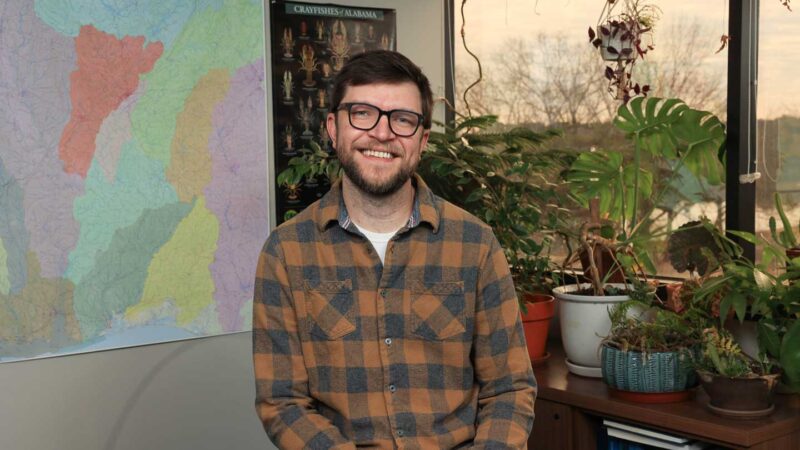
Alabama’s new state climatologist takes the reins
The controversial John Christy is retiring as Alabama’s state climatologist. Lee Ellenburg now assumes the role and is already making a few changes, including declaring that climate change is real and caused by humans.
