
‘Given a gun and sent to die’: Kenyans lured to fight for Russia in Ukraine
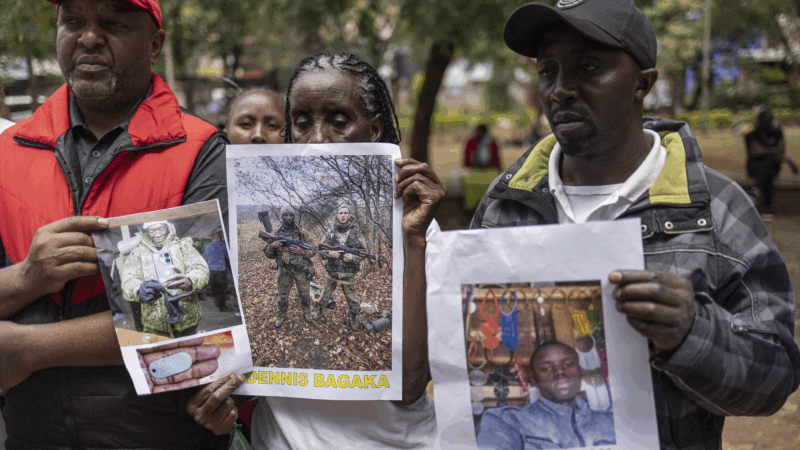
NAIROBI, Kenya — In Sikonga village, Kisii County, a mother’s wails fill the house. Dennis Bagaka Ombwori, 39, the second-born son of John and Esther Ombwori, is the latest Kenyan confirmed dead in the Russia–Ukraine war.
Villagers gather outside, offering what little comfort they can, but Esther Ombwori cannot be consoled. Dennis worked as a security officer in Qatar when recruiters approached him with what appeared to be a better offer. But his family says he never knew what the job really was.
His brother, Alfred Morara, said the news had shattered the family.
“They were not told which job they wanted to do. They were taken to Russia.” Morara said. “He was recruited as a foreign soldier in Russia. They started fighting for Russia against Ukraine.”
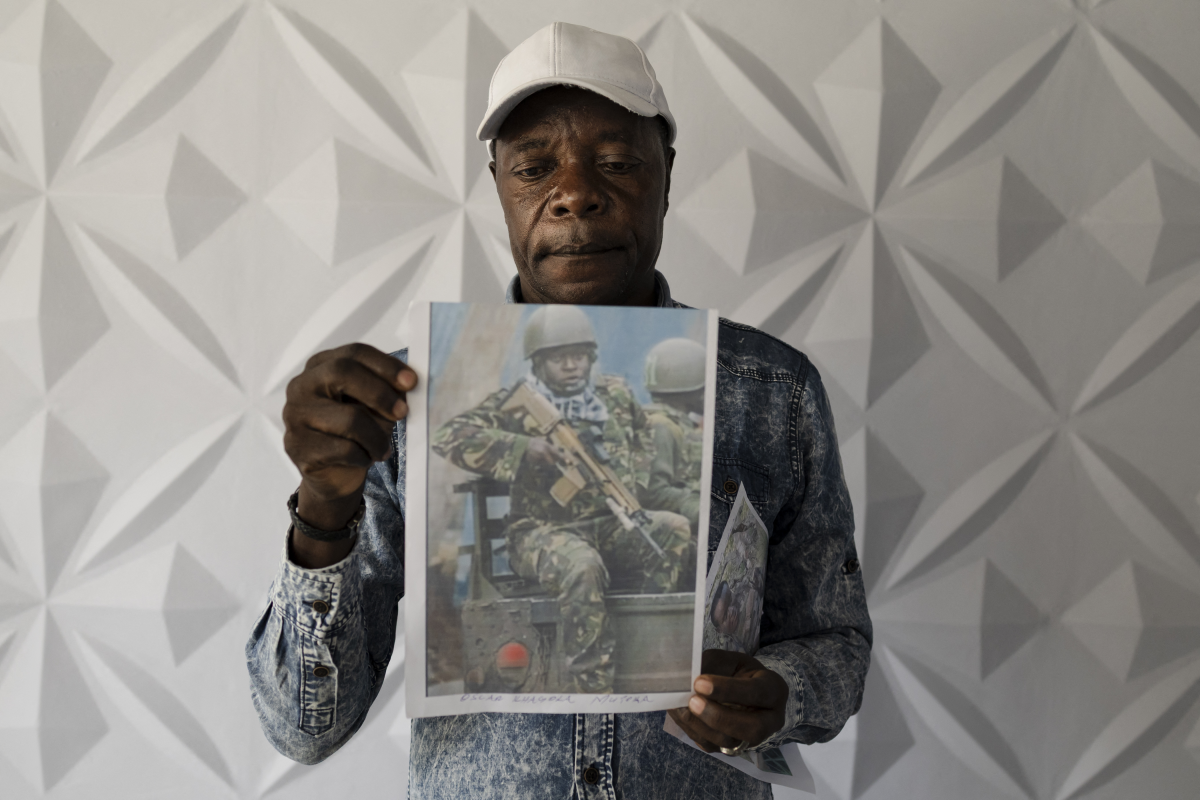
Hundreds of miles away in Nairobi, the Ogolla family mourns a similar loss. 32-year-old Oscar Agola Ojiambo vanished shortly after joining the Russian army last June. Months later, his family is still waiting for answers — and for his body.
“The commanders at the war front revealed that my son died on 14 August 2025,” says Charles Ojiambo Mutoka, Oscar’s father. “That revelation came in January this year, but the Russian government has not disclosed it to next of kin.”
For families like the Ombworis and the Ogollas, hope is slipping away. A report presented to Parliament on Wednesday by Kenya’s National Intelligence Service estimates that more than 1,000 Kenyans are currently fighting in Ukraine — far higher than earlier figures.
The government says they are working to identify and repatriate Kenyans caught in the conflict, but the scale of the problem is staggering.
According to the intelligence report, 89 Kenyans remain on the frontline, 39 have been hospitalized, and 28 are missing in action.
Since December, at least 30 have been repatriated after leaving the conflict, with many recounting harsh battlefield conditions. Some of those missing or feared dead are former Kenya Defence Forces personnel.
In Parliament, the report has sparked alarm, where lawmakers say they are shocked by the scale of the problem. Majority Leader Kimani Ichung’wah said officials in both Nairobi and Moscow played a role in sending Kenyans to the frontlines.
“More telling is the collusion by officers at the Russian Embassy and the Kenyan Embassy in Moscow,” Ichung’wah told Parliament. “Our ambassador in Moscow must be able to identify the officers within the embassy that may have colluded with these criminals.”
Opposition MP Joseph Makilap, who pushed for the intelligence report to be released, said the scale of the recruitment was staggering.
“I am extremely shocked in the manner in which Kenyans can be actually taken all the way to Moscow to fight another sovereign country called Ukraine.”
Dr. Korir Sing’Oei, principal secretary at the Ministry of Foreign Affairs, says young Kenyans are falling victim to unscrupulous recruitment networks.
“Some Kenyans have been irregularly recruited to serve within the context of the ongoing Ukrainian-Russian conflict,” Singoei said. “Unfortunately, in their desire to work abroad, many Kenyans fall victim to unscrupulous groups.”
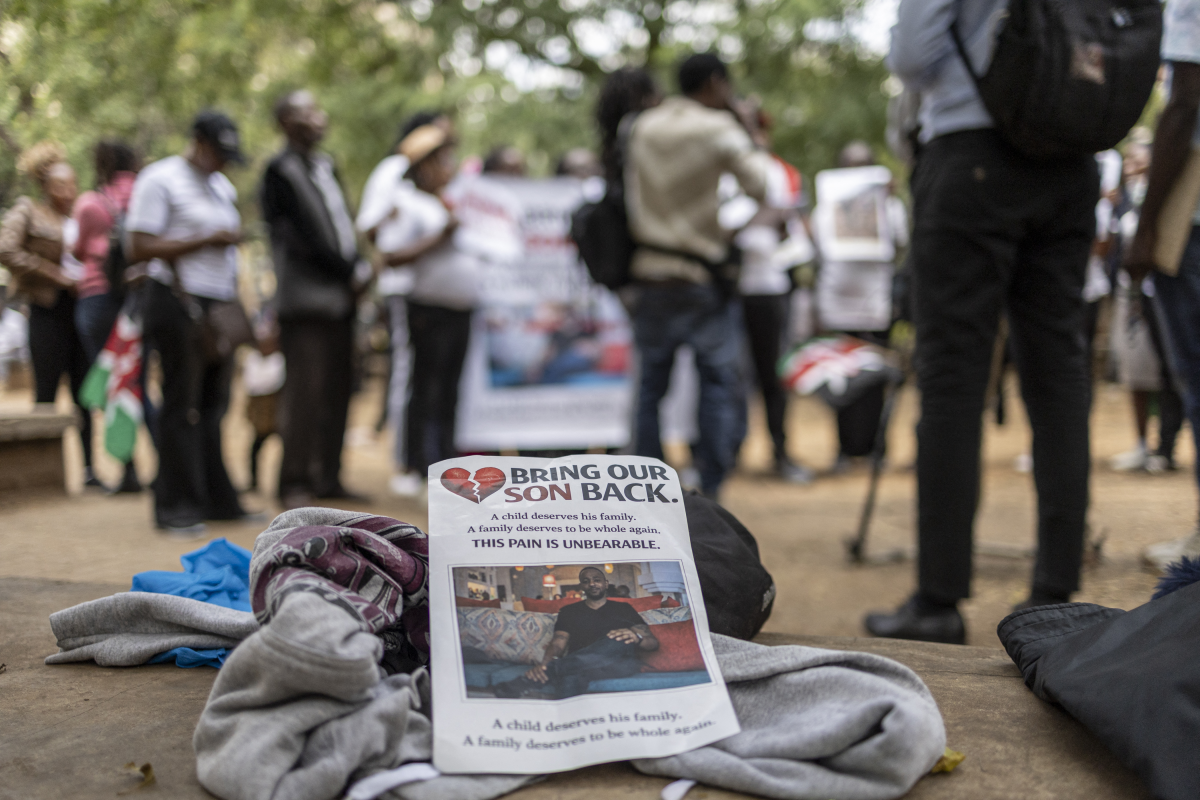
Training for recruits is limited, according to the Majority Leader Ichung’wah. “Nobody in the military trains people for three weeks. Some have only nine days of preparation.”
“They are basically given a gun and sent to die,” Ichung’wah told Parliament.
The Russian Embassy in Nairobi has dismissed the allegations as “dangerous and misleading,” saying its staff have never been involved in “rogue schemes” or any form of illegal recruitment.
In a post on X, the Embassy stated: “At no point during the ongoing crisis in Ukraine has the Embassy issued visas to Kenyan citizens seeking to travel to Russia with the stated purpose of participating in the Special Military Operation (SMO) in Ukraine. Nor has the Embassy encouraged any Kenyan citizen to do so.”
According to the Kenyan intelligence report the recruitment networks involve both Kenyan and foreign actors. Many of those enlisted travel through Uganda, South Sudan, or South Africa to avoid detection. Others leave secure jobs in the Middle East for contracts promising thousands of dollars and the possibility of Russian citizenship after a year on the frontlines.
Recruits are promised a monthly salary of up to 350,000 Kenyan shillings ($2,400), with bonuses ranging from 900,000 to 1.2 million shillings ($6,200–$8,300).
Across the continent, this situation is far from isolated. In November, Ukraine’s Minister of Foreign Affairs Andrii Sybiha, said more than 1,400 Africans from over 30 countries were fighting for Russia — though Kenya’s own figures suggest that may be a conservative estimate.
Young men are promised jobs as drivers or security guards, with salaries ten times what they could earn at home. Instead, many are sent to the frontlines.
Kenya’s Foreign Minister is set to travel to Russia to push for a deal banning the conscription of Kenyan soldiers — a mission families like the Ogollas are pinning their hopes on.
For the Ogollas and many others, it is more than a policy negotiation — it could be a lifeline, offering answers and a path home for the hundreds of young Kenyans still trapped fighting in a war that is not theirs.

Trump to raise global tariffs to 15%
President Trump previously said he would implement 10% global tariffs after the U.S. Supreme Court struck down his tariff policies.

Pin trading has taken over the Olympics. Here’s what it’s like in Milan
Pin trading has become a hallmark of the Olympics in recent decades — and not just for athletes. An official trading center in Milan was a hotspot for longtime collectors and curious newcomers alike.
US military airlifts small reactor as Trump pushes to quickly deploy nuclear power
The Pentagon and the Energy Department have airlifted a small nuclear reactor from California to Utah, demonstrating what they say is potential for the U.S. to quickly deploy nuclear power for military and civilian use.

How Nazgul the wolfdog made his run for Winter Olympic glory in Italy
Nazgul isn't talking, but his owners come clean about how he got loose, got famous, and how they feel now

Court clears way for Louisiana law requiring Ten Commandments in classrooms to take effect
The 5th U.S. Circuit Court of Appeals has cleared the way for a Louisiana law requiring displays of the Ten Commandments in public classrooms to take effect.

Opinion: The enduring dignity of Jesse Jackson
Rev. Jesse Jackson died this week at age 84. NPR's Scott Simon remembers covering Jackson's 1984 presidential campaign in Mississippi.
