
Ginseng has linked America and China for centuries. A new graphic novel digs into why
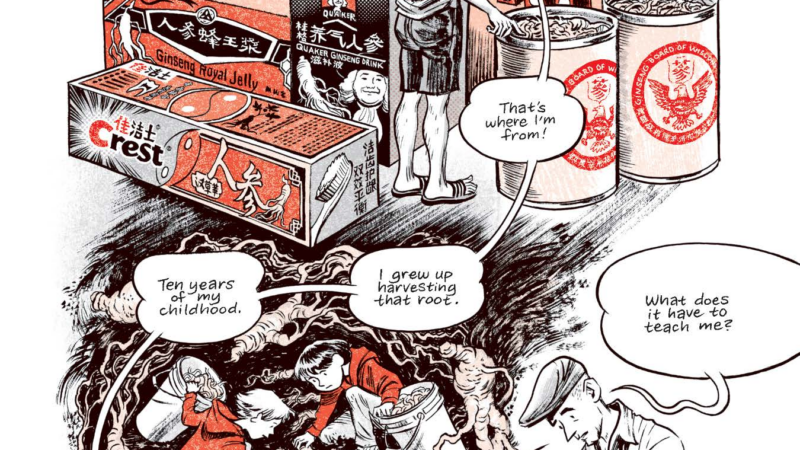
In 2011, cartoonist Craig Thompson fell on his moneymaker – by which I mean his drawing hand.
The author of the award-winning (and often banned) graphic memoir Blankets was in China, riding a bamboo raft along the Yulong River (“very touristy,” he told me, a bit apologetically). He was helping carry the raft over some small rapids when he slipped and fell. He thought he sprained his hand.
Someone helped him get to a pharmacy on the outskirts of town, where they gave him a spray that instantly took away the pain. Temporarily, at least. The primary ingredient of the spray was ginseng. And as he looked around the pharmacy, there was ginseng everywhere – including from his home state, Wisconsin.

This was the seed of Thompson’s latest graphic novel, Ginseng Roots. The book is a bit of a spiritual sequel to Blankets – it looks back at Thompson’s childhood, growing up working on ginseng farms, hitting the fields in the morning to earn money for comic books. He’s also reporting on how the ginseng trade connects his life to so many others. He talks to farmers and business owners in America, and visits shops, wholesale vendors and marketplaces in South Korea and China. The book is an examination of the intricate, global web of labor, production and consumption.
“Maybe there is no USA without ginseng”
That a little pharmacy in China stocked Wisconsin ginseng isn’t all that surprising. Ginseng is the official herb of the state. The state is the leading producer of American ginseng – particularly in Marathon, Wisconsin, where Thompson grew up. But the irony of the global ginseng trade is that the ginseng Americans are most likely familiar with is Asian ginseng – a “stimulating herb, that’s going to power you through like coffee,” said Thompson. American ginseng, by comparison, is a “more cool, adaptogenic herb that you can use to nourish your general health.” And it’s more popular in China.
America’s history trading ginseng with China is one of our earliest stories. In 1784, America was in debt to France, who floated the money to help pay for the American Revolution. To earn that money, America sent a ship full of ginseng to China. “So maybe there’s no USA without ginseng,” Thompson said. “Certainly, it was the beginning of this trade relationship that’s becoming more and more forefront and crucial.”

In Ginseng Roots, when Thompson draws himself, his face appears more minimalist. For lack of a better term, more cartoony. But when he draws the people he interviews, the people whose lives are rooted in the ginseng trade, he draws their faces with weight and detail. It’s clearly an ambitious project – one that took eight years to make. In part, because of his hand.
The fall follows him throughout the book. It turns out there were more serious issues. In the notes of the book, Thompson writes: “My hand degeneration is a result of compounding conditions including fibromatosis, Dupuytren’s contracture, arthritis, ongoing ganglion cysts, and probably overuse.” He’s tried everything – radiation, surgery, physical therapy, and herbs (yes, including ginseng, which does help). But all he can do now is slow down.
“I thought this [new book] was my swan song to comics,” he said. “Amazingly, coming out of the other side, I do feel like I will make more. Maybe it’s just what I’m best suited towards.”
What’s the difference between a weed and an herb?
In the course of reporting the book, Thompson encounters acupuncturist Justin Penoyer, who ends up treating Thompson using Chinese medicine (“Funny that my Western doctor is Asian and my Chinese Medicine doctor is Caucasian,” Thompson notes in the book).
Throughout their treatments, Thompson and Penoyer discuss the history of Chinese medicine, the benefits of American ginseng, and the link between Thompson’s medical condition and his childhood working on pesticide-ridden farms. And Penoyer drops this nugget of wisdom: “An herb is a weed that has a storyline to it. A weed is a plant that’s lost its social narrative.”
People make things. That’s an obvious point, but it’s a major takeaway from Ginseng Roots. Someone, somewhere, touched the things we consume. They gave it a narrative, turning it from a weed into an herb. That’s true of the tea you drank this morning, to the cream you’ll put on your face tonight, to the book you hold in your hands.
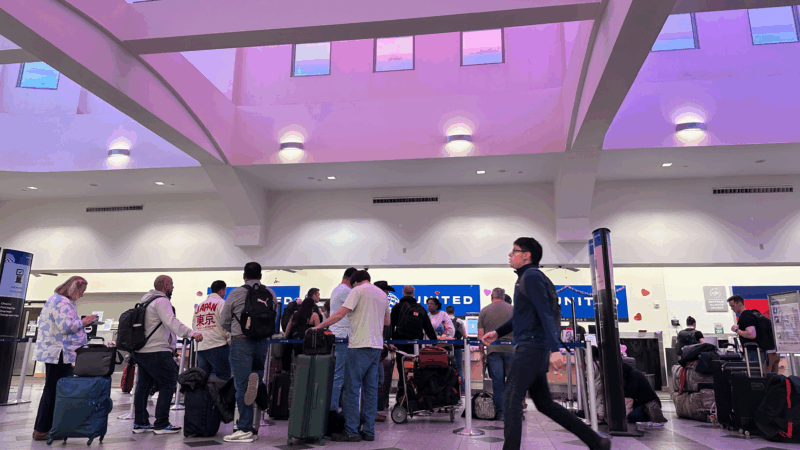
The airspace around El Paso is open again. Why it closed is in dispute
The Federal Aviation Administration abruptly closed the airspace around El Paso, only to reopen it hours later. The bizarre episode pointed to a lack of coordination between the FAA and the Pentagon.
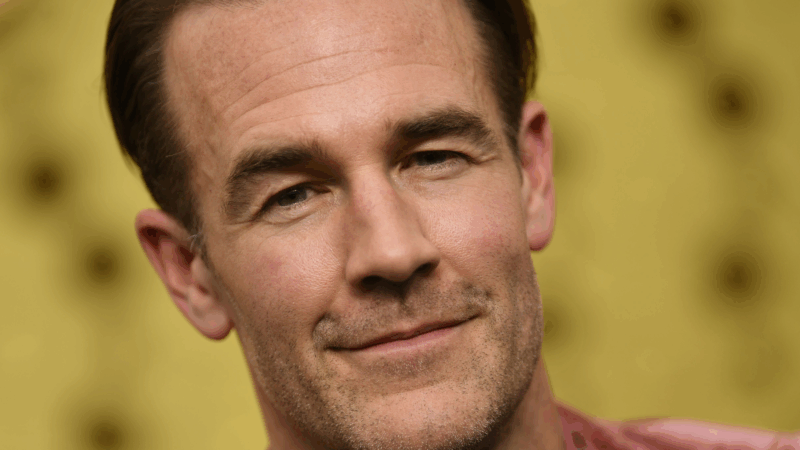
‘Dawson’s Creek’ star James Van Der Beek has died at 48
Van Der Beek played Dawson Leery on the hit show Dawson's Creek. He announced his colon cancer diagnosis in 2024.
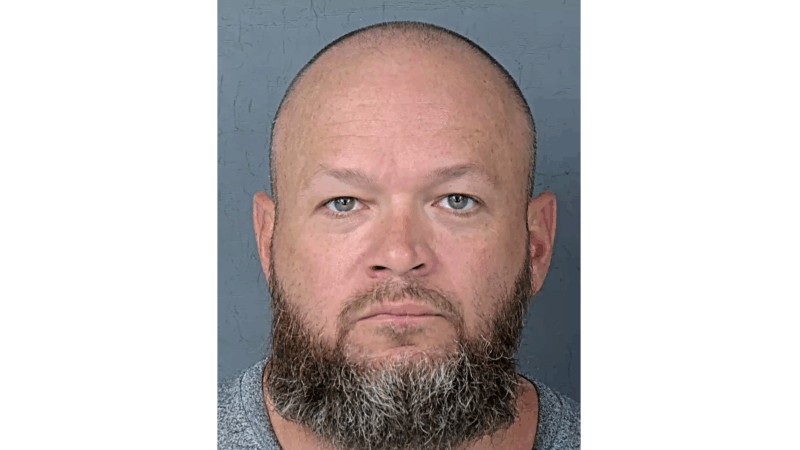
A Jan. 6 rioter pardoned by Trump was convicted of sexually abusing children
A handyman from Florida who received a pardon from President Trump for storming the U.S. Capitol on Jan. 6, 2021, was convicted on state charges of child sex abuse and exposing himself to a child.
A country-pop newcomer’s debut is your reinvention album of 2026
August Ponthier's Everywhere Isn't Texas is as much a fully realized introduction as a complete revival. Its an existential debut that asks: How, exactly, does the artist fit in here?
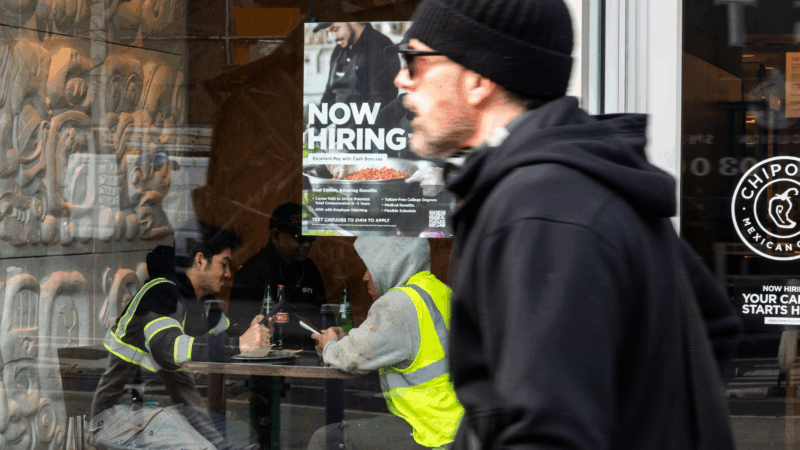
U.S. unexpectedly adds 130,000 jobs in January after a weak 2025
U.S. employers added 130,000 jobs in January as the unemployment rate dipped to 4.3% from 4.4% in December. Annual revisions show that job growth last year was far weaker than initially reported.
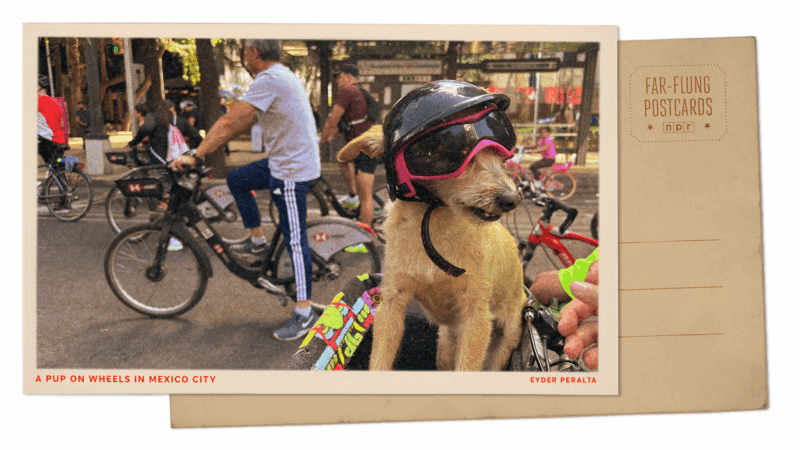
Greetings from Mexico City’s iconic boulevard, where a dog on a bike steals the show
Every week, more than 100,000 people ride bikes, skates and rollerblades past some of the best-known parts of Mexico's capital. And sometimes their dogs join them too.
