
Germany’s train service is one of Europe’s worst. How did it get so bad?
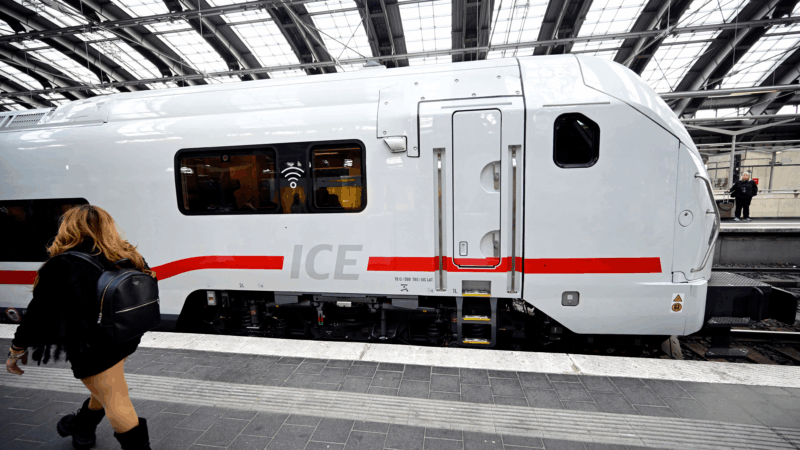
EN ROUTE TO BERLIN — As the 12:06 p.m. Intercity Express train to Berlin leaves the Swiss city of Bern and crosses the border into Germany, passengers reluctantly bid farewell to punctuality — a guarantee in the Alpine republic where trains run like clockwork.
Fifty-seven-year-old Elisabeth Eisel regularly takes this seven-hour train journey. “Trains in Switzerland are always on time, unless they’re arriving from Germany,” she says. “Harsh but true, sadly. It didn’t used to be the case.”
Chronic underinvestment in Germany has derailed yet another myth about Teutonic efficiency. The German railway Deutsche Bahn’s long-distance “high-speed” trains are now among the least punctual in Europe. In October, the national rail operator broke its own poor record with roughly only half of all long-distance trains arriving without delay.
Waning reliability is but one of many problems for state-owned Deutsche Bahn, which is operating at a loss and regularly subjects its passengers to poor or no Wi-Fi access, seat reservation mix-ups, missing train cars and “technical problems” — a catch-all reason commonly cited by conductors over the train intercom.

After decades of neglect, the government has announced a 100-billion-euro investment in rail infrastructure. But Lukas Iffländer, vice chair of the railway passenger lobby group Pro Bahn, says it will take more than money to get German trains back on track.
“We are now paying the price for years and years of neglect, basically since 1998,” Iffländer says. It’s not just crumbling tracks and sticky signals that need attention, he explains, but the network operator’s overly bureaucratic infrastructure.
“Every process at Deutsche Bahn is really complicated,” Iffländer says. “It takes forever and that frustrates the people that actually want to do something.”
Iffländer says Deutsche Bahn is top heavy: While there are not enough train engineers and signal operators, there are too many managers sitting at desks.
German news weekly Der Spiegel recently reported that upper management has allegedly approved canceling long-distance trains to bump up punctuality ratings because canceled trains are not recorded in the statistics.
Deutsche Bahn declined NPR’s requests for an interview, but in a written statement it denied embellishing its data. It said that the Spiegel report is “based on chat messages between dispatchers,” not “actual data used for collecting statistics.”
On a different train — the 11:18 a.m. from Munich to Berlin — passengers are packed like sardines at double capacity because another fully booked Intercity Express was canceled at the very last minute.
The mood is surprisingly jolly, despite the fact that half of the passengers have been standing for more than four hours now — with no hope of getting through the crowded carriages to use the restroom.
Catherine Launay, 51, is lucky enough to have a seat. She’s from France and says she’s surprised passengers are not kicking up more of a fuss.
“If this had been a French train, there’d have been more of an uproar!” Launay quips. “In fact, French passengers would have revolted by now.”
In an effort to prevent aggressive passenger behavior toward train staff, Deutsche Bahn has launched a mockumentary series for TikTok, Instagram and YouTube about a train crew struggling to cope under increasingly preposterous conditions.
The fictional train staff’s dance routine to a techno beat, while singing “zenk yoo for träveling wiz Deutsche Bahn,” has gone down surprisingly well with passengers, even if they can’t actually watch it on board because the Wi-Fi can’t cope with streaming.
And as our train rattles along the track, it’s difficult to differentiate between Deutsche Bahn parody and reality. The train conductor wishes passengers a pleasant journey “as far as it’s possible,” adding “we should just about make it to Berlin.” The train car chortles.
But Deutsche Bahn is no laughing matter for Federal Transport Minister Patrick Schnieder, who recently warned that “many equate the malfunctioning of railways with the malfunctioning of our state.”
Many are putting their hopes in the railway company’s new CEO, Evelyn Palla, based on her track record at Austrian Federal Railways.
Palla announced plans this week to make Deutsche Bahn more trim and efficient by eliminating executive positions, but she warned that there’s so much to fix, it will take time.
As we finally pull into Berlin’s main train station, passengers are resigned to the fact that — whether it’s signal failure, humor failure or state failure — Germany’s trains appear to have gone off the rails.
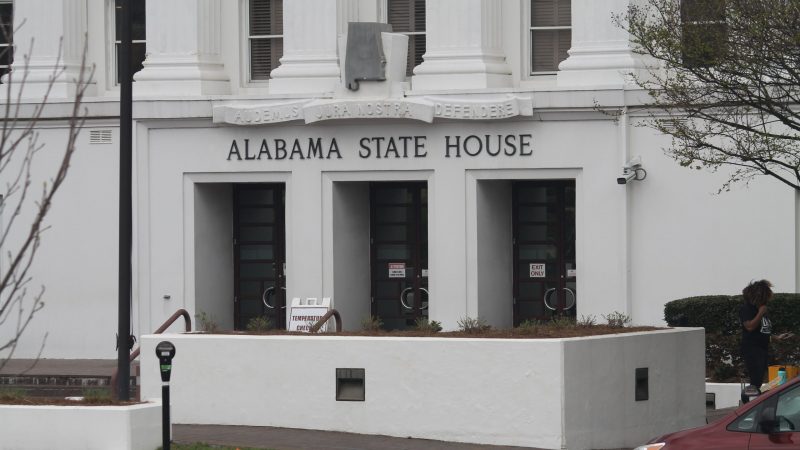
Bill making the Public Service Commission an appointed board is dead for the session
Usually when discussing legislative action, the focus is on what's moving forward. But plenty of bills in a legislature stall or even die. Leaders in the Alabama legislature say a bill involving the Public Service Commission is dead for the session. We get details on that from Todd Stacy, host of Capitol Journal on Alabama Public Television.
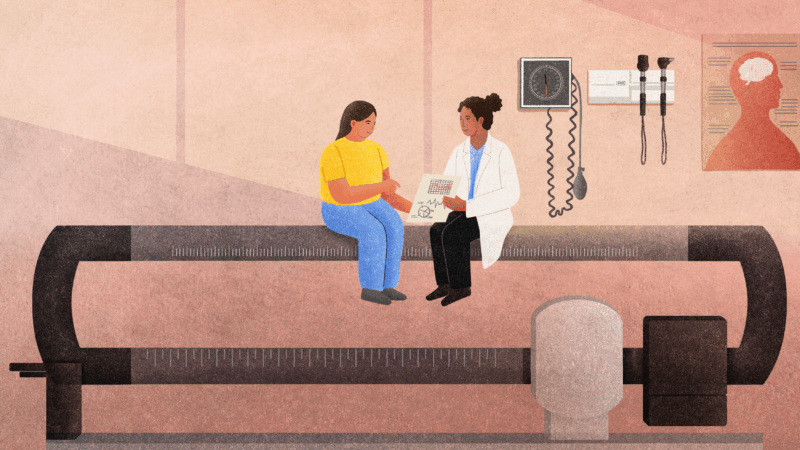
My doctor keeps focusing on my weight. What other health metrics matter more?
Our Real Talk with a Doc columnist explains how to push back if your doctor's obsessed with weight loss. And what other health metrics matter more instead.

Baz Luhrmann will make you fall in love with Elvis Presley
The new movie is made up of footage originally shot in the early 1970s, which Luhrmann found in storage in a Kansas salt mine.

Forget the State of the Union. What’s the state of your quiz score?
What's the state of your union, quiz-wise? Find out!

A team of midlife cheerleaders in Ukraine refuses to let war defeat them
Ukrainian women in their 50s and 60s say they've embraced cheerleading as a way to cope with the extreme stress and anxiety of four years of Russia's full-scale invasion.

SNL mocked her as a ‘scary mom.’ In the Senate, Katie Britt is an emerging dealmaker
Sen. Katie Britt, Republican of Alabama, is a budding bipartisan dealmaker. Her latest assignment: helping negotiate changes to immigration enforcement tactics.
