
From cubicles to kitchens: How empty offices are becoming homes
The room looks like your typical office suite: white walls, low ceilings, gray carpet worn thin from years of foot traffic.
But for this vacant office outside Dupont Circle in Washington, D.C., real estate developers see potential.
Matt Pestronk is the president of Post Brothers, a development company that bought the entire office building back in 2021, along with a neighboring building. Instead of making updates to attract new business tenants, Post Brothers decided to convert the old offices into more than 500 apartments.
“ This location is a little bit off the beaten track for major office tenants, and it’s an incredible residential neighborhood,” Pestronk says. “The most obvious use, to us, was to make it into a residential building.”
In the former office suite, once home to an AmeriCorps program, Pestronk estimates how many units they can squeeze out of this one suite: “Maybe six,” he says.
Cities across the U.S. are grappling with two parallel problems: too much empty office space and not enough housing. Nationally, office vacancy rates reached roughly 20% in 2024, after years of employees working from home. At the same time, the national housing shortage is in the millions. Cities like Washington, D.C., are now betting that by turning vacant offices into homes, one crisis can help solve the other.
Post Brothers has completed half a dozen office-to-residential conversions so far. Its project in D.C., which broke ground last month, is the largest such conversion in the city to date.
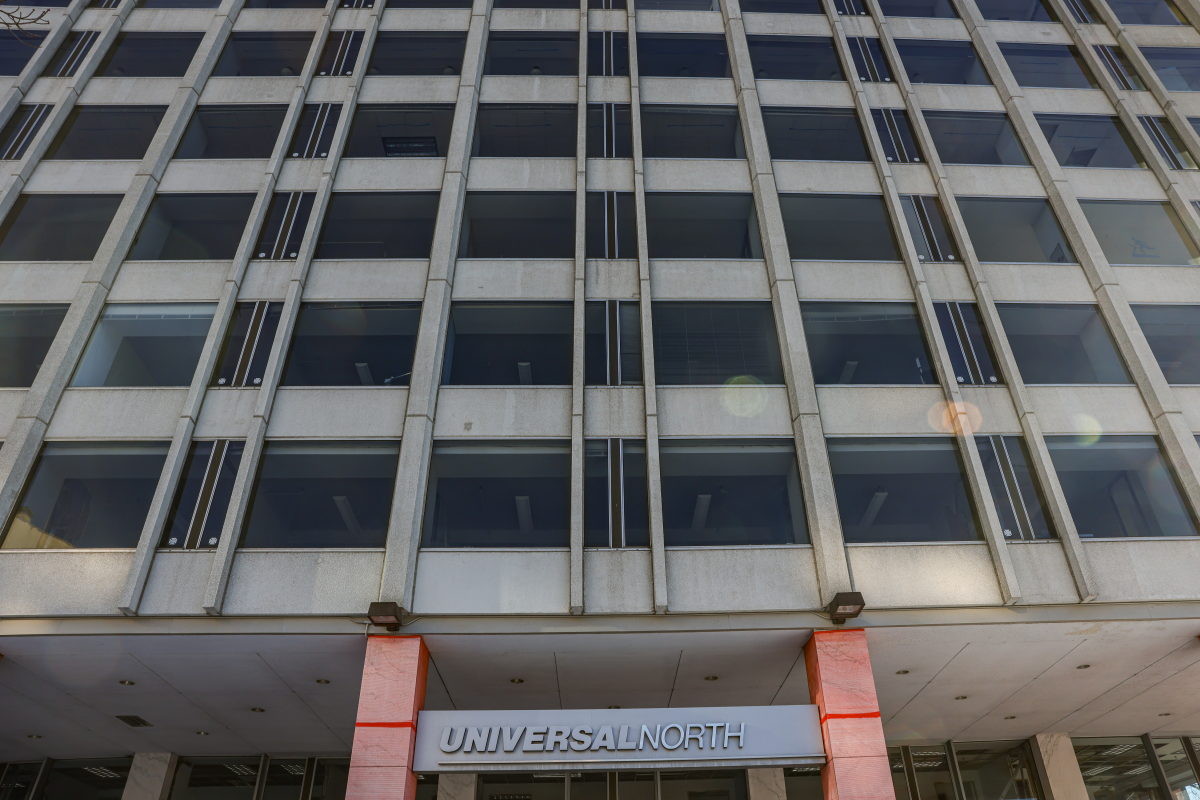
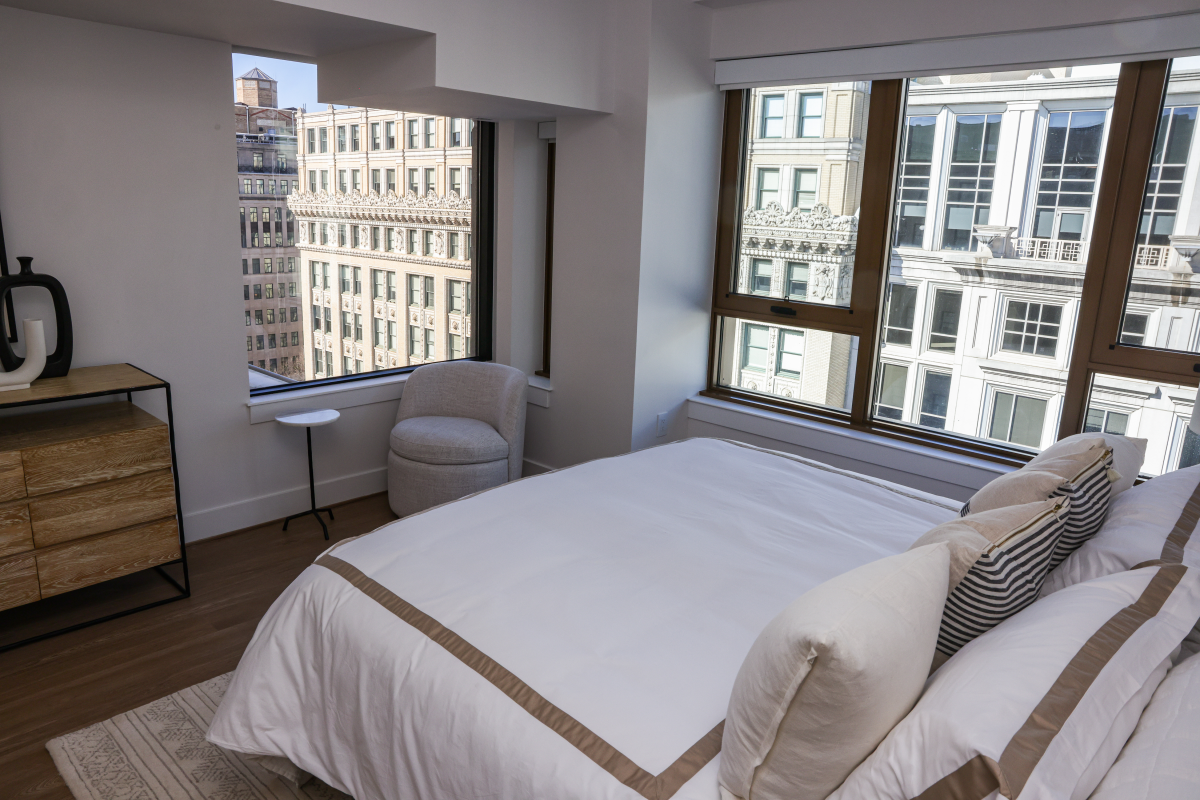
Pestronk says the overall structure of the buildings will remain the same, but with some major additions. A lighter-colored limestone-like aggregate facade will replace the gray concrete from the 1960s, and old inefficient windows will be replaced by larger ones that let in more light per unit.
The aim is to have residents move in next year — an ambitious-sounding timeline that Pestronk says is possible because it’s not a new construction.
“ One of the advantages of doing conversions is that we don’t have to dig a hole for a foundation because there’s already one,” he says.
Plans for the completed building include luxury amenities such as a pool and a dog park. Projected rent for a one-bedroom apartment is around $4,000 per month, but 60 units will be set aside as affordable housing.
“We would love to do more affordable housing,” Pestronk says. But he says he’s limited by the realities of the market. “ Unfortunately, almost all capital seeks a return. This was as much as we could afford to do.”
Tracy Loh, a fellow at the Brookings Institution who studies adaptive reuse of old buildings, says the scale of the shortage far outpaces what conversions can provide.

“Office-to-residential conversion is not going to solve the housing crisis,” she says. But she argues that these projects still matter.
“ It does kill two birds with one stone, in terms of providing some housing supply,” Loh says. And it tends to create housing in central, transit-accessible areas that are in high demand.
The pressure to repurpose offices reflects a deeper shift in American work culture, one beginning even before the COVID-19 pandemic. “The way that people use offices is something that’s been transforming gradually over the last 20 years,” Loh says.
Loh says this downturn is unlike past office slumps and warns developers against relying on old cyclical patterns to continue.

“There’s a concept in the industry called ‘extend and pretend,'” she says. “In times past when there’s been a glut of supply in office space, it has gradually resolved itself over time with new growth and new demand.”
This slump in office demand is likely to persist, though. In our digital age, office storage is less essential because files live on our computers. So even when workers are coming into the office, employers need less space per employee.
D.C. leaders are responding to that shift. Since 2024, the city has completed 11 office conversions, creating nearly 2,000 new apartments. Mayor Muriel Bowser has made adaptive reuse a focus of her administration, offering incentives such as a 20-year property tax abatement to encourage developers to move forward.

Today, D.C. has the second-largest number of planned office-to-residential conversions in the country, just behind New York City. But it’s a trend that’s gaining popularity more broadly, in cities from Dallas to Manchester, New Hampshire.
Foulger Pratt is a local D.C. development company that used to focus largely on building office space. This past October, residents began moving into the company’s first office conversion, located blocks away from the White House.
Kofi Meroe, a director of development at Foulger Pratt who oversaw the process, says the company looked at 30 potential properties before purchasing the building in 2019. Ultimately, he says, they decided to take a chance on the location.

“Our bet was that this downtown corridor would start to evolve and become more of a residential destination,” Meroe says.
As a local developer, Meroe sees conversions as the way forward. “ It’ll allow us to create more units, especially in a city like D.C. where there isn’t a lot of open land.”
Meroe says Foulger Pratt adapted to the changing office landscape early on, starting before the pandemic.
“We bought this building in 2019,” he emphasizes. “Because we own a lot of office buildings, we did start to see that there was something going on with people’s relation to the office.”

Loh, of the Brookings Institution, argues that this kind of adaptation is crucial in a changing economy. She compares it to the decline in manufacturing in the late 20th century.
“When shifts happen in the economy and society, we need to change the built environment in order to match contemporary demand.”
Just like many empty factory floors became trendy lofts, today’s empty cubicles are turning into sleek kitchens and bedrooms.

Israeli soldiers fire on family car in occupied West Bank, killing 4
Israeli soldiers fired on a car carrying a family in the northern West Bank, killing four people including two children, the Palestinian Authority's Health Ministry said.

U.S. military names six killed in plane crash as Iran war enters third week
The conflict in the Middle East has entered a third week, with Israel announcing a barrage of new strikes on western Iran on Sunday, while the U.S. defense department released the names of six service members who died when their military refueling aircraft crashed.
Alabama poised to drastically overhaul utility regulation. Will it lower electric bills?
The Alabama Senate unanimously voted to expand the public service commission, and create a Secretary of Energy to address rising electricity prices. A bill in the House would go even further, requiring rate case hearings and limiting utility profits.

Acclaimed 20th century philosopher Jürgen Habermas dies at 96
Associated with the Frankfurt School, Habermas was a world-renowned thinker on modernity and democracy who helped shape German post-war and post-reunification political discourse.

Why the Chicago Bears could be moving to Indiana
While Illinois is trying to keep the team in Chicago's suburbs, Indiana lawmakers are offering a plan to finance a new stadium

Pentagon tightens controls over Stars and Stripes after calling it “woke”
The new rules for the independent military newspaper are the Defense Department's latest effort to put extraordinary restrictions on journalists covering the agency.
