
Former top general calls military’s removal of trans troops a costly mistake
As 71-year-old retired four star Gen. Stanley McChrystal approaches the podium, the room applauds.
“I can’t believe he’s here,” someone whispers.
Almost as if he heard them, McChrystal says this into the microphone.
“First off, we shouldn’t be here.”
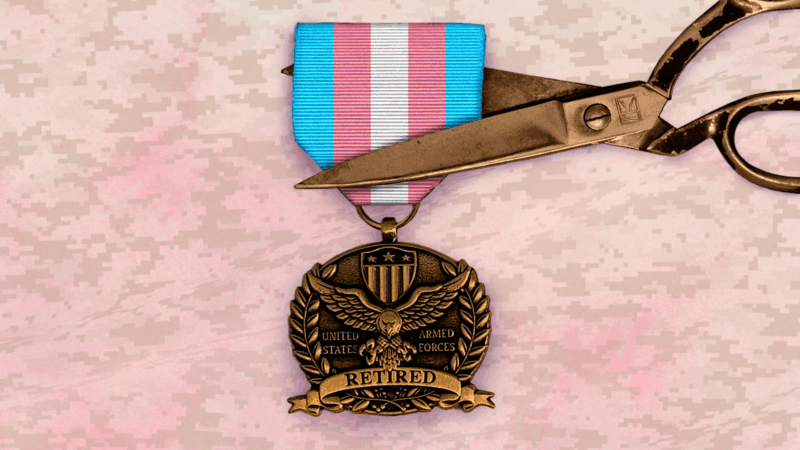
“Here” is a retirement ceremony for five transgender service members who have been forcibly separated from the military under the Trump administration’s second ban. The ceremony, which normally would be given by the Pentagon, has been hosted by the Human Rights Campaign in Washington, D.C.
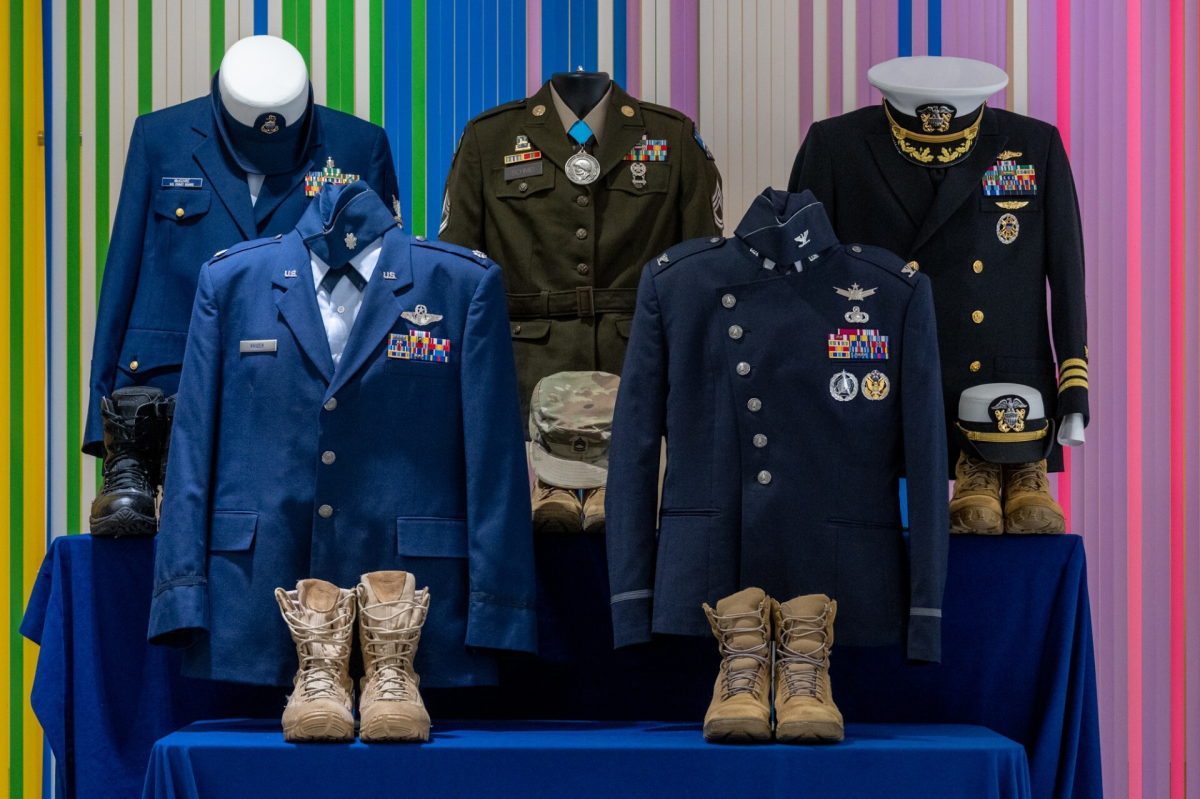
To the left of the stage is a table of mannequins dressed in the retirees’ uniforms. The service members are prohibited from wearing them for the ceremony.
“When these professionals finally decide to retire,” says McChrystal. “It should happen on parade fields, in offices, on the deck of ships … wherever the Space Force goes, I don’t know.”
The audience laughs, grateful for the playful jab on an otherwise somber day.
McChrystal became a household name in the early-to-mid-2000s during the wars in Iraq and Afghanistan — as commander of Joint Special Operations from 2003 to 2008, the International Security Assistance Force (ISAF) and all U.S. forces in Afghanistan from 2009 to 2010.
McChrystal was known as “the soldier monk” for his austere, ascetic lifestyle. He oversaw the special operations that led to the capture of Saddam Hussein and the airstrike that killed Abu Musab Al-Zarqawi, the al-Qaida leader in Iraq.
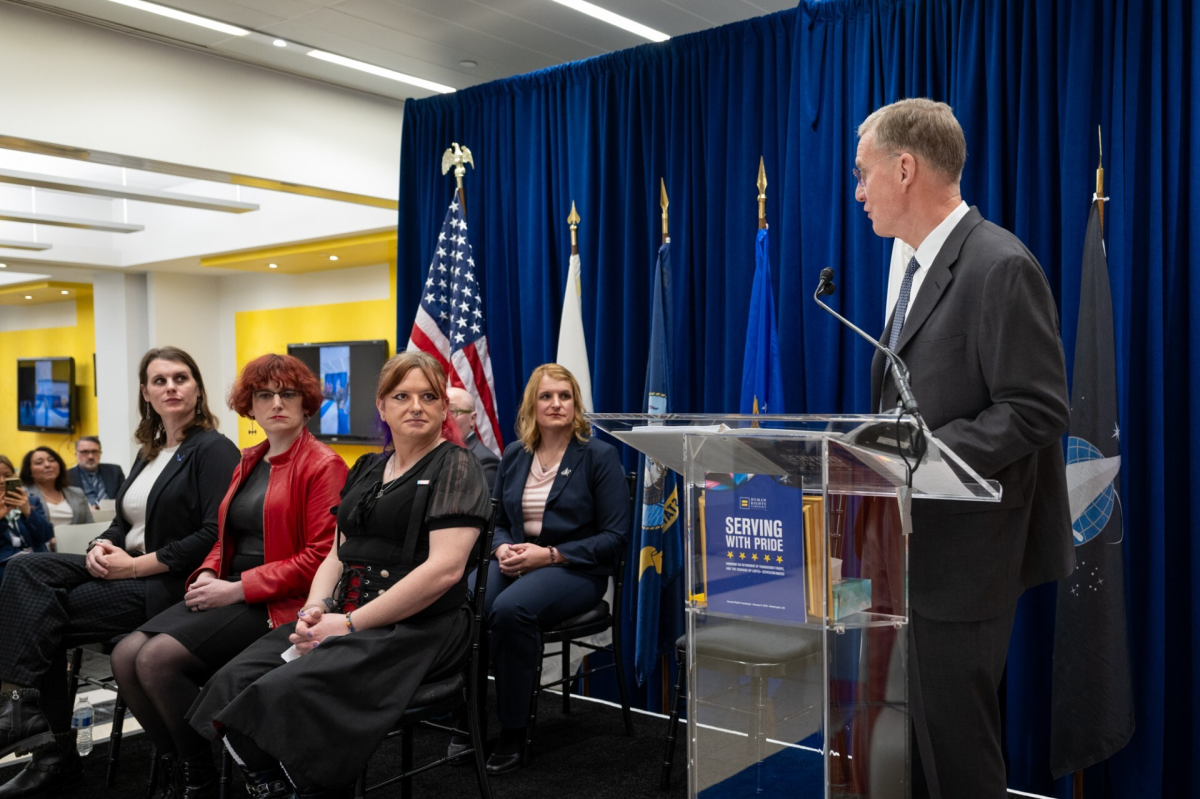
But today, no longer in uniform, he appears in a suit and tie to preside over the ceremony.
In a sit-down with NPR before the event, McChrystal said that he’s served with transgender service members and that he’s here today because it’s the right thing to do.
“I think it’s unfortunate and I think it’s unfair,” he said. “But I think it’s heartening that a number of people would come together to recognize this publicly.”
During the ceremony, the emcee reads out the names and titles of those being honored.
“We gather today to recognize Col. Bree Fram, United States Air Force; Cmdr. Blake Dremann, United States Navy; Lt. Col. Erin Krizek, United States Air Force; Chief Petty Officer Jaida McGuire, United States Coast Guard; and Sgt. 1st Class Cathrine Schmid, United States Army.”
Each of the retirees is then introduced by a loved one and a heartfelt speech.
“Mom,” says Krizek’s daughter Ozzie through tears. “Thank you for serving our country, for leading with heart and spirit and showing me how long hours can still be fun. I love you so much and I’m grateful to be your daughter.”
Each retiree steps up to speak. Their words are filled with pride and a lot of pain.
“Best job ever,” says Krizek. “And I love submarines, and I love sailors. And I miss it dearly.”
Fram is introduced next. Before the ban, she was the highest-ranking transgender member of the U.S. armed forces. An astronautical engineer, she deployed to Iraq and Qatar during the Iraq war and later served as an officer in the United States Space Force.
Fram steps up to the microphone.
“Freedom is not self-sustaining. It is not inevitable. It requires people again and again who are willing to stand up and say: ‘If not me, then who?’ “
And then, she asks people to do just that.
“If you are a trans service member or veteran, I’m going to ask you to do something that may feel uncomfortable. I’m going to ask you to stand for a moment.”
The crowd rustles as several people stand at attention.
“Look around this room,” says Fram. “These are people who deployed, commanded, innovated, fixed what was broken and made the mission happen.”
Under the radar
One of those standing is U.S. Army Maj. Kara Corcoran. Her 17 years of service includes significant combat and leadership experience. Commissioned in 2008 as an infantry officer in the Army, she served two tours in Afghanistan and attended Ranger and Airborne schools.
She is still going through her separation from the military. As NPR previously reported, the first Trump administration gave a small window to any transgender person already serving who wanted to stay in the military: get an official medical diagnosis for gender dysphoria within a few months.
“It was at a very inopportune time because my ex-wife was eight months pregnant with our twin daughters,” Corcoran says. “So I quickly rushed into the troop medical clinic.”
She got her diagnosis in time to keep her job.
After Trump was reelected to his 2nd term, new guidance was put out that listed gender dysphoria as a disqualifying standard for service.
Having obtained the diagnosis as instructed, Corcoran was now identified for removal.
In a memo filed February 2025, Defense Secretary Pete Hegseth gave the following rationale for the reversal:
“The department must ensure it is building ‘one force’ without subgroups defined by anything other than ability or mission adherence. Efforts to split our troops along lines of identity weaken our force and make us vulnerable. Such efforts must not be tolerated or accommodated.”
“It’s systematic oppression,” says Corcoran. “You’re creating unnecessary paperwork for commanders and service members to navigate when it should be the same standard of care in the same process as anybody you would have with a shoulder surgery or a knee surgery.”
“By the way,” Corcoran adds. “For all the surgeries we get, the recovery period is less. And we’re back into the fight – which again stymies their argument.”
“W,” a trans woman serving in the Navy, agrees.
“Say you were born with bad eyesight and you could get Lasik surgery to fix your eyes,” she says. “But there are people spinning a rhetoric that you would be inferior or you would never truly have 20/20 vision because you got surgery and weren’t born with it.”
W has asked to only go by an initial because she’s “stealth” — meaning, she’s not out as trans and knows she’ll lose her job if it’s made public.
“I present very masc because I have a very deep voice,” she says. “I am male at birth. So it’d be very difficult for me to use any pronouns besides him, since I am pre-transition.”
She says only about four of her colleagues know. And those people are helping by asking questions on her behalf so no one suspects anything.
“I will say there is a lot of quiet support for transgender sailors, at least at my command. Like people are trying their best to follow the letter of the law or the exact wording of these orders without completely outing their trans sailors.”
That experience is echoed by a fellow sailor. “A” is a trans man who is also stealth and using an initial for the same reasons as W. But A is stealth in a different way.
“It’s two very different experiences,” says A. “You’ve got people like me who transitioned prior to the military. So there was no change in documents when I joined.”
Though unlike W, he says it’s definitely documented somewhere in his paperwork. But there’s been a similar collective effort from colleagues to keep it quiet since he joined. When he started boot camp, he pulled a sergeant aside to let her know. And she arranged for separate showers for “religious reasons.” Later, when an opportunity came up for flight school, it was obvious that A’s gender identity would be revealed during the drug testing process. So he and his command decided he would opt out of the training to avoid that situation — but on paper, it was due to his ADHD diagnosis.
He’s incredibly grateful for the protection. But also points out that it’s stopping him from being more useful to the Navy.
“I’m completely qualified to serve. I’m good at my job. The Navy has paid for me to be good at this. If we really are preparing for deployment or combat, why can’t we just focus on doing our jobs and doing them to the best of our abilities?”
A focus on gender identity
The scrutiny is spreading to other service populations. In January, NPR’s Tom Bowman obtained a memo from the Pentagon announcing a six-month review of women in ground combat jobs, to ensure what it calls the military “effectiveness” of having several thousand female soldiers and Marines in infantry, armor and artillery.
Before becoming secretary of defense, Pete Hegseth openly opposed women in ground combat units.
“I’m straight up saying we should not have women in combat roles,” he said in a November 2024 podcast hosted by Shawn Ryan. “It hasn’t made us more effective. Hasn’t made us more lethal. Has made fighting more complicated.” But he backtracked during his confirmation hearing last year, saying women can serve in combat roles if they meet male standards.
He repeated this requirement during a September speech at Quantico. Hegseth used the moment to announce the renaming of the Department of Defense as the Department of War, decried “fat generals” and declared that the “woke” military was gone.
“This administration has done a great deal, from Day 1, to remove the social justice, politically correct and toxic ideological garbage that had infected our department, to rip out the politics,” Hegseth said from the stage. “No more identity months, DEI offices, dudes in dresses.”
Hundreds of generals and admirals were ordered from commands all around the world to fly in and attend the speech in person. And a few weeks later, Hegseth released a memo requiring all troops to watch or read it in its entirety.
“My chain of command was pretty outspoken. Saying, like, why are we wasting our time with this?” says A.
A pre-determined outcome
Priya Rashid is a military attorney working with several transgender service members, including some interviewed for this story but cannot speak directly about their cases. She’s had a front row seat to the Pentagon’s push to remove this service population since Trump’s second term began. NPR spoke to Rashid in September when she was helping several clients fight the separation process in the Air Force, which she says gave them no due process and was trying to retroactively recoup the promised retirement benefits. Now, that process has spread to the rest of the branches of the armed forces.
When asked for comment, the Pentagon referred NPR to the gender dysphoria policy on its website.
In the latest directives, military separation boards have been ordered to find unfit and separate any transgender servicemember with a current or past documentation of gender dysphoria. Rashid says this is a unique process for several reasons. The first:
“We know that the outcome is generally predetermined,” says Rashid, pointing out that this is the first time a specific finding has been mandatory in military separation boards, which are supposed to be independent. “The government has really set itself up to purge these people out of our ranks.”
The second unique feature of this process, says Rashid, is that trans servicemembers are not allowed to amend or update any part of their medical records with a doctor’s appointment, unlike the rest of the service. Meaning, if a condition no longer affects someone’s ability to return to work, that can be updated on their paperwork. Corcoran, the Army major, for example, qualified to have gender dysphoria removed from her record because transitioning was the prescribed treatment for it.
“That is common. That is something that is afforded to all soldiers. Whether it is a broken knee, a displaced hip, even things like depression and other types of mental health conditions,” says Rashid. “But the government is choosing to not allow those with gender dysphoria to engage in their medical access rights.”
Rashid is also angry about the administration’s argument that trans service members are burdening the Pentagon with outsized medical costs. She points to the cost of removing them in comparison.
“So when I go to these board members who are the jury, I said, we have spent $22,000 to assemble us all here to discuss somebody’s genitals. Is that what we all wanted to do? Every single one of us, myself included, has combat patches. We’ve all done our time. And yet we’re being brought forth not to talk about birth sex. And that just says something about where we’re putting our money and the cost incurred upon us. These boards are extremely expensive.”
And then there’s the mental and emotional cost. Rashid gets choked up when she discusses the toll this is taking on her clients and their loved ones.
“There have been several suicides in the last year,” she says. “And we believe that they are directly related to the administrative separation plan that these people, the only thing that they had had in their life and known was a military culture and a military life and that was being ripped away from them.”
She pauses to compose herself. She says as a lawyer, she has always believed in the law. And that she had more hope in it at this point last year. But her optimism is waning.
“We always say, you know, just the arc of justice is long. And you know, it’ll come back and things will get corrected and fixed. But there are things that cannot be fixed.”
If not me, then who?
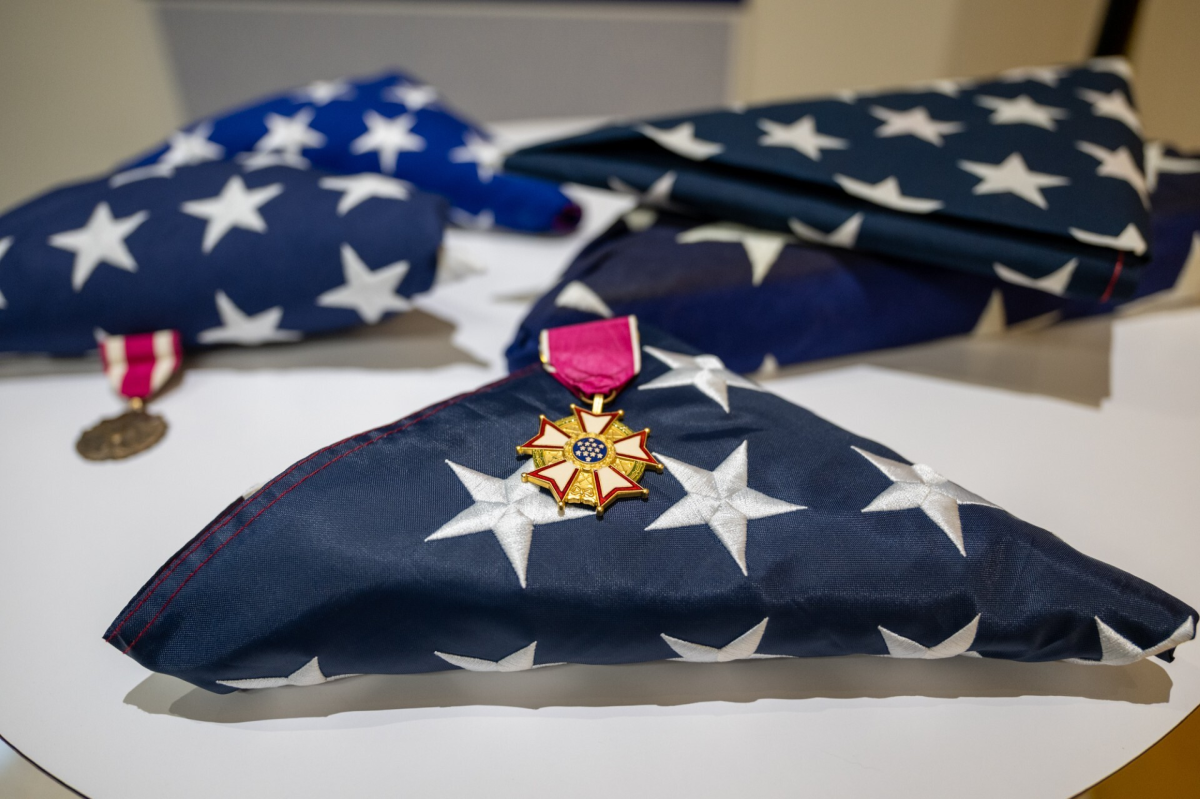
Back at the ceremony, the retirees are being handed their folded flags and doing their final walk-outs.
McChrystal says the separations are a mistake and are affecting mission readiness — one of the very values that Hegseth claims as a priority for his Department of War, amid several simmering global conflicts.
“God forbid, if we had a major war and we need to start calling everybody up,” says McChrystal. “I would hope that we would not suddenly say we are only going to draft people of a certain type because we wouldn’t have enough.”
Fram thanks McChrystal, salutes him and walks through the crowd in silence, holding her flag to her chest.
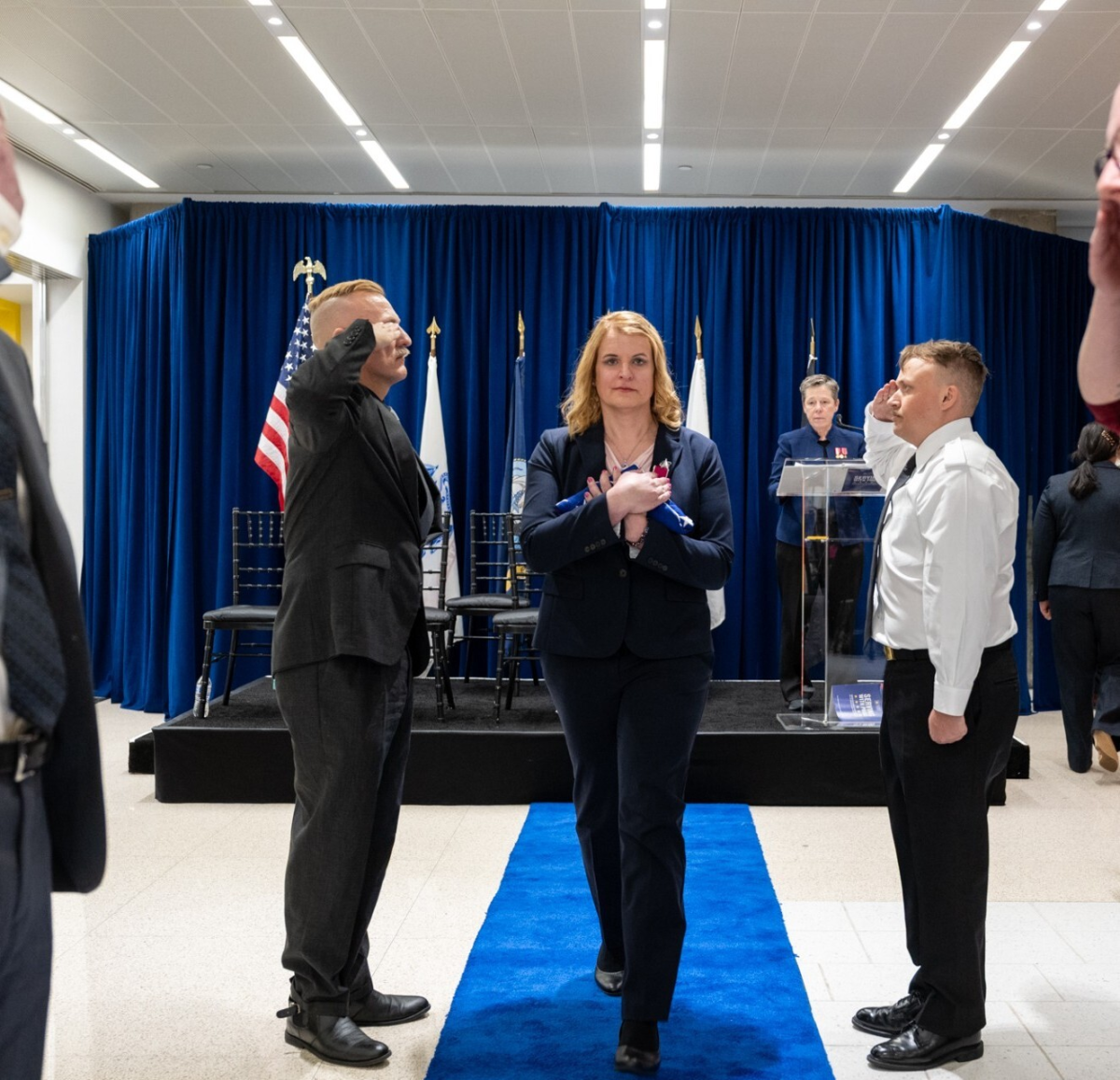
“I think he was a big part of giving people back some of that dignity,” Fram says during a phone call later that week. “When you hear from a four-star general that you matter? I am sure we saved lives that day.”
Fram says while she knows McChrystal isn’t alone in his sentiments, he seems to be one of the few with the courage to speak up right now.
“We have so long been ingrained that you don’t say anything,” she says. “It’s a core piece of our identity as members of the military. But there are barriers and norms that we have crossed, that we have been broken. We need those voices to help change our direction.”
And with that, Fram announced a run for Congress.
Transcript:
SCOTT DETROW, HOST:
It is true that President Trump has now twice banned transgender people from enlisting or serving in the U.S. military. But during the first Trump administration, there was an exception.
LOGAN IRELAND: I did what the service asked me to do. It seemed kind of silly to me, but this was what the checklist was.
DETROW: Logan Ireland became a master sergeant in the U.S. Air Force, and for a while, he benefited from something of a grandfather clause. When the Department of Defense announced its restrictions on trans service members in March of 2019, it allowed troops to continue to serve if, by the time the policy went into effect a month later in April, they had been diagnosed with gender dysphoria by a military doctor. So Ireland rushed to make an appointment and obtained that diagnosis of gender dysphoria, even though…
IRELAND: I’ve never felt necessarily dysphoric about who I am. You know, I’m Logan. I happen to be, you know, born female, but I transitioned to male, and I’m just here living my life and doing my job.
DETROW: The diagnosis went on file. Ireland went back to his job. President Biden’s administration then reversed the ban on transgender troops.
IRELAND: You know, we’re service members first. We all raise our right hand. We wear the same uniform. We deploy over the world. You know, we not only meet but exceed the standards. The only difference is we just happen to be transgender.
DETROW: Then, on the first day of his second term, President Trump again took aim at trans service members with an executive order titled Prioritizing Military Excellence and Readiness. About a month later, people with gender dysphoria were disqualified from military service under a new Defense Department policy. At the time, the DOD said there were over 4,200 people in the military with a diagnosis of gender dysphoria.
IRELAND: It doesn’t seem real. It’s been a feeling of being kicked down, being betrayed.
DETROW: People like Ireland, who once sought an official diagnosis in order to keep their jobs, are now set to lose those jobs because of it.
(SOUNDBITE OF MUSIC)
DETROW: CONSIDER THIS – the Pentagon is now actively removing nearly all remaining openly transgender troops. In the parting messages, they and their allies say it is only hurting, not helping military readiness.
(SOUNDBITE OF MUSIC)
DETROW: From NPR, I’m Scott Detrow.
(SOUNDBITE OF MUSIC)
DETROW: It’s CONSIDER THIS FROM NPR. Tensions with Iran remain high. The heavy presence of U.S. forces in the Caribbean continues, and relations have frayed with key military allies. But under Defense Secretary Pete Hegseth’s anti-DEI push, the Pentagon is still aggressively pursuing separations with transgender service members. One of our producers, NPR’s Lauren Hodges, has been in contact with several of the people affected. Here’s her report.
(APPLAUSE)
LAUREN HODGES, BYLINE: The room applauds as 71-year-old retired four-star general Stanley McChrystal approaches the podium. I can’t believe he’s here, someone whispers. Almost as if he heard them, McChrystal says this into the microphone.
(SOUNDBITE OF ARCHIVED RECORDING)
STANLEY MCCHRYSTAL: First off, we shouldn’t be here.
HODGES: Here is a retirement ceremony for five transgender service members who have been forcibly separated from the military under the Trump administration’s second ban. The event has been organized by the advocacy group the Human Rights Campaign in lieu of a proper Pentagon ceremony.
(SOUNDBITE OF ARCHIVED RECORDING)
MCCHRYSTAL: When these professionals finally decide to retire, it should happen on parade fields, in offices, on the deck of ships, wherever the Space Force goes, I don’t know.
(LAUGHTER)
HODGES: The playful dig at the military’s newest branch gets a laugh from the room full of service members. McChrystal became a household name in the early to mid-2000s during the wars in Iraq and Afghanistan. But today, he’s here in a suit and tie to preside over this ceremony.
(SOUNDBITE OF ARCHIVED RECORDING)
UNIDENTIFIED ANNOUNCER: We gather today to recognize Commander Blake Dremann, United States Navy; Lieutenant Colonel Erin Krizek, United States Air Force; Chief Petty Officer Jaida McGuire, United States Coast Guard; Sergeant First Class Cathrine Schmid, United States Army; Colonel Bree Fram, United States Air Force.
HODGES: Before the ban, Colonel Bree Fram was the highest-ranking transgender member of the U.S. armed forces. An astronautical engineer, she deployed to Iraq and Qatar during the Iraq War and later served as an officer in the U.S. Space Force. Fram steps up to the podium.
(SOUNDBITE OF ARCHIVED RECORDING)
BREE FRAM: Freedom is not self-sustaining. It is not inevitable. It requires people again and again who are willing to stand up and say, if not me, then who?
HODGES: And then she asks people to do just that.
(SOUNDBITE OF ARCHIVED RECORDING)
FRAM: If you are a trans service member or veteran, I’m going to ask you to do something that may feel uncomfortable. I’m going to ask you to stand for a moment.
HODGES: One of those standing is U.S. Army Major Kara Corcoran. Her 17 years of service includes significant combat and leadership experience.
KARA CORCORAN: Platoon leader in the Rakkasans, 3rd Brigade, 101st Airborne Air Assault Division, Combat Outpost Spera, company commander for three years in the 82nd Airborne Division, where I was the jumpmaster.
HODGES: She is still going through her separation from the service. As NPR previously reported, the First Trump administration gave a short window of hope to any transgender person already serving who wanted to keep their job – get an official medical diagnosis for gender dysphoria within a few months.
CORCORAN: So I quickly rushed into the troop medical clinic. They gave me a gender dysphoria diagnosis.
HODGES: After Trump was reelected to his second term, new guidance was put out that listed gender dysphoria as a disqualifying standard for service. Having obtained the diagnosis as instructed, Corcoran was identified for removal, along with thousands of others. The Trump administration has argued that this is necessary for mission readiness, cost issues and unit cohesion. Corcoran pushes back.
CORCORAN: It’s systematic oppression. It should be the same standard of care and the same process as anybody would have with a shoulder surgery or a knee surgery, which, by the way, for all the surgeries we get, the recovery period is less, and we’re back in the fight.
W: It feels like they just want an excuse to kick out all the transgender service members, period.
HODGES: W is a transgender woman who serves in the Navy. She has asked to only go by an initial because she’s, quote, “stealth,” meaning she’s not out as trans. She presents as a man and hasn’t undergone any gender affirmation surgery. She knows she’ll lose her job if it’s made public. W says only about four of her colleagues know, and those people are helping by asking questions on her behalf so no one suspects anything.
W: I will say, there is a lot of quiet support for transgender sailors, at least at my command. Like, people are trying their best to follow the exact wording of these orders without completely outing their trans sailors.
HODGES: That experience is shared by a fellow sailor, A, who is also stealth and using only an initial for the same reasons as W. But, A, a trans man, is stealth in a different way.
A: It’s two very different experiences. You’ve got people like me, who transitioned prior to the military, so there was no change in documents when I joined.
HODGES: When A started boot camp, he pulled a sergeant aside to let her know, and she arranged for separate showers for, quote, “religious reasons.” And when an opportunity came up for flight school, it was obvious that A’s gender identity would be revealed during the drug testing process. So he and his command decided he would opt out of the training to avoid that situation, but on paper, due to his ADHD diagnosis. He’s incredibly grateful for the protection but also points out that it’s stopping him from being more useful to the Navy.
A: If we really are preparing for combat or deployment, why can’t we just focus on doing our jobs and doing them to the best of our ability?
HODGES: A points to moments like Defense Secretary Pete Hegseth requiring all troops to watch or read his September speech at Quantico, Virginia.
(SOUNDBITE OF ARCHIVED RECORDING)
PETE HEGSETH: This administration has done a great deal from Day 1 to remove the social justice, politically correct and toxic ideological garbage that had infected our department, to rip out the politics. No more identity months, DEI offices, dudes in dresses.
HODGES: Hundreds of generals and admirals were ordered from commands all around the world to fly in and attend the speech in person.
A: My chain of command was pretty outspoken, like why are we wasting our time with this?
HODGES: Others point to a waste of not just time, but also money – for instance, on the separation board hearings.
PRIYA RASHID: When I go to these board members who are the jury, I said, we have spent $22,000 to assemble us all here to discuss somebody’s genitals. These boards are extremely expensive.
HODGES: Priya Rashid is a military attorney working with several transgender service members, including in this story, but says she cannot speak directly about their cases. She’s had a front-row seat to the Pentagon’s push to remove the service population since Trump’s second term began. In the latest directives, military separation boards have been ordered to find unfit and separate any transgender service member with a current or past documentation of gender dysphoria.
RASHID: The outcome is generally predetermined, and the government has really set itself up to purge these people out of our ranks.
HODGES: The Pentagon responded to NPR’s request for comment by referring to the gender dysphoria policy guidance on its website.
(SOUNDBITE OF ARCHIVED RECORDING)
UNIDENTIFIED ANNOUNCER: Commander Blake Dremann, United States Navy, departing.
HODGES: Back at the ceremony, the retirees are being handed their folded flags and doing their final walkouts.
(SOUNDBITE OF ARCHIVED RECORDING)
UNIDENTIFIED ANNOUNCER: Colonel Bree Fram, United States Space Force, departing.
HODGES: General McChrystal says the separations are a mistake and that they’re affecting mission readiness, one of the listed values that Secretary Hegseth claims as a priority for his Department of War amidst several simmering global conflicts.
(SOUNDBITE OF ARCHIVED RECORDING)
MCCHRYSTAL: God forbid, if we had a major war and we need to start calling everybody up, I would hope that we would not suddenly say we are only going to draft people of a certain type because we wouldn’t have enough.
HODGES: Lauren Hodges, NPR News, Washington.
(SOUNDBITE OF MUSIC)
DETROW: This episode was produced by Lauren Hodges and Mia Venkat, with audio engineering by Neisha Heinis. It was edited by Andrew Sussman and Patrick Jarenwattananon. Our executive producer is Sami Yenigun.
(SOUNDBITE OF MUSIC)
DETROW: It’s CONSIDER THIS FROM NPR. I’m Scott Detrow.
US military airlifts small reactor as Trump pushes to quickly deploy nuclear power
The Pentagon and the Energy Department have airlifted a small nuclear reactor from California to Utah, demonstrating what they say is potential for the U.S. to quickly deploy nuclear power for military and civilian use.

How Nazgul the wolfdog made his run for Winter Olympic glory in Italy
Nazgul isn't talking, but his owners come clean about how he got loose, got famous, and how they feel now

Court clears way for Louisiana law requiring Ten Commandments in classrooms to take effect
The 5th U.S. Circuit Court of Appeals has cleared the way for a Louisiana law requiring displays of the Ten Commandments in public classrooms to take effect.
From cubicles to kitchens: How empty offices are becoming homes
Many U.S. cities have too many office buildings and not enough homes. Developers are now converting some old offices into apartments and condos, but it's going slowly.
Opinion: The enduring dignity of Jesse Jackson
Rev. Jesse Jackson died this week at age 84. NPR's Scott Simon remembers covering Jackson's 1984 presidential campaign in Mississippi.

A huge study finds a link between cannabis use in teens and psychosis later
Researchers followed more than 400,000 teens until they were adults. It found that those who used marijuana were more likely to develop serious mental illness, as well as depression and anxiety.
