
For filmmaker Chloé Zhao, creative life was never linear
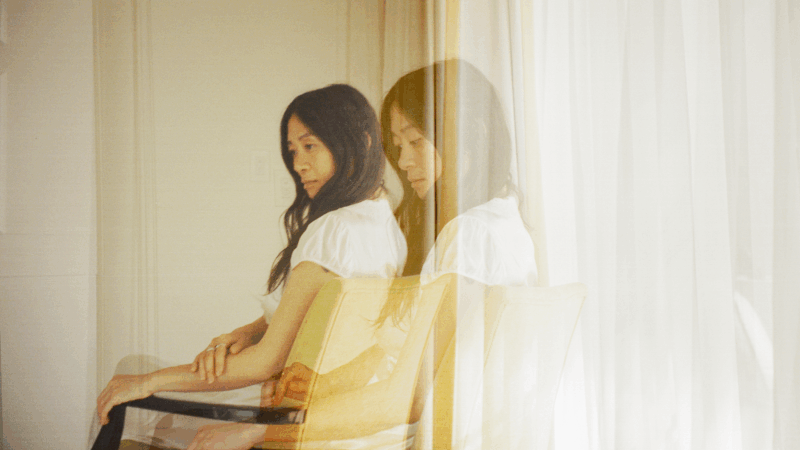
It took a very special kind of spirit to make Hamnet, which is nominated for best picture at this year’s Academy Awards. Chloé Zhao brought her uniquely sensitive, mind-body approach to directing the fictionalized story about how William Shakespeare was inspired to write his masterpiece Hamlet.
Zhao adapted the screenplay from a novel by Maggie O’Farrell, and for directing the film, she’s now nominated for an Oscar. She could make history by becoming the first woman to win the best director award more than once.
Zhao says she believes in ceremonies and rituals, in setting an intention, a mood, a vibration for any event. Before Hamnet premiered at the Toronto International Film Festival last year, she led the audience in a guided meditation and a breathing exercise.
Zhao also likes to loosen up, like she did at a screening of Hamnet in Los Angeles last month, when she got the audience to get up and dance with her to a Rihanna song.
She, her cast and crew had regular dance parties during the production of Hamnet. So for our NPR photo shoot and interview at a Beverly Hills hotel, I invited her to share some music from her playlist. She chose a track she described as “drones and tones.”
Our photographer captured her in her filmy white gown, peeking contemplatively from behind the filmy white curtains of a balcony at the Waldorf Astoria.

Then Zhao and I sat down to talk.
“I had a dream that we were doing this interview,” I told her. “And it started with a photo shoot, and there was a glass globe –”
“No way!” she gasped.
It so happens that on the desk next to us, was a small glass globe — perhaps a paperweight.
I told her that in my dream, she was looking through the globe at some projected images. “We were having fun and it was like we didn’t want it to stop,” I said.
“Oh, well, me and the globe and the lights on the wall: they’re all part of you,” Zhao said. “They’re your inner crystal ball, your inner Chloé.”
“Inner Chloé?” I asked. “What is the inner Chloé like?”
“I don’t know, you tell me,” she said. “Humbly, from my lineage and what I studied is that everything in a dream is a part of our own psyche.”
Dreams and symbols are very much a part of Zhao’s approach to filmmaking, which she describes as a magical and communal experience. She said it’s all part of her directing style.
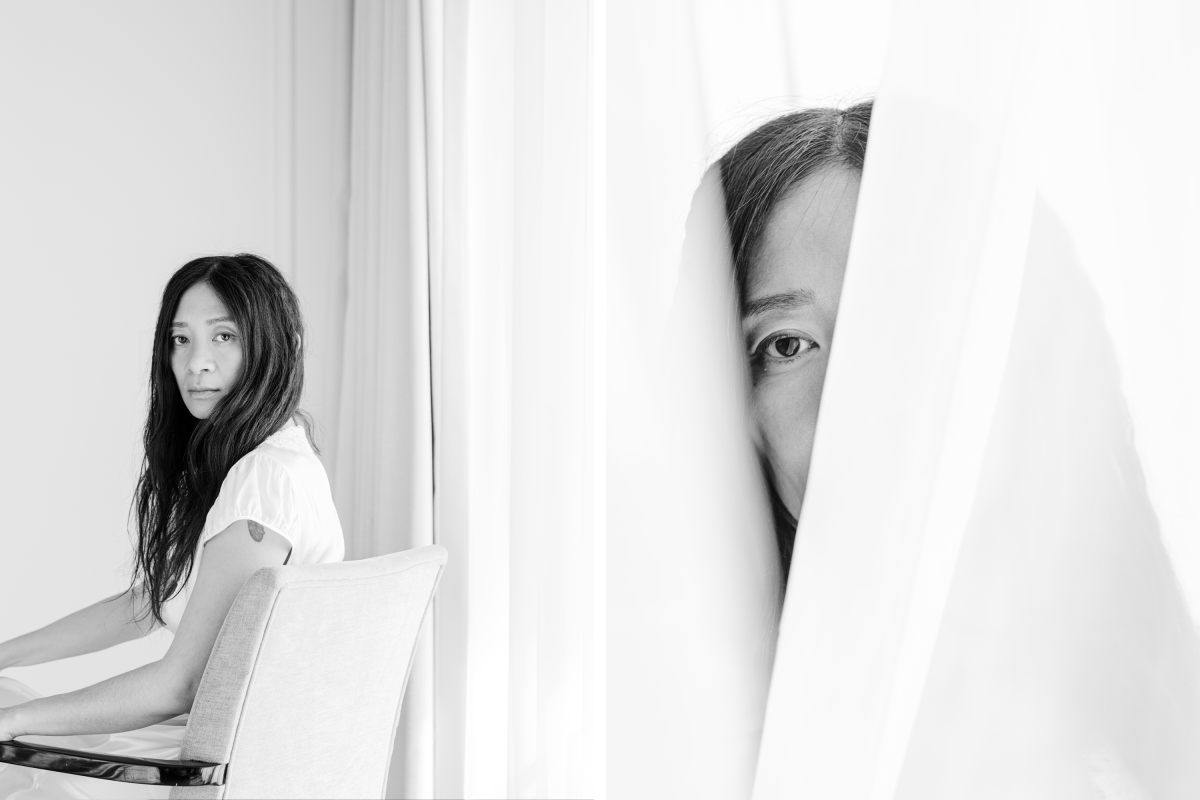
“If you’re captain of any ship, you are not just giving instructions; people are also looking to you energetically as well,” she explained. “Whether it’s calmness, it’s groundedness, it’s feeling safe: then everyone else is going to tune to you.” Zhao says it has taken many years to get to this awareness. Her own journey began 43 years ago in Beijing, where she was born. She moved to the U.S. as a teen, and studied film at New York University where Spike Lee was one of her teachers. She continued honing her craft at the Sundance Institute labs — along with her friend Ryan Coogler and other indie filmmakers.
Over the years, Zhao’s film catalogue has been eclectic — from her indie debut Songs My Brothers Taught Me, set on a Lakota Sioux reservation, to the big-budget Marvel superhero movie Eternals. She got her first best director Oscar in 2021 for the best picture winner Nomadland. Next up is a reboot of Buffy the Vampire Slayer.
“A creative life,” she notes, “is not a linear experience for me.”
Zhao still lingers over the making of Hamnet, a very emotional story about the death of a child. During the production, Zhao says she used somatic and tantric exercises and rituals to open and close shooting days.
She also invited her lead actors Paul Mescal and Jessie Buckley to help her set the mood on set. They danced, they painted, they meditated together.
“She created an atmosphere where everybody who chose to step in to tell this story was there for a reason that was deeply within them,” actress Jessie Buckley told me.
Buckley is a leading contender for this year’s best actress Oscar. She said that to prepare for her very intense role as William Shakespeare’s wife, Zhao asked her to write down her dreams “as a kind of access point, to gently stir the waters of where I was feeling.”
Buckley sent Zhao her writings, and also music she felt was “a tone and texture of that essence.”
That kind of became the ritual of how they worked together, Buckley said. “And not just the cast were moving together, but the crew were and the camera was really creating dynamics and a collective unconscious.”

That was incredibly useful for creating Hamnet — a story about communal grief. Steven Spielberg, who co-produced the film, called Zhao’s empathy her superpower.
“In every glance, in every pause and every touch, in every tear, in every single moment of this film, every choice that Chloé made is evidence of her fearlessness,” Spielberg said when awarding Zhao a Directors Guild of America award. “In Hamnet, Chloé also shows us that there can be life after grief.”
Zhao says it took five years and a midlife crisis for her to develop the emotional tools she used to make Hamnet.
“I hope it could give people a two-hour little ceremony,” she told me. “And in the end, I hope that a point of contact can be made. That means that there’s a heart opening. But it will be painful, right? Because when your heart opens, you feel all the things you usually don’t feel. And then a catharsis can emerge.”
As our interview time came to a close, I told Zhao I have my own little ritual at the end of every interview; I record a few minutes of room tone, the ambient sound of the space we’re in. It’s for production purposes, to smooth out the audio.
Zhao knew just what I meant. She told me a story about her late friend Michael “Wolf” Snyder who was her sound recordist for Nomadland. “He said to me, ‘I don’t always need it, but just so you know, I am going to watch you. And when I tell that you are a little frazzled, I’m going to ask for a room tone … just to give you space.'” she recalled. “‘And if you feel like you need the silence space, you just look at me, nod. I’ll come ask for a room tone.'”
I closed our interview ceremony with that moment of silence, a moment of peace, for director Chloé Zhao.
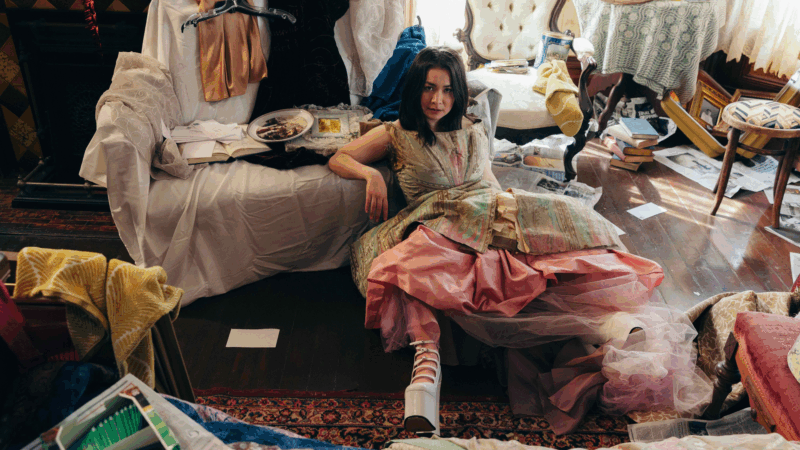
Mitski comes undone
She may be indie rock's queen of precisely rendered emotion, but on Mitski's latest album, Nothing's About to Happen to Me, warped perspectives, questionable motives and possible hauntings abound.
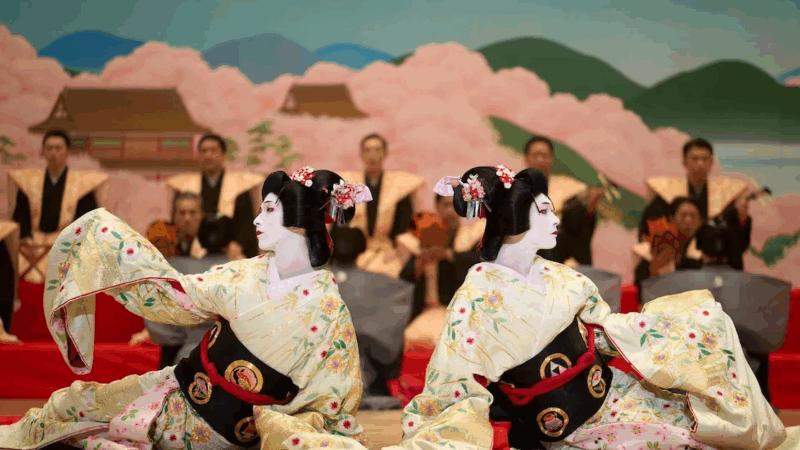
This quiet epic is the top-grossing Japanese live action film of all time
The Oscar-nominated Kokuho tells a compelling story about friendship, the weight of history and the torturous road to becoming a star in Japan's Kabuki theater.

The Live Nation trial could reshape the music industry. Here’s what you need to know
On Tuesday opening statements will begin for the federal antitrust trial against Live Nation, one of the largest entertainment companies in the world.

A new one-a-day-pill holds promise for HIV’s ‘forgotten population’
It's designed to take the place of complicated, multiple drug regimens that many people with HIV need to follow. And it's also beneficial because the HIV virus is always evolving.
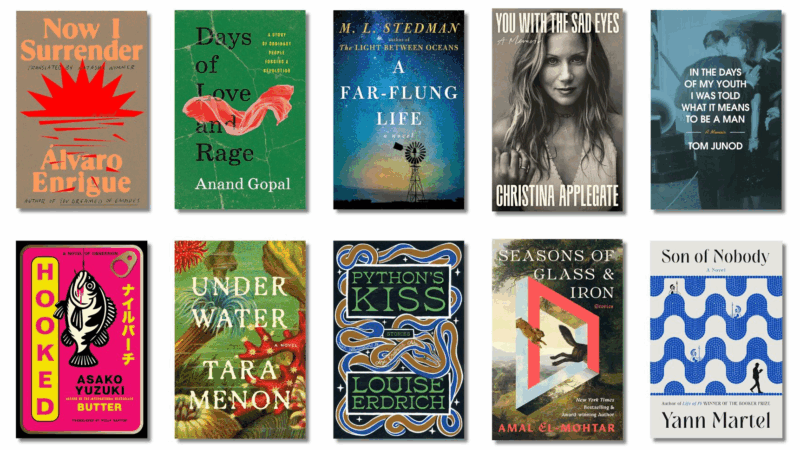
10 new books in March offer mental vacations
March is always a big one for books – this year is no different. We call out a handful of upcoming titles for readers to put on their radars — offering a good alternative to doomscrolling.
Sen. Chris Coons, D-Del., talks about the war with Iran and upcoming war powers vote
NPR's A Martínez asks Delaware Democrat Chris Coons, a member of the Senate Foreign Affairs Committee, about the war with Iran.
