
Flu shot recommendation for kids dropped just as the illness rages
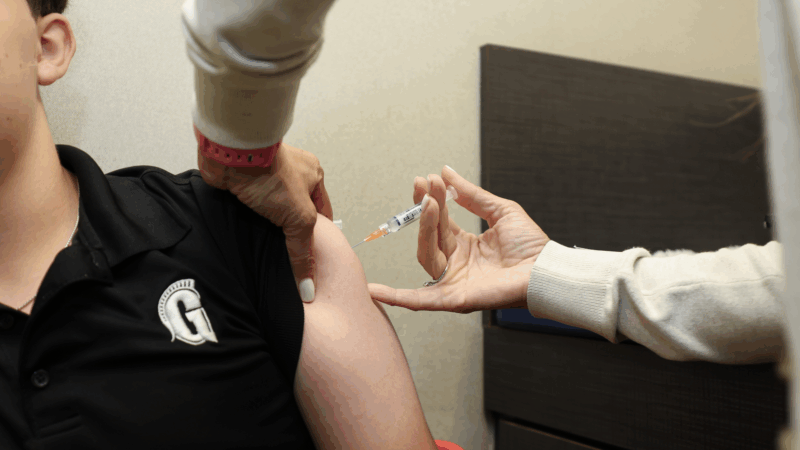
Every year, Dr. Molly O’Shea’s pediatric practices would hold drive-thru clinics in the parking lot to make it as easy as possible for busy parents to quickly get their kids their annual flu and COVID-19 shots.
“We would do big flu clinics. You know, hundreds — literally hundreds – of families would come through at one time and when they’d roll down their windows we would give vaccine,” O’Shea says.
But those days are gone.
“No more drive-thrus. That’s out. We can’t do that anymore,” O’Shea says.
That’s because last spring Health and Human Services Secretary Robert F. Kennedy Jr. dropped the recommendation that all kids routinely get COVID shots. And the Centers for Disease Control and Prevention last week did the same thing for six other childhood immunizations, including the annual flu shot.
Instead, the CDC now says parents should talk to a health care provider about whether the shot is really necessary — what’s called “shared clinical decision-making.”
“The possibility of doing mass vaccination again in that way — I don’t see how that could be possible because the demands of shared decision-making require individual conversations with each family about each child,” says O’Shea, who runs Birmingham Pediatrics + Wellness Center and Campground Pediatrics + Wellness Center outside Detroit. She also serves as a spokesperson for the American Academy of Pediatrics.
“It’s disappointing,” O’Shea says.
Now, there’s a lot of confusion and debate about what the new federal vaccination recommendations really mean. Some legal experts say drive-thru clinics are still possible.
“It certainly isn’t required by the shift to shared clinical decision-making,” says Michelle Mello, a professor of law at Stanford Law School.
So it’s unclear how pediatricians will respond.
But the new recommendations are causing widespread concern among doctors and parents, as well as infectious disease and public health experts.
“I think this is a good example of how confusing shared clinical decision-making is,” says law professor Dorit Reiss, who studies vaccine policies at UC Law, San Francisco.
A challenging flu season heightens concerns
The change for the flu shot is triggering the most immediate alarm — coming during what is one of the worst flu seasons in years.
“Doing that in the middle of a serious influenza season is irresponsible,” says Dr. David Higgins, a pediatrician at the University of Colorado who also represents the American Academy of Pediatrics.
Doctor visits for flu-like illnesses in the U.S. have reached their highest level in nearly 30 years, according to the CDC. Children are among those at greatest risk for serious complications from the flu.
Flu killed at least 288 children last year, according to the CDC. Most of the children who died last season were unvaccinated. Flu has already claimed the lives of at least nine kids this season, according to the CDC.
“We have unfortunately already had pediatric deaths,” Higgins says. “We have had thousands of children hospitalized. And in my own practice I have seen children get incredibly sick from the flu. In the midst of that, changing the recommendation to make it seem as if the recommendation for flu vaccine is really uncertain is dangerous.” Trump administration officials question whether this season is more severe than last year and challenge the benefits of flu shots for kids.
Trump administration downplays severity of this flu season
“Don’t let media histrionics mislead you: this season’s respiratory illness activity has been comparable to last season’s, even with a 15% increase in holiday travel according to TSA screening data,” wrote Acting CDC Director Jim O’Neill in a recent post on X.
The new recommendations “means that pediatric flu vaccination decision should be based on individual patient characteristics as opposed to population-wide factors,” he wrote, adding that a new scientific review of childhood immunizations found “no randomized controlled trials demonstrating reduction of community transmission, hospitalizations, or mortality in children from the pediatric vaccine.”
But independent experts dispute that. They point out that last year’s flu season was also unusually severe and childhood vaccination against the flu is already lagging slightly behind last year. They fear the changes will inevitably lead to fewer parents getting their kids flu shots and more kids getting sick, hospitalized and dying.
“Other countries have gone overdrive, saying: Now is the time to be vaccinated. CDC? Not a word,” says Dr. Demetre Daskalakis, who led the National Center for Immunization and Respiratory Diseases at the CDC until he left the agency last August because of Kennedy’s policies.
Last year the CDC canceled what he says was a highly successful campaign to encourage flu vaccination. “I think this whole thing is dangerous,” he says.

Bill making the Public Service Commission an appointed board is dead for the session
Usually when discussing legislative action, the focus is on what's moving forward. But plenty of bills in a legislature stall or even die. Leaders in the Alabama legislature say a bill involving the Public Service Commission is dead for the session. We get details on that from Todd Stacy, host of Capitol Journal on Alabama Public Television.
Baz Luhrmann will make you fall in love with Elvis Presley
The new movie is made up of footage originally shot in the early 1970s, which Luhrmann found in storage in a Kansas salt mine.

My doctor keeps focusing on my weight. What other health metrics matter more?
Our Real Talk with a Doc columnist explains how to push back if your doctor's obsessed with weight loss. And what other health metrics matter more instead.

Forget the State of the Union. What’s the state of your quiz score?
What's the state of your union, quiz-wise? Find out!

A team of midlife cheerleaders in Ukraine refuses to let war defeat them
Ukrainian women in their 50s and 60s say they've embraced cheerleading as a way to cope with the extreme stress and anxiety of four years of Russia's full-scale invasion.

As the U.S. celebrates its 250th birthday, many Latinos question whether they belong
Many U.S.-born Latinos feel afraid and anxious amid the political rhetoric. Still, others wouldn't miss celebrating their country
