
First, relief. Then, a scramble to get stuff in after U.S. cuts China tariffs for now
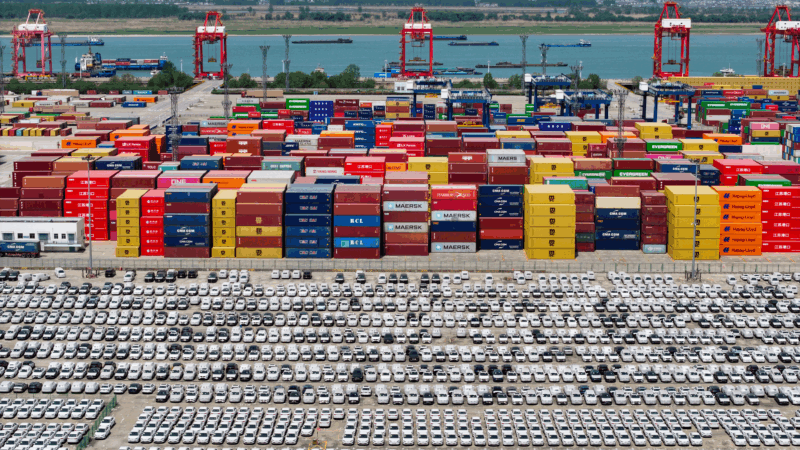
For Bonnie Ross, a clothing importer based in New York, news that the U.S. would temporarily cut tariffs on China came as a relief — at least for a short time.
“It was a great relief for about five minutes,” Ross says.
Then the scramble began.
Ross had pulled two cargo containers off ships in China when the 145% tariffs took effect last month. Now she’s trying to get as much merchandise to the U.S. as she can while the lower tariffs are in place.
Still, she worries that other businesses will be in the same crowded boat.
“Now it’s going to be a rush because everybody wants it out in the next 90 days,” Ross says. “What is going to happen to the freight rates?”
For business owners like Ross, a cut in tariffs on China is welcome news — but it also prolongs uncertainty.
Although the U.S. and China agreed to slash the crippling tariffs they had imposed on each other, the lower import taxes are set to last for only 90 days — with no certainty of what happens afterward.
The tax on Chinese imports to the U.S. will drop from 145% to 30%, while the tariff China charges on U.S. goods will fall from 125% to 10%. The remaining tariffs are still significantly higher than the U.S. was charging before President Trump launched his trade war.
Getting through the next four to six weeks
Jay Foreman, whose Florida-based company makes Tinkertoys, Lincoln Logs and other toys in China, got news of the deal at 4:30 a.m. and immediately called associates in Hong Kong to begin scheduling shipments.
“We’ve been holding everything at the factories and at the ports, because we didn’t want to risk putting anything on containers with a 145% tariff,” Foreman says.
He says a 30% import tax is more manageable, although at least some of that cost will have to be passed on to consumers in the form of higher prices.
“It’s a complete disruption, but obviously I’m sure everybody in the supply chain would agree it’s better than it was,” Foreman says.
Some businesses may race to produce and ship products early for the Christmas holiday season to avoid the risk of higher tariffs in the fall. But that’s also a gamble, Foreman says, because it’s possible the administration will order lower tariffs at the end of the three-month window.
“Right now, I’m just trying to get through the next four to six weeks,” he says. “Whether I double-shift the factories to try to get more produced and out the door before the end of the 90 days, I’ll probably need another three to four weeks to figure that out.”
A temporary deal is still better than none
Jonathan Silva runs a company in Massachusetts that produces high-end board games in China. He has nine containers of merchandise that he has been holding in China that he will now send to the United States.
“We need to get product back on shelves,” Silva says. “I think that we were really getting close to the tipping point of starting to see some shortages.”
“30% — it’s not ideal,” he adds. “I think there will be slight price increases.”

But at least Silva is no longer afraid of going bankrupt.
For now, like other business owners, he’s scrambling to produce and ship more games in time for the holiday shopping season.
“The spigot was turned on,” Silva says. “Everyone is going to be placing orders over the course of the next week, and we’re placing our orders today for what we think we can get done in the next 90 days and try to save as much business for the holidays as we can.”
Whatever the tariff landscape looks like in 90 days, Silva says he’ll be exploring alternatives to manufacturing in China, including other Asian countries and the United States.
“The past 40 days has been the hardest 40 days in all of our business’s life,” he says. “And I’m glad that we’re going to be able to come out of it. But we don’t know what’s going to happen tomorrow. It’s very unpredictable.”
Hundreds of American nurses choose Canada over the U.S. under Trump
More than 1,000 American nurses have successfully applied for licensure in British Columbia since April, a massive increase over prior years.
Trump’s many tariff tools mean consumer prices won’t go down, analysts say
The Supreme Court struck down President Trump's signature tariffs. But the president has other tariff tools, and consumers shouldn't expect cheaper prices anytime soon, economists say.
5 takeaways from Trump’s State of the Union address
President Trump hit familiar notes on immigration and culture in his speech Tuesday night, but he largely underplayed the economic problems that voters say they are most concerned about.
China restricts exports to 40 Japanese entities with ties to military
China on Tuesday restricted exports to 40 Japanese entities it says are contributing to Japan's "remilitarization," in the latest escalation of tensions with Tokyo.
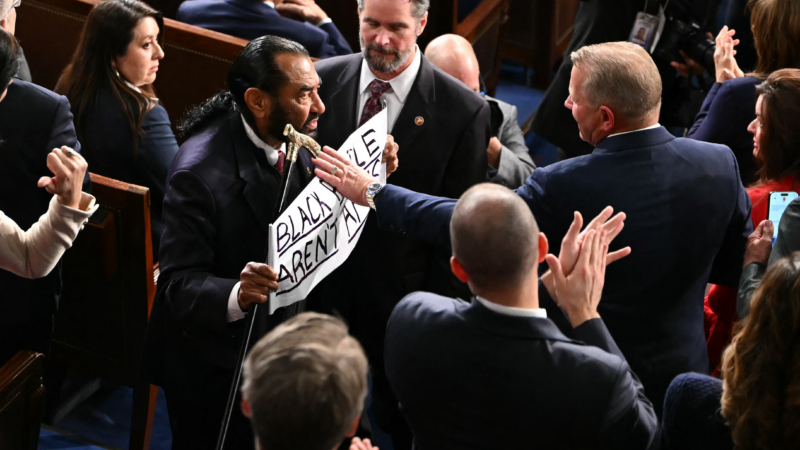
Signs, silence, and skipping: How Democrats protested Trump’s State of the Union
The pushback comes as Democrats enter a midterm year where they hope to make gains in the House and Senate.

Trump honors gold medal-winning men’s hockey team at State of the Union amid controversy
The celebration of the men's team comes after FBI Director Kash Patel's trip to the Games in Milan, and the president's comments about the U.S. women's team, have drawn scrutiny.
