
Feds investigate hospitals over religious exemptions from gender-affirming care

The Trump administration has launched investigations into health systems in what legal experts say is an effort to allow providers to refuse care for transgender patients on religious or moral grounds.
One of the most recent actions by the Department of Health and Human Services, launched in mid-June, targets the University of Michigan Health system over a former employee’s claims that she was fired for requesting a religious exemption from providing gender-affirming care.
An administration release announcing the probe says the Michigan case is the third investigation in “a larger effort to strengthen enforcement of laws protecting conscience and religious exercise” for medical providers, citing federal laws known as the Church Amendments.
The probes are the first time HHS is applying those amendments in a way that would “allow providers to refuse gender-affirming care or to misgender patients,” said Elizabeth Sepper, a professor at the University of Texas at Austin School of Law who studies conscience laws. Those laws, Sepper said, primarily allow objections to performing abortions or sterilizations but “don’t apply to gender-affirming care, by their very own text.”
But religious freedom groups that supported the health worker in the Michigan case, Valerie Kloosterman, say the investigation is a welcome recognition of existing protections for medical professionals to refuse to provide some types of care that conflict with their beliefs.
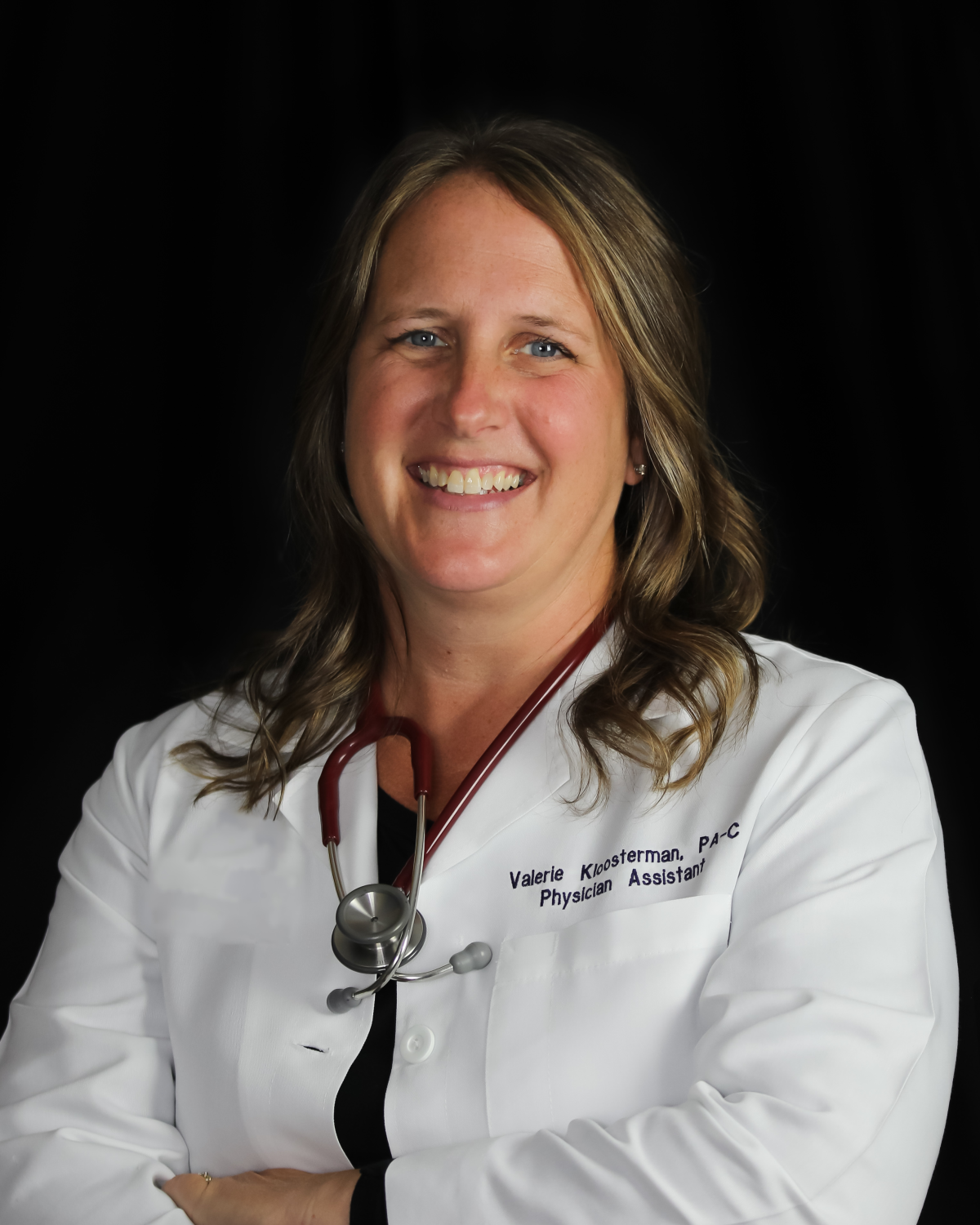
“We are pleased to learn that the Department of Health and Human Services is taking its responsibility seriously to enforce the federal statutes protecting religious health care providers,” said Kloosterman’s attorney Kayla Toney, of the First Liberty Institute, which advocates for religious liberty plaintiffs.
The two other cases the Department of Health and Human Services (HHS) announced in recent months involve ultrasound technicians who “allegedly faced potential termination because they have religious objections to conducting ultrasounds in abortion procedures” ” and a nurse who was fired for asking for a religious exemption to “avoid administering puberty blockers and cross-sex hormones to children,” according to HHS.
The department did not disclose the locations for those investigations.
Sepper said opening investigations into gender-affirming care cases is a new tactic for HHS after federal courts blocked a 2019 effort by the previous Trump administration to broaden conscience rules.
And it sends a message that this administration will “investigate or otherwise harass providers of gender-affirming care, even when that provision is legal in the states where they operate,” said Sam Bagenstos, a general counsel at HHS during the Biden administration and a professor of law at the University of Michigan.
HHS spokesperson Andrew Nixon declined to comment, citing the ongoing investigation.
Michigan case began in 2022
HHS launched its investigation years after Kloosterman filed a lawsuit against her former employer. She started working for Metropolitan Hospital in Caledonia, Michigan, as a physician assistant in 2004. When the hospital merged to become part of University of Michigan Health-West in 2021, Kloosterman took part in a “mandatory diversity training,” according to a federal lawsuit filed in 2022.
In that training and follow-up discussions, the health system “attempted to compel Ms. Kloosterman to pledge, against her sincerely held religious convictions and her medical conscience, that she would speak biology-obscuring pronouns and make referrals for ‘gender transition’ drugs and procedures,” according to the lawsuit. These were, at this point, purely hypotheticals: “No patient ever asked her for a referral for such drugs or procedures, and she never used pronouns contrary to a patient’s wishes,” the suit claimed.
But when Kloosterman requested a religious accommodation, she was “summoned” to a meeting with administrators, who “called her ‘evil’ and a ‘liar,’ mockingly told her that she could not take the Bible or her religious beliefs to work with her, and blamed her for gender dysphoria-related suicides,” according to the lawsuit, which alleges she was fired in August 2021, shortly after the meeting.
The health system denied all allegations in a filing responding to the suit, arguing that it was always clear with Kloosterman that it “‘would not require [her] to personally provide care to a patient” that she was “not comfortable providing, whether that discomfort was due to lack of professional knowledge and experience, or personal, religious, or other ethical beliefs.'”
But when Kloosterman did provide care to patients “she knew to be ‘lesbian, gay, or experiencing gender dysphoria,'” then the health system required all employees to provide medical treatment that was “free from discrimination” in accordance with federal law.
Instead, the health system’s filing said, Kloosterman “admitted that after she began treatment of patients whom she knew to identify as lesbian and other patients who may seek ‘puberty blockers,’ ‘hormone therapy,’ or ‘gender assignment surgery,’ she would then refuse to refer patients to other medical providers” if she objected (emphasis in original).
In April 2024, U.S. District Judge Jane Beckering dismissed Kloosterman’s case, ruling it should be settled in private arbitration.
Kloosterman’s lawyers filed an appeal with the U.S. Court of Appeals for the 6th Circuit. Appellate judges heard oral arguments in the case in February but have not issued a decision.
Civil rights enforcement in health care
The Health and Human Services agency initiated its own investigation under the Church Amendments because it’s “committed to enforcing Federal conscience laws in health care,” said Paula M. Stannard, director of the department’s Office for Civil Rights, in a statement announcing the investigation. “Health care workers should be able to practice both their professions and their faith.”
But the investigation “represents a real expansion beyond what the Trump administration did in the first term, and also in terms of the text of the law,” Sepper said.
The Church Amendments date to the 1970s and allow health care institutions and providers to refuse to participate in abortion or sterilization procedures.
“Some of these also apply to end-of-life care and to physician aid in dying. So they have relatively narrow scope,” Sepper said. “They focus on a set of procedures. They don’t allow health care providers or institutions to refuse to provide all kinds of care based on their religious or moral objections.”
How broadly do conscience protections apply?
There is one broader provision in these laws that “is about the conscience-based decision to perform, or not to perform, a lawful medical procedure,” said Bagenstos, the former HHS general counsel during the Biden administration. But that applies only to recipients of a “grant or contract for biomedical or behavioral research,” he said. So this case is “an extreme stretch of the conscience protections, and probably more than a stretch.”
But Ismail Royer, director of Islam and religious freedom at the Religious Freedom Institute, which filed an amicus brief supporting Kloosterman’s lawsuit, said the Church Amendments are just a few of the laws HHS enforces, along with broad civil rights protections and laws that prohibit discrimination on the basis of religion.
“This is not a case where someone is refusing to treat someone who is LGBT,” Royer said. “This is a case of someone who does not believe that they should be forced to use pronouns that would constitute a lie.”
Other providers are available if a patient’s “feelings are hurt,” he said. “But hurt feelings do not constitute the basis for the government violating our constitutional rights.”
The stakes for a health system are very different in an HHS investigation than in civil suits, Sepper said. The government agency, which oversees the vast majority of health care spending, could decide to strip Medicare and Medicaid funding from the health system. HHS has previously been hesitant to remove funding, Sepper said.
But it would be highly unusual — and possibly illegal — for HHS to actually withhold funding from the health system over a case like this, Bagenstos said.
By taking up these investigations so publicly, Sepper said, HHS is putting health systems “in a very difficult situation.” Antidiscrimination laws require them to treat transgender patients equally, she said. But now the administration is prioritizing “employees that might want to make it more difficult for transgender patients to receive care.”
These investigations are “meant to offer red meat to the anti-LGBT rights movement, to tell them that HHS is squarely on their side,” Sepper said.
This article comes from NPR’s health reporting partnership with Michigan Public and NPR.

Forget the State of the Union. What’s the state of your quiz score?
What's the state of your union, quiz-wise? Find out!

As the U.S. celebrates its 250th birthday, many Latinos question whether they belong
Many U.S.-born Latinos feel afraid and anxious amid the political rhetoric. Still, others wouldn't miss celebrating their country
Nancy Guthrie case: How do families of missing people cope with the uncertainty?
When a loved one goes missing, relatives can feel guilty simply for eating, says Charlie Shunick, whose sister was kidnapped. Shunick now helps others navigate a nightmare "nobody is prepared for."
SNL mocked her as a ‘scary mom.’ In the Senate, Katie Britt is an emerging dealmaker
Sen. Katie Britt, Republican of Alabama, is a budding bipartisan dealmaker. Her latest assignment: helping negotiate changes to immigration enforcement tactics.

A team of midlife cheerleaders in Ukraine refuses to let war defeat them
Ukrainian women in their 50s and 60s say they've embraced cheerleading as a way to cope with the extreme stress and anxiety of four years of Russia's full-scale invasion.
This community festival embraces the joys of a frozen lake — while it still has one
As climate change accelerates, local experts say the date Wisconsin's Lake Mendota freezes over is getting later, making safe conditions for activities that rely on snow and ice harder to predict.
