
Federal judge acknowledges ‘abusive workplace’ in court order

An unnamed federal judge acknowledged to investigators the atmosphere in their court chambers “at times resulted in an abusive workplace” and agreed to take corrective measures after a law clerk complained about bullying, according to an order made public Tuesday by the U.S. Court of Appeals for the Fourth Circuit.
The order described allegations that a judge subjected clerks to harassment, verbal abuse and erratic behavior during the COVID pandemic. For example, the judge expected clerks to give weekly updates on some 200 cases assigned to them and would unleash “a verbal browbeating” if the clerks could not provide exact details “at a moment’s notice,” the order said. On another occasion, the judge banged on the door when a clerk was using a bathroom in chambers, yelling, “that’s my bathroom.”
The order did not identify the judge in question but two sources familiar with the process told NPR it is U.S. District Judge Lydia Kay Griggsby, of Maryland. Judge Griggsby, 58, was appointed by President Biden and confirmed by the Senate for the lifetime tenured job in 2021.
Earlier in her career, Griggsby worked for the U.S. Justice Department and served as counsel to the Senate Select Committee on Ethics. She also worked as the chief counsel for privacy and information policy for the Senate Judiciary Committee.
Judge Griggsby did not respond to a message left on her voicemail in chambers Tuesday afternoon. The circuit executive, James Ishida, also had no immediate response. A spokesperson for the Administrative Office of the U.S. Courts in Washington declined to comment.
The newly published order, signed by Chief Judge Albert Diaz of the U.S. Court of Appeals for the Fourth Circuit, which oversees Maryland, North Carolina, South Carolina, Virginia and West Virginia, concluded that at least some of the allegations “may be explained by poor communication, unstated assumptions or misunderstandings between the judge and the law clerks.”
But Diaz also found a workplace culture where clerks feared asking questions and faced health issues that they attributed to the stress of their clerkships. Both the complaining clerk and that person’s co-clerk accepted transfers out of Judge Griggsby’s chambers before their two-year clerkships ended. One of those clerks served only two-and-a-half months before the transfer.
The investigation by the Fourth Circuit included interviews with a judicial assistant and other former law clerks, who reported that they too experienced some similar problems in chambers. Judge Diaz’s order said that most of them said they would still work for the judge again despite the intense atmosphere.
Judge Diaz’s order said the unnamed judge cooperated fully with the investigation and agreed to several corrective actions, including meeting with a mentor judge to discuss best practices; attending annual workplace training; and informing new clerks they can approach the chief judge with any problems.
An NPR investigation has uncovered problems with the system the judiciary uses to police itself and a widespread fear of retribution. Tens of thousands of employees of the federal courts are not covered by federal anti-discrimination laws and cannot easily sue over misconduct in the office.
Judges exert enormous influence on law clerks, who rely on them for mentoring and lifelong career guidance, tamping down the number of formal complaints against lifetime-tenured jurists.
But some allegations of misconduct are nonetheless breaking into public view. Last week NPR reported on the retirement of Senior Judge Mark Wolf in Boston. Wolf’s announcement to leave the bench coincided with a complaint from one of his former clerks.
The Legal Accountability Project, which seeks to bring more transparency into the clerkship process, filed a formal complaint last year against a different federal judge, Sarah Merriam of the Second Circuit Appeals Court.
Aliza Shatzman, founder of The Legal Accountability Project, said the newly public complaint is “just the latest in a long line of examples of the outrageous lack of accountability for federal judges who abuse their power by mistreating clerks.”
Shatzman pointed out that in this case, both clerks were reassigned years ago – but she said that it took years for the court to open an investigation into possible judicial misconduct, potentially exposing more law clerks to mistreatment.
She also raised doubts that corrective action like workplace training and meetings is sufficient to change the dynamic in a judge’s chambers.
“Because without meaningful discipline, abusive conduct will persist unabated in the federal courts,” Shatzman said.

Colossal Biosciences breeds controversy while trying to revive mammoths
A Texas biotech company is trying to bring mammoths and other extinct creatures back to life. The science is as intriguing as the ethical questions are thorny.
Mundane, magic, maybe both — a new book explores ‘The Writer’s Room’
Why are we captivated by the spaces where where authors write? Katie da Cunha Lewin set out to explore "The Hidden Worlds That Shape the Books We Love."
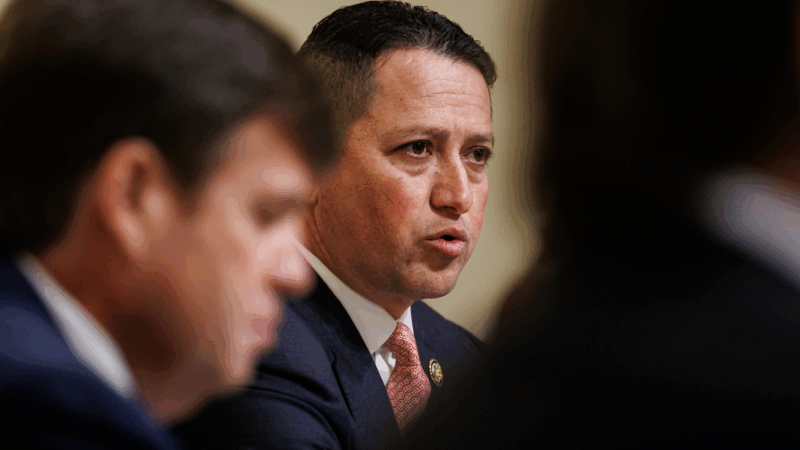
GOP Rep. Tony Gonzales heads to a runoff in Texas amid a new ethics probe in the House
Texas Republican Rep. Tony Gonzales has faced increasing pressure from his party to resign or drop out of his race after allegations of an affair with a staffer.
Satellite images show Iran school strike hit more targets than earlier reported
The images suggest that precision munitions struck other buildings, including a clinic that was also inside the complex.

As live music becomes more inaccessible, most fans stay watching through screens
Now that it is becoming harder and harder to get a ticket to your favorite artist's show, watching indirectly is becoming a popular compromise. What is gained and lost in a tiered concert hierarchy?

Paul McCartney’s decade of transformation: From Beatles breakup to John Lennon’s murder
Man on the Run shows McCartney's effort to define himself outside The Beatles' shadow: "Paul making this documentary was a way of coming to terms with that whole period," says director Morgan Neville.
