
Father of U.S.-based activist sentenced in Hong Kong under national security law
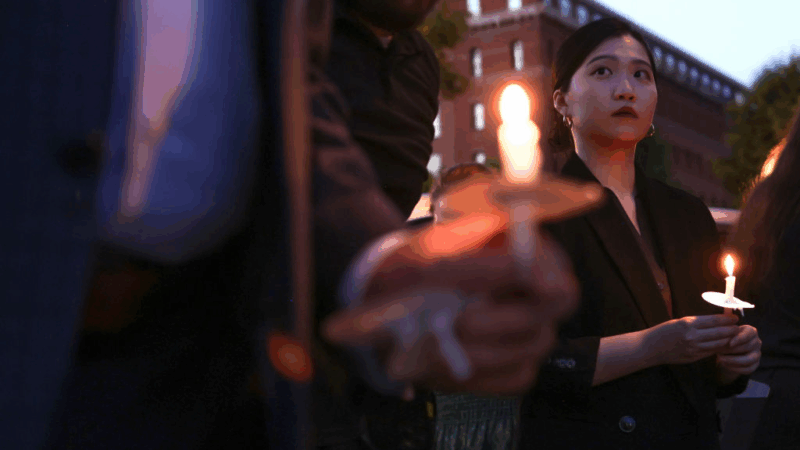
A Hong Kong court on Thursday used the city’s national security law to jail a 69-year old man for eight months, in the first case against a family member of a pro-democracy activist wanted by authorities.
Kwok Yin-sang, the father of exiled pro-democracy activist Anna Kwok, was convicted in early February, found guilty of handling financial assets belonging to his daughter. Anna Kwok, 29, is one of more than two dozen overseas activists who is wanted by Hong Kong authorities, who have issued a bounty of $1 million Hong Kong dollars (approximately $127,000 ) for her arrest.
Anna Kwok lives in Washington, where she is the executive director of the Hong Kong Democracy Council (HKDC), a lobbyist group that raises issues like the plight of the city’s political prisoners and ongoing human rights abuses.
Prosecutors argued that Kwok Yin-sang committed a crime by trying to withdraw funds from an education savings insurance policy that he bought for his daughter when she was 2 years old. Under the domestic national security law, known as Article 23, providing any financial support to “absconders” is a criminal offense. Kwok Yin-sang pleaded not guilty.
In handing down the sentence, the judge said the offense was serious and that Kwok Yin-sang had shown no remorse, according to Hong Kong Free Press.
Anna Kwok, in an interview with NPR, said the charge was “ridiculous” as she had never taken control of the insurance policy, signed any papers or communicated with her father about benefitting financially in any way.
The Hong Kong courts “are constructing a storyline that is essentially using legalese to put my dad in jail, just to target me,” she said.
Kwok’s imprisonment marks the first time a family member of a Hong Kong activist has been jailed in connection with their relatives’ overseas lobbying, marking a new chapter of repression in the once-autonomous financial center. Beijing has long deployed such tactics against overseas Chinese dissidents as well as the Uyghur and Tibetan diaspora, whose family members still within reach of Chinese authorities have been detained, harassed and intimidated.
Kwok Yin-sang’s case also shows authorities’ willingness to utilize their full arsenal of punitive national security legislation to criminalize a wider swath of Hong Kong’s population, according to Eric Lai, a senior fellow at the Georgetown Center for Asian Law. Article 23, which was drafted locally and signed into law in 2024, added new national security offenses that were not covered under the Beijing imposed national security law in 2020.
With Article 23, and Kwok’s case, the Hong Kong government is “legalizing collective punishment,” said Lai. “Punishing peaceful advocates and their affiliates mainly because of… political orientation should never be accepted in civilized and rights-respecting jurisdiction at all.”
David Tobin, a lecturer in East Asian Studies at the University of Sheffield in England, said these tactics have long been deployed by China’s ruling Communist Party, where the “whole security apparatus monitors the family” rather than the individual.
“It deters anyone who doesn’t have the social capital, [foreign] citizenship and finances, and who cannot protect themselves,” he added.
Anna Kwok only became a named activist after the enactment of the national security law, hoping to show others, she said, that they did not have to back down. When Hong Kong residents took to the streets in 2019 to stand against Beijing’s encroachment, Anna Kwok says she was still an anonymous activist, lobbying behind the scenes without the profile of more prominent youth leaders.
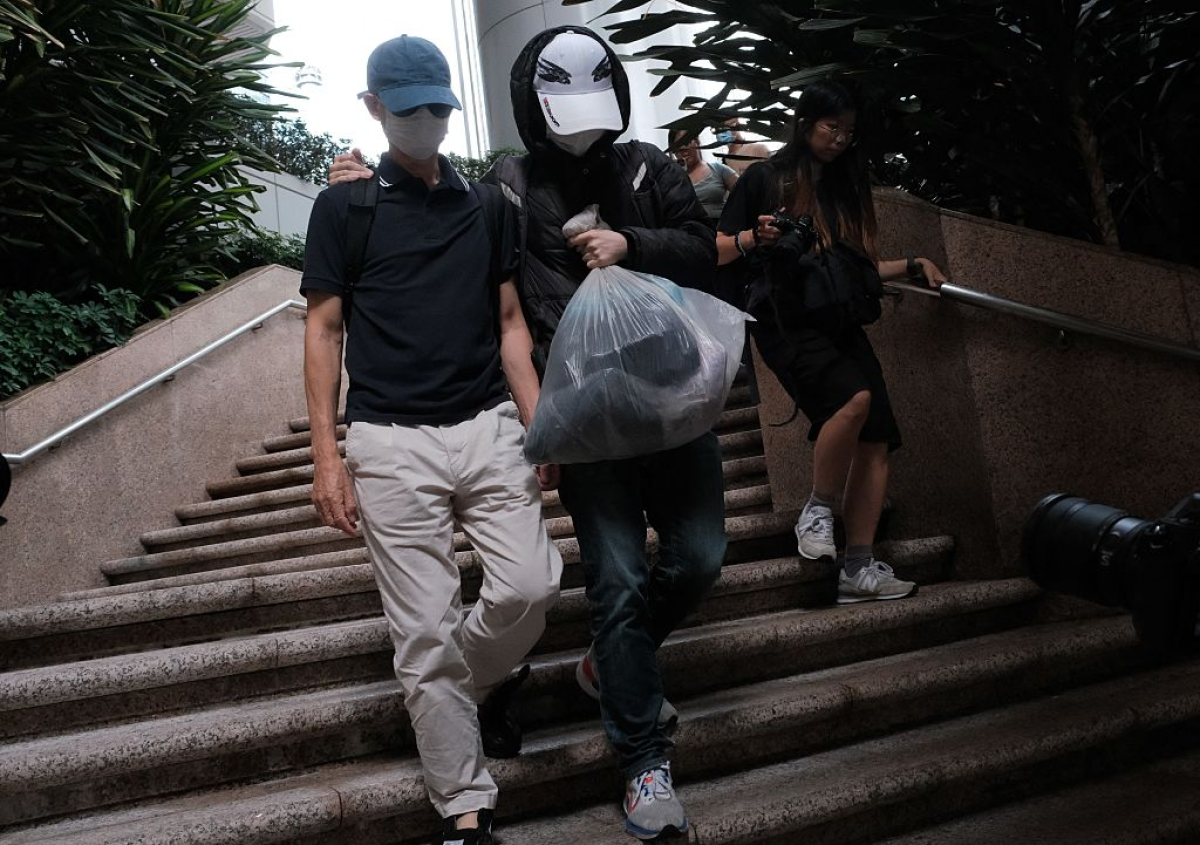
In targeting her family, authorities have isolated Anna Kwok from them, unable to interact with her father, brother or others since police first started investigations in 2023. She said she has had to guess how her father is doing, relying only on public reporting, photos and his gait as he walked into the courtroom, since he obscured his face throughout the trial with a mask.
The experience, she said, has prompted a deep introspection on the sacrifices that come with a life of activism – and has recommitted her to advocacy work.
“They want to use this as a way to silence everyone, as a way to intimidate everyone into not doing anything [and] forgetting about Hong Kong,” Anna Kwok said.
“I do see it as my role to show people that you can still move forward.”

Pentagon shifts toward maintaining ties to Scouting
Months after NPR reported on the Pentagon's efforts to sever ties with Scouting America, efforts to maintain the partnership have new momentum

Why farmers in California are backing a giant solar farm
Many farmers have had to fallow land as a state law comes into effect limiting their access to water. There's now a push to develop some of that land… into solar farms.
‘Get back to integrity’: Oklahoma’s Kevin Stitt on Republicans after Trump
NPR's Steve Inskeep asks Oklahoma Gov. Kevin Stitt about his spat with President Trump, immigration and the future of the Republican Party.
Can’t get a prescription renewed? Here’s how to cope with prior authorizations
These health care hurdles can stand in the way of getting treatment your doctor says you need. Here's what to know about how to deal with them.
Civil rights leaders say the racial progress Jesse Jackson fought for is under threat
Activists say racial progress won by the Rev. Jesse Jackson is under threat, as a new generation of leaders works to preserve hard-fought civil rights gains.

Every business wants your review. What’s with the feedback frenzy?
Customers want to read reviews and businesses need reviews to attract customers. But the constant demand for reviews could be creating a feedback backlash, experts say.
