
Fantasy or faith? One company’s AI-generated Bible content stirs controversy
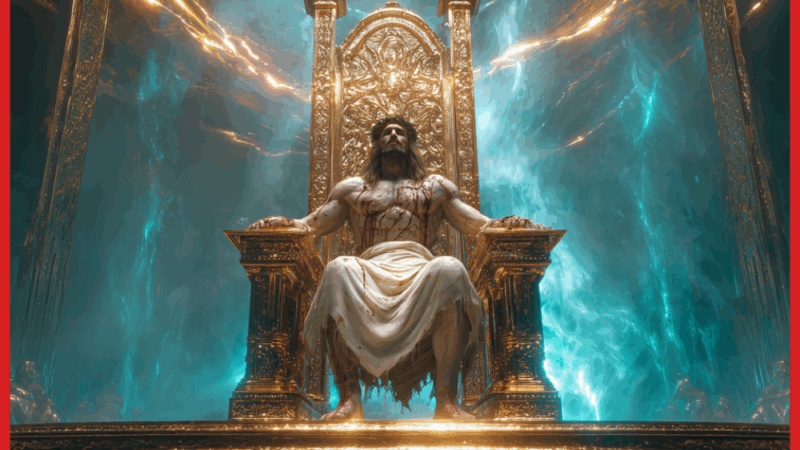
In a recent video posted to the AI Bible’s Youtube channel, buildings crumble and terrified-looking people claw their way through the rubble. Horns blare, and an angel appears floating above the chaos. Then come monsters, including a seven-headed dragon that looks like something out of a Dungeons and Dragons rulebook.
The eight-minute video, which depicts a section of the Book of Revelation, is entirely generated by artificial intelligence tools. At times it feels like a high-budget Hollywood movie, at times more like a scene from a video game, and at times like fantasy art. Despite the somewhat muddled visual styles, viewers seem to like what they see – it has racked up over 750,000 views in the two months since it was posted.
The AI Bible is run by Pray.com, a for-profit company that claims to have “the world’s #1 app for faith and prayer.” The new AI videos are being warmly received online, according to Ryan Beck, Pray’s Chief Technology Officer. The viewers are mostly under 30 and skew male, though not too heavily.
“People are starting to write in on our YouTube, telling us how these stories are really transforming their life, how they’re really impacting them spiritually and mentally,” he said.
But theologians are more skeptical. The videos rob the Bible of its power by reducing it to an action movie, said Brad East, a professor of theology at Abilene Christian University in Texas.
“It’s depressing that anyone would think that approach to biblical material was in any way spiritually edifying,” he said.
Almost from the start, Christianity has been interested in using technology to spread the word. Christians were among the first to pioneer the use of handwritten, bound books over scrolls, and later they used the printing press to mass-produce copies of the Bible.
Today, evangelicals in particular are at the forefront of experimenting with technology, said John Dyer, a professor at Dallas Theological Seminary and author of People of the Screen, which traces the history of Biblical software.
The evangelical movement has become a political force in recent decades, but “underneath the hood is a real kind of can-do American spirit of trying stuff,” he said. To him, the AI Bible is the latest example of that willingness to embrace new ways of storytelling. To evangelicals, “if it connects people to the Bible, it’s a good thing.”.
‘The Marvel Universe of faith’
As tools have grown more powerful, AI-generated videos are increasingly part of the social media scene. Some are generating attention-grabbing “slop” for profit, while others are attempting to reimagine historical figures and events.
Religious personalities are among those resurrected by the machines. One humorous video created by comedian Jon Lajoie depicts Jesus sparring with the Easter Bunny in a podcast. Another envisions Mary as an influencer on her way to Bethlehem (“Don’t forget to like and pray!” she quips).
Pray.com had been experimenting with AI-generated images and videos to illustrate Biblical content for a few years before the latest craze began, said Max Bard, the company’s Vice President for Content.
“AI has given us access to all these tools to bring these stories to life,” he said.
But in recent months, Bard said video generation has reached a tipping point where it’s possible to create lots of high-quality content. The company cranks out about two videos per week. “We’re kind of in this groove where we think we really know what people really enjoy and engage with,” he said.
Bard and his team use a huge variety of AI tools, including ChatGPT to develop concepts and still images of what they want the story to look like. Then they record a video in their office on their phone, mimicking the action.
“The cool thing is, you can take that video, put it into the video generator, and it will turn you into Elijah or one of the prophets or what have you,” he said.
They’ve got over two million followers spread across YouTube, Instagram and TikTok, with some videos getting millions of views.
“The AI Bible is a way to really bring these stories to life in a way that people have never seen before. Think of if we were like, the Marvel Universe of faith,” he said.
A bad thing to pursue
Theological scholars contacted by NPR gave the videos mixed reviews.
“It does have the Marvel, sort of videogame, Marvel aesthetic in all the worst ways,” added Brad East. “Like that’s a bad thing to pursue.”
“I think that the package, the form, situates the Bible as entertainment, as content to be titillated or amused by… Rather than a word that is a divine revelation intended to transform our lives and bring them into accordance with truth, with God and with one another,” said Jeffrey Bilbro, a professor of English and Grove City College in Pennsylvania who has written on Christians’ relationship to AI.
Others are more receptive to the videos.
“I’m always a fan of anything that drives interest in the story of the Holy Scripture or in the Bible,” said Rev. Dr. Paul Hoffman, a professor in the Department of Biblical and Religious Studies at Samford University in Birmingham, Alabama. Hoffman did however wonder about the decision to animate some of the more difficult-to-interpret parts of the Bible, like the Book of Revelation, and the story of the Nephilim in the Old Testament.

“Some of what they’re doing is taking things that are, within Christian scholarship, debatable,” he said. “Maybe that’s part of the marketing plan.”
The medium matters, East said. For Christians, the Bible is the word of God, and turning that word into short-form viral content robs it of its power. He also pointed out that many of the most important stories don’t fit the epic plotlines the AI Bible likes to highlight:
“When do we get simply watching Jesus say, turn the other cheek? That’s not going to be much of an action movie trailer.”
Pray.com’s Ryan Beck said this isn’t AI slop. Care and time is put into each video. The images may be AI, but the voices are real actors, and the music is composed especially for each episode. A pastor reads the scripts, which often closely follow the biblical verses they describe. At the same time he said the content is meant as “edutainment”.
“We want to gear on the side of entertainment,” he said, “because we think especially biblical content is over-indexed to educational.”
House Dem. Leader Jeffries responds to air strikes on Iran by U.S. and Israel
NPR's Emily Kwong speaks to House Minority Leader Hakeem Jeffries (D-NY), who is still calling for a vote on a war powers resolution following a wave of U.S.- and Israel-led airstrikes on Iran.
Iran’s Ayatollah Ali Khamenei is killed in Israeli strike, ending 36-year iron rule
Khamenei, the Islamic Republic's second supreme leader, has been killed. He had held power since 1989, guiding Iran through difficult times — and overseeing the violent suppression of dissent.

Found: The 19th century silent film that first captured a robot attack
A newly rediscovered 1897 short by famed French filmmaker Georges Méliès is being hailed as the first-ever depiction of a robot in cinema.
‘One year of failure.’ The Lancet slams RFK Jr.’s first year as health chief
In a scathing review, the top US medical journal's editorial board warned that the "destruction that Kennedy has wrought in 1 in office might take generations to repair."
Here’s how world leaders are reacting to the US-Israel strikes on Iran
Several leaders voiced support for the operation – but most, including those who stopped short of condemning it, called for restraint moving forward.

How could the U.S. strikes in Iran affect the world’s oil supply?
Despite sanctions, Iran is one of the world's major oil producers, with much of its crude exported to China.
