
Etsy sellers are being hit hard by tariffs and the end of the de minimis rule
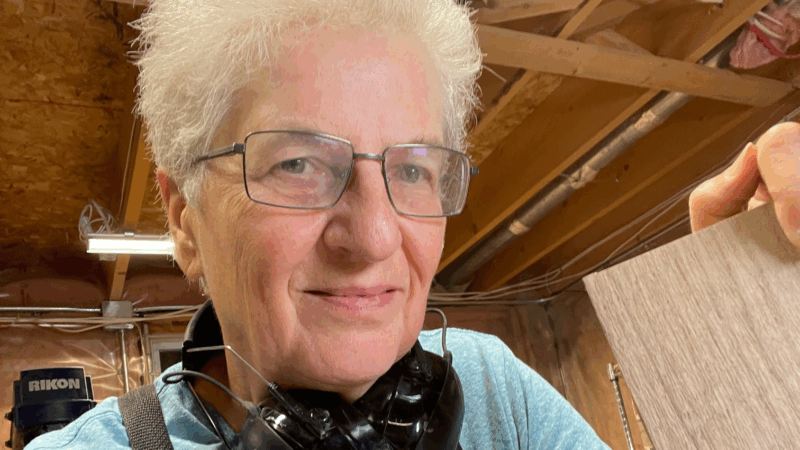
After Doris Kochanek retired in her Ottawa, Canada, suburb, her friends and family convinced her to start an Etsy shop, using her woodworking skills to make walnut candle holders and other housewares. Her prices often range from around $30 to $150.
“My shop is four years old. This year, I’ll probably most likely hit 1,000 sales,” Kochanek says. “So, what started as a small retirement hobby has actually become a pretty significant business.”
Many of those sales have been to U.S. customers. In Canada, Etsy vendors such as Kochanek benefit from close proximity to most of the U.S. population, a free trade agreement and — until last week — a generous U.S. tax exemption called de minimis, which waived tariffs and duties on virtually any shipments valued up to $800. That allowed Kochanek to ship products from her basement workshop to customers across the U.S. with minimal paperwork and cost.
“The U.S. has essentially been an extension of our domestic market,” Kochanek says. On Etsy, she adds, “most Canadian sellers had exposure of about 90% or so to the U.S. market.”
But then President Trump put an abrupt end to de minimis on worldwide shipments to the U.S., exposing all imports to tariffs based on their country of origin, with narrow exceptions for things like gifts and letters. The change came after discount retailers such as Temu and Shein enjoyed explosive growth by using de minimis to ship cheap goods directly to Americans.
“When this program started, it was kind of assumed, ‘Hey, there’s not that many international cross-border parcels. This will be hard to track. Let’s create this exemption,'” says Sean Henry, CEO and co-founder of Stord, a business logistics company.
But then came online shopping, and the value of de minimis processing rose “to over $65 billion a year as of the most recent year,” Henry adds.
While past tariffs have often targeted industries (e.g., carmakers) or commodities (e.g., steel), the axing of de minimis in combination with higher tariffs is hitting small businesses. In Canada, for instance, Kochanek and other Etsy sellers suddenly face the threat of 35% tariffs on handmade jewelry and knickknacks.
“My very first reaction was, ‘No, that can’t possibly be,'” Kochanek says of the end of de minimis.
The end of de minimis changes the math for retailers
Until this year, the U.S. was unique in offering international retailers a large and well-resourced customer base with few taxes and hurdles. The nation stands alone among the 38 countries in the Organisation for Economic Co-operation and Development in not having a value-added tax (VAT).
“In most countries, that’s their main revenue source rather than income taxes,” says Ernie Tedeschi, director of economics at the Budget Lab at Yale University. For those nations, a high de minimis exception would cut into their tax revenue.
“Whereas for us, we didn’t have high tariffs in most recent history — plus we don’t have a national sales tax,” Tedeschi says. “So it was not as big of a trade-off for us to have such a high de minimis exception.”
The result for retailers in Canada and other countries, says Cindy Baldassi, an Etsy vendor in Calgary, Alberta, is that “the United States has been one of the easiest places to sell to.”
Baldassi, who runs CindyLouWho2, a small jewelry business, and who works as an e-commerce consultant for microbusinesses, says that when she shipped her handmade jewelry to the U.S. under de minimis, she didn’t have to think about prepaying customs and broker fees or filling out multiple fields on a form.
“I think that has in part led to so many people depending on American business to keep their small businesses running online,” she says. “It’s not the only reason, but it’s certainly one of them.”
With de minimis now gone in the U.S., Baldassi and Kochanek say, vendors are scrambling to adjust.
Increasingly, sellers in Canada are seeking to use tariff exemptions available under the U.S.-Mexico-Canada Agreement (USMCA). Many products can still avoid tariffs if they’re certified to have originated within those three countries.
But the requirements are onerous and time-consuming.
“It’s an absolute nightmare,” Kochanek says — a term she repeats several times to describe the paperwork needed to document the original source of her materials. Her USMCA certification has since been approved, but other vendors are in limbo.

“Some people feel their businesses are over, especially those who are using yarn and fabric, very little of which is going to be made in Canada or even in the United States,” Baldassi says.
It’s not only Etsy vendors in Canada: Some sellers in the U.S. also say they’re in dire straits, as Trump’s tariffs have made it more difficult and expensive to import supplies they’ve sourced from China and other countries.
What options do retailers have?
Online retailers outside the U.S. now have three main options for handling tariffs when they ship to the U.S., according to Olu Sonola, who leads U.S. economic research at Fitch Ratings.
Sellers who prepay the tariffs could bake tariff costs into their list prices; others could add the tariff as a line item on their checkout page, alongside shipping and handling fees.
“A third option — likely far less common — is for the seller to ship the product but designate the buyer to pay duties directly to CBP [Customs and Border Protection] or through the carrier (e.g., FedEx or DHL),” he wrote in an email. In that scenario, a customer in the U.S. could learn about additional fees after approving the sales transaction.
That scenario might not be common, but it’s getting attention: U.S. customers are taking to Reddit to share stories of being hit with unexpected duties for foreign items handled by UPS, DHL and others.
“No consumer I’ve met has ever heard of de minimis,” says Henry, of Stord. But, he adds, “consumers have all of a sudden gotten more accustomed to getting packages on their doorstep directly from China, from Mexico, from Canada, from other markets.”
With the rule that enabled that explosive growth no longer in effect, Sonola says, the transition is going to take time as the retail market figures out the most efficient way to handle tariffs under a new set of rules. He predicts it could reshape online shopping trends and bring higher prices.
“Countries facing high tariff rates, such as China, could see transaction volumes drop sharply — potentially by 50% or more,” he says.
Trump’s tariffs are being challenged by lawsuits, and his administration is asking the Supreme Court to affirm his power to impose them. But the tariffs remain in effect and likely will for the next few years, Tedeschi says, noting that the administration “has a few alternative authorities that it can and probably will draw on.”
Baldassi says she feels for vendors outside the U.S. who have worked to meet Etsy’s standards and develop a business and who are now facing the prospect of it collapsing.
“I know plenty of people for whom selling online is their full-time job. It is all of their income,” Baldassi says. “I know people whose spouses have quit — to work with them at home and run businesses — so that their whole family is supported by their online business.”
She also has a message for American online shoppers.
“We still want to sell to you,” Baldassi says. “We may not be able to do it right now very easily because the systems are not yet in place on so many levels. But we are trying and we will hope to get back to you soon.”

GOP Rep. Tony Gonzales of Texas ends reelection bid after admitting to affair with aide
Republican Rep. Tony Gonzales of Texas said late Thursday he was withdrawing from his reelection race, after having admitted an affair with a former staff member.
Pentagon labels AI company Anthropic a supply chain risk
The Pentagon said in a statement Thursday that it has "officially informed Anthropic leadership the company and its products are deemed a supply chain risk, effective immediately."
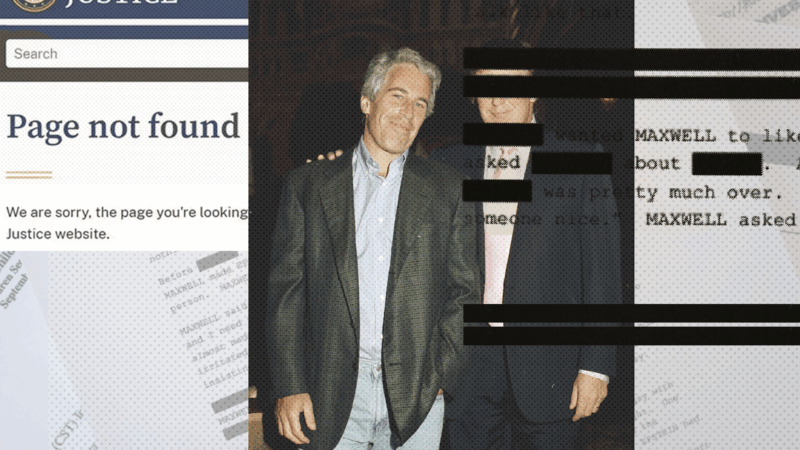
Justice Department publishes some missing Epstein files related to Trump
The Justice Department has published additional Epstein files related to allegations that President Trump sexually abused a minor after an NPR investigation found dozens of pages were withheld.
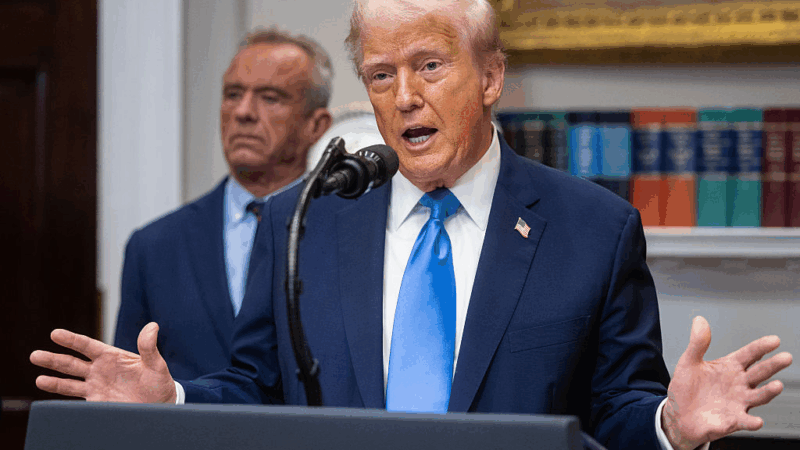
Pregnant women in ERs took less Tylenol after Trump autism warning
A study in The Lancet finds that pregnant women in emergency rooms used less Tylenol after President Trump said it could raise their babies' risk of autism. Scientists say there is no proven link.

Mixed reactions, including relief, greet news the Coast Guard is buying BSC campus
The U.S. Coast Guard will take possession of the 192-acre campus in the northeast corner of Birmingham’s Bush Hills Neighborhood and will begin work to refit it as a training center for officers and enlisted personnel.

What you need to know about Sen. Markwayne Mullin, Trump’s new pick to lead DHS
President Trump announced Thursday that Sen. Markwayne Mullin, R-Okla., is his pick to replace Kristi Noem as the head of the Department of Homeland Security.
