
Electric vehicles had a bumpy road in 2025 — and one pleasant surprise
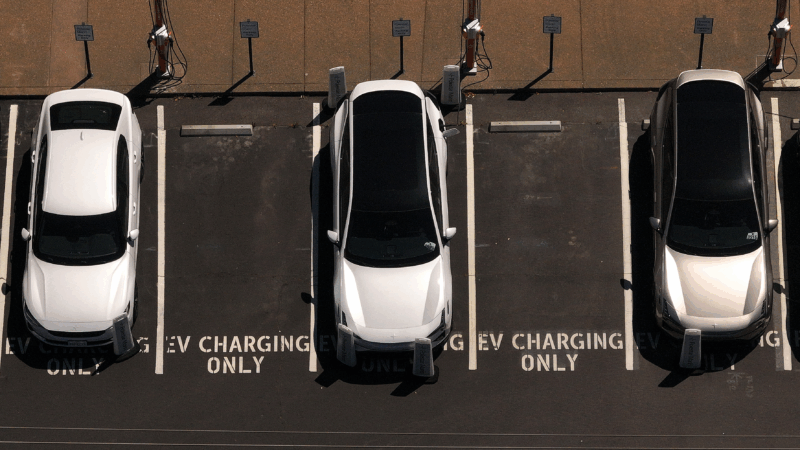
The electric vehicle industry has taken a pummeling this year. The Trump administration, as expected, reversed a whole suite of federal policies that promoted or encouraged EVs.
California’s ability to require the sale of EVs: gone. Federal rules about emissions and fuel economy — being rewritten. Federal penalties for car companies that sell too many gas guzzlers: zeroed out. The $7,500 federal tax credit? Kaput.
Meanwhile, automakers delayed or canceled a host of unprofitable EV plans.
The all-electric Ram 1500 REV was canceled before a single one was built. The all-electric Ford Lightning was discontinued despite some glowing reviews. (Both pickups will be replaced with extended-range electric vehicles, which come with both a big battery and a backup gas tank.)
The buzzy Volkswagen Buzz is still available in other countries, but no longer in the U.S. The GM Brightdrop van is no more. The list goes on.
As for sales? “It’s a roller-coaster ride,” says Stephanie Valdez Streaty, who monitors EVs for the data and services company Cox Automotive.
Sales spiked in August and September, during the last weeks that the federal tax credit was available, as buyers rushed to take advantage of the expiring opportunity. Cox estimated EVs hit an all-time high of 11.6% of the new vehicle market in September. Then sales crashed by 50% in October.
But here’s a twist.
“Among U.S. shoppers who are in [the] market for new vehicles, the interest in electric vehicles actually ticked up a bit after the tax credit went away,” says Brent Gruber, who runs the EV practice at consumer insights company J.D. Power.
It’s the EV story you might not have heard this year: Despite the political and product planning whiplash, consumer appetite for EVs has been on a very smooth ride.
Overall, about 25% of new car shoppers are very interested in buying an EV, according to J.D. Power surveys. And with minor fluctuations, “it’s held pretty consistent,” Gruber says, despite what he calls the “turbulence” of this year.
“There’s still a tremendous amount of interest,” he says. “And from an EV owner perspective, we continue to see high levels of satisfaction once people do get into those products.” In fact, EV owners are 94% likely to repurchase another EV for their next vehicle, he says.
BJ Birtwell runs the Electrify Expo, a traveling festival dedicated to EVs. He says EVs have suffered from being politicized, with a lot of right-of-center Americans rejecting them out of hand.
“There’s still a cloud of skepticism around EVs across some parts of the country,” he says. But put a skeptic behind the wheel of a new EV, he says, “and I’ll tell you what I see: Smiles for miles.” Test drives reveal the cars are fun to drive, he says, and a little research can show that charging at home is easier and cheaper than they thought.
An American slowdown
Still, while Americans remain interested in EVs, it’s undeniable that battery-powered vehicles are taking off more slowly than industry execs expected a few years ago. That’s not just because of the policy reversal; it’s also because of market realities. For example, while charging might be easy at home, it’s a hassle for apartment dwellers who don’t have that option. Meanwhile, vehicle prices — a challenge for the entire auto market — are even higher for EVs. Lower fuel and maintenance costs can’t always overcome that up-front sticker shock, even for people who are hypothetically interested in buying.
This slowdown will have global consequences for the environment and for human beings: It locks in higher carbon emissions and air pollution for years to come.
The legacy automakers, of course, have lost billions of dollars on the EV designs they’ve canceled or postponed. But the delay hurts more than just the big-name auto brands. A whole network of suppliers sell parts to the automakers, and they also bear the burden when plans change.
Ken O’Trakoun of RPM Partners works with auto suppliers in distress. “The whiplash,” he says, “between demand going up and demand receding, it has impacted a number of suppliers.” They made investments in factories to supply automakers for vehicles that either aren’t being made, or are being made at much lower volumes. “It’s pretty disruptive.”
The “ripple effect” from those suppliers “creates impacts on jobs,” Valdez-Streaty notes.
Automakers, too, have laid off or reassigned employees away from battery plants and EV production lines as part of their adjusted timelines.
A clear global trend
But while automakers are slowing their EV plans down significantly, they’re not giving up on them, either.
Partly that’s because of the enduring consumer interest; as long as there’s a market, the automakers want to serve it. And partly that’s because the automakers are all global companies. They want to be able to sell to the rest of the world, too.
“On a global scale, internal combustion engine cars already peaked back, like, eight or nine years ago,” says Huiling Zhou, U.S. EV analyst for the research group BloombergNEF.
About one in four cars sold worldwide this year was electric, Zhou says — driven by China’s remarkably fast embrace of those vehicles. And China, increasingly, is exporting cars around the world.
That means that the global market for cars that run on gas or diesel is shrinking, while the market for battery-powered cars is expanding — and China is dominating it.
If automakers want to compete around the world, they simply can’t afford to get off the EV roller coaster.
With a win over Sweden, the U.S. men’s hockey team will play for an Olympic medal
A thrilling overtime goal by defenseman Quinn Hughes puts Team USA through to a semifinal game against Slovakia. On the other side of the bracket, Canada had its own close call, but moves on to face Finland.
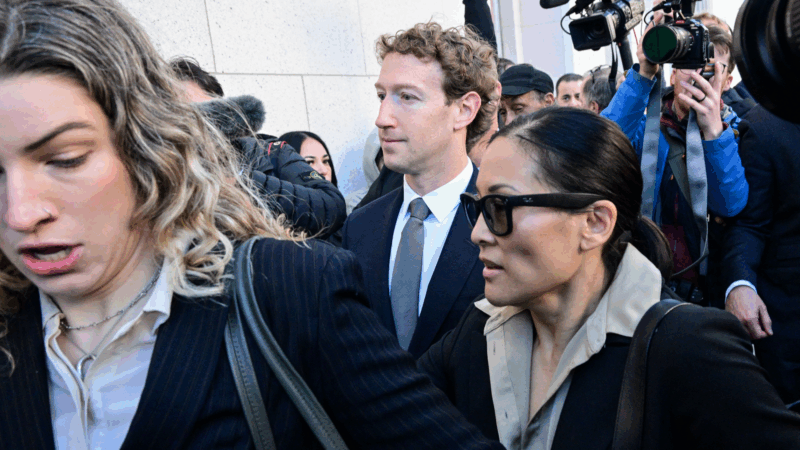
Zuckerberg grilled about Meta’s strategy to target ‘teens’ and ‘tweens’
The billionaire tech mogul's testimony was part of a landmark social media addiction trial in Los Angeles. The jury's verdict in the case could shape how some 1,600 other pending cases from families and school districts are resolved.
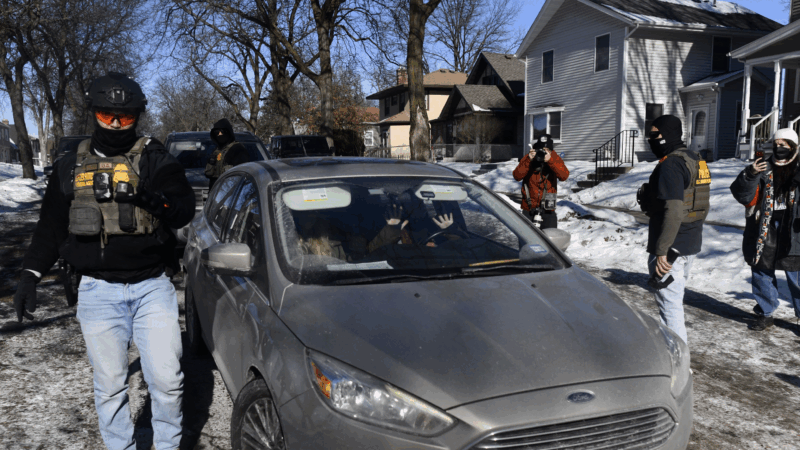
The Trump administration is increasingly trying to criminalize observing ICE
ICE officers often tell people tracking and watching them that they are breaking federal law in doing so, but legal experts say the vast majority of observers are exercising their constitutional rights.

8 backcountry skiers found dead and 1 still missing after California avalanche
Authorities say the bodies of eight backcountry skiers have been found and one remains missing after an avalanche near Lake Tahoe in California. Six others were found alive.
FDA reverses course on Moderna flu shot
The Food and Drug Administration's about-face comes a little more than a week after the agency refused to consider the company's application to market the new kind of influenza vaccine.
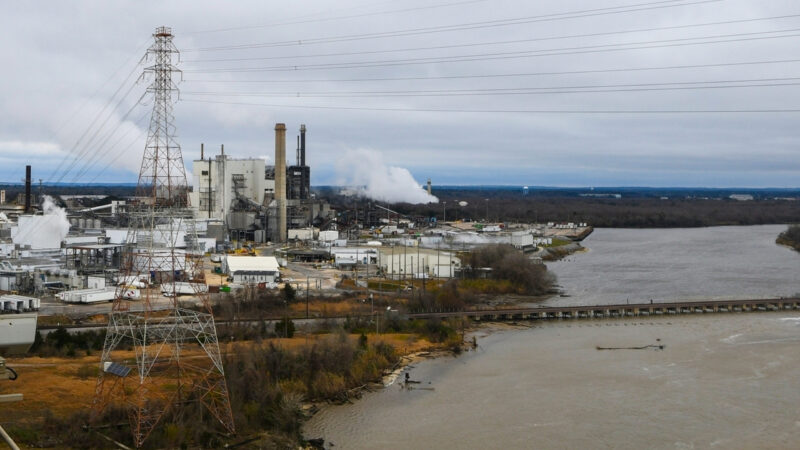
Following Trump’s lead, Alabama seeks to limit environmental regulations
The Alabama Legislature on Tuesday approved legislation backed by business groups that would prevent state agencies from setting restrictions on pollutants and hazardous substances exceeding those set by the federal government. In areas where no federal standard exists, the state could adopt new rules only if there is a “direct causal link” between exposure to harmful emissions and “manifest bodily harm” to humans.
