
Easy-to-use solar panels are coming, but utilities are trying to delay them
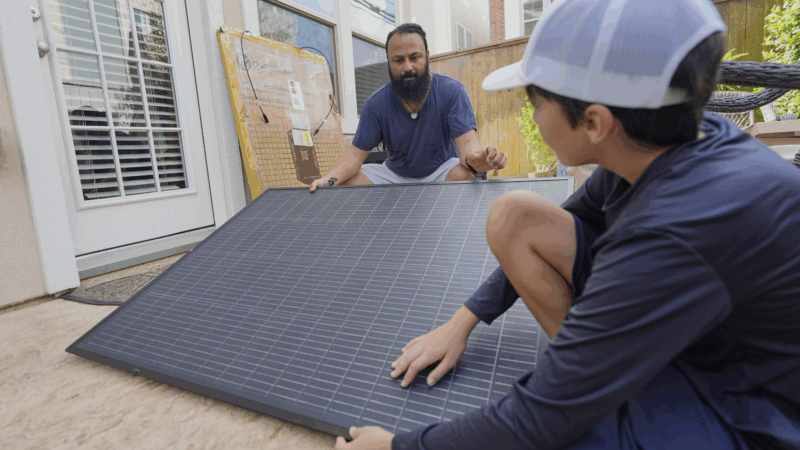
Easy-to-install solar panels that plug into a regular outlet are getting attention just as Americans are worried about rising energy costs. That’s because these plug-in or balcony solar panels start shaving off part of a homeowner’s or renter’s utility bill right away.
“A year ago, nobody was talking about this,” says Cora Stryker, co-founder of Bright Saver, a California nonprofit group that advocates for plug-in solar. The panels are already popular in Germany, where more than 1.2 million of the small plug-in systems are registered with the German government.
For the panels to become more widely available in the U.S., state lawmakers are proposing bills that eliminate complicated utility connection agreements, which are required for larger rooftop solar installations and, most utilities say, should apply to plug-in solar too. Those agreements, along with permitting and other installation costs, can double the price of solar panels.
Utah enacted the first law, last May, supporting plug-in solar, and now some 30 pieces of similar legislation have been introduced around the United States. But the drive toward plug-in solar is facing pushback from electric utilities. They are raising safety concerns and prompting legislators to delay votes on the bills. So far, utilities have won over lawmakers in five states and convinced them to delay votes on plug-in solar bills.
“The safety of our linemen and others that work on that system is a reason that we oppose House Bill 1304,” said Emily Pateuk, a lobbyist with Georgia Electric Membership Corp., which represents cooperative utilities. After her comments at a legislative hearing in Georgia last month, the committee chairman declined to hold a vote on the bill until safety questions could be addressed.
Similar bills have been delayed in Arizona, New Mexico, Washington and Wyoming.
Plug-in solar safety
Plug-in solar advocates say that safety concerns about the new technology have been addressed and that utilities are really just worried about losing business, because every kilowatt-hour generated by a plug-in solar panel is one less the utility sells to a customer.
“They don’t want anyone messing with their business model,” Stryker says. “Kicking up dust regarding safety concerns is definitely a strategy that is being used by people who don’t want this for their own self-interested reasons.”
NPR asked utilities mentioned in this story, as well as their trade groups, to comment on Stryker’s “kicking up dust” allegation, but they did not respond beyond saying that safety and reliability are their primary concerns with plug-in solar.
Stryker also cites climate change as a reason for her solar advocacy. Most electricity in the U.S. is still generated by climate-warming fossil fuels, but solar panels generate power without emitting greenhouse gases.
While the new portable solar panels don’t usually deliver enough electricity to power an entire house, they do offer a new source of competition to utilities.
There are safety risks with any electrical appliance, and it’s true that plug-in solar panels present some unique problems. But safety experts also say those issues can be managed.

Traditional solar panel systems, which can cost more than $20,000, are bolted to a homeowner’s roof. As a result, they’re usually not a safety concern for the public because they’re not easily accessible. Plug-in panels cost much less and generate enough electricity to power a refrigerator or microwave.
They can sit on a balcony, hang out a window or be set up in a backyard. They collect energy from the sun and then feed electricity into a home through a regular outlet, displacing electricity that otherwise would come in from the grid. That makes them easier to install but also more easily accessible to people who aren’t used to being around appliances that generate electricity, where the plug can present more of a shock hazard.
“When you think about an appliance — your toaster, for example — when you unplug it, the appliance is entirely disconnected from the electrical supply,” says Ken Boyce, vice president of engineering at UL Solutions (formerly Underwriters Laboratories), which develops safety standards for products. Plug-in solar generates electricity rather than consumes it. So Boyce says the blades on the end of the plug could shock someone.
That’s among the safety issues that UL Solutions considered when it launched a testing and certification program for plug-in solar systems in January. Manufacturers have to come up with designs that resolve the issues before UL Solutions certifies a product that gets the familiar “UL” label.
Lineworker safety during outages
Another issue — the primary concern that utilities have raised with lawmakers — is that during an outage, a panel could continue generating electricity and send the power through a home’s wiring and back out to the grid, where it could endanger a lineworker.
“There are ways, from a technological standpoint, to mitigate those potential hazards for utility workers,” Boyce says. That’s also one of the issues UL Solutions will consider as it tests plug-in solar products for its certification. The Utah law and the other proposals based on it require such certification. But as utilities talk with lawmakers around the country, they continue to highlight concern for lineworkers as a reason to delay new legislation.
“This bill does present a lot of safety concerns to the utilities,” Nathan Nicholas, an attorney representing utility company Rocky Mountain Power, told Wyoming lawmakers at a February hearing. Most utilities argue plug-in solar should be subject to the same connection agreements that are required for bigger rooftop solar projects. Nicholas said without that, Rocky Mountain Power wouldn’t know where these devices are located or whether they’ve received UL Solutions certification.
“It takes the safety out of the hands of the utility and puts it on the consumer,” Nicholas said. At the Wyoming hearing, plug-in solar supporters explained that the systems stop generating power when the grid is down. Still, lawmakers let the legislation die without taking a vote on it.
German utilities expressed many of the same concerns nearly a decade ago when plug-in solar started to become popular in Germany. But with more than a million systems installed, no safety incidents have been reported for customers who used the panels as instructed, according to a research paper funded by the U.S. Department of Energy.
Competing kilowatts
In Germany, smaller plug-in panels cost just a few hundred dollars, and customers can recover that in saved energy bills within seven years. The panels should continue to produce power for up to 30 years.
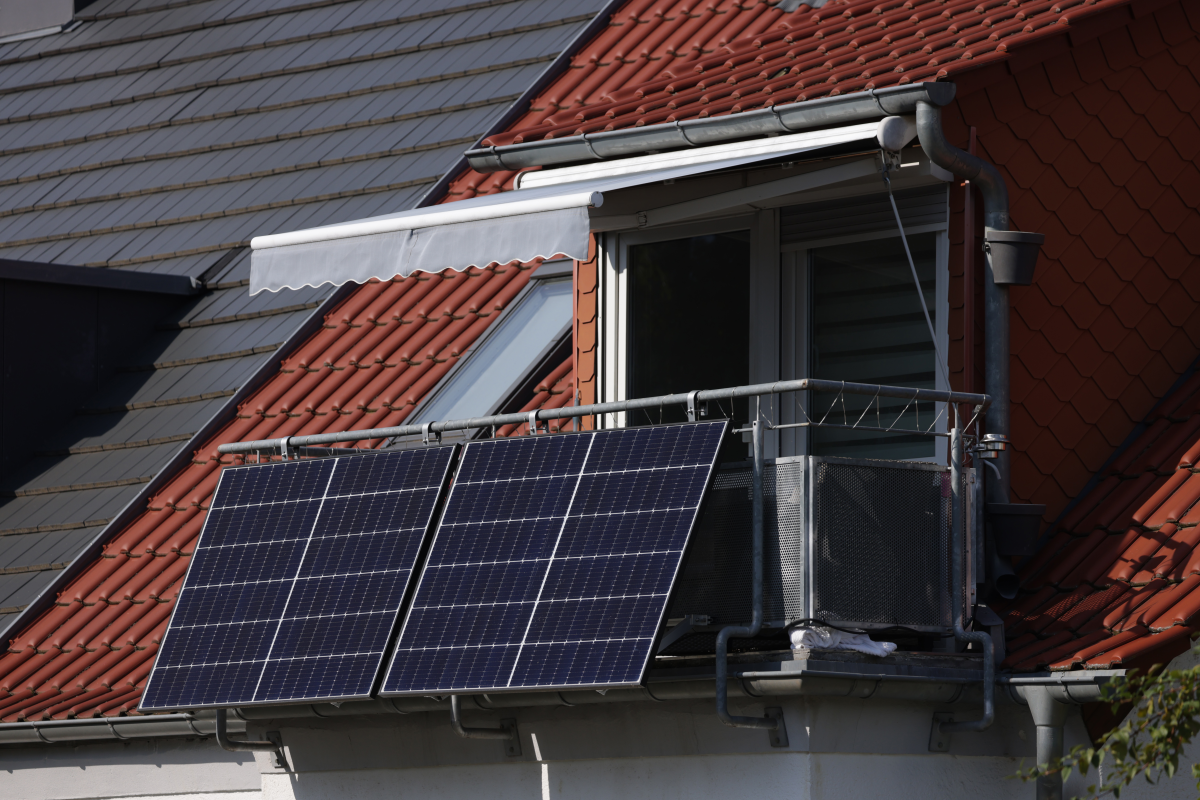
Stryker says plug-in solar took off in Germany once renters were allowed to install the systems, and she sees the potential for a similar trajectory in the United States. But first, she says, Utah-style legislation is needed in more states; such legislation would exempt plug-in solar from the complicated connection agreements with utilities that are required for rooftop solar.
Virginia likely will become the second state to pass a law encouraging plug-in solar. Both chambers in Virginia’s legislature passed a bill, and Gov. Abigail Spanberger is expected to sign it.
“We think that as soon as we have legislative change in a handful of states — five or more — we are going to see mass adoption of balcony solar,” Stryker says, “because people need a way to reduce their electricity consumption — to lower their bills.”
And since the bills require UL Solutions certification, manufacturers will have to get their products through that process. Some already have started to do that.
“We are working with manufacturers. Obviously, in the interests of confidentiality, we can’t really talk about which companies those are,” Boyce says. But he says certifications are likely to come in months, not years.

Chilean Smiljan Radić Clarke wins architecture’s highest honor
The Pritzker Prize was awarded Thursday. "In every work, he is able to answer with radical originality, making the unobvious obvious," said fellow Chilean architect and prize chair Alejandro Aravena.
El Niño is set to take hold this summer, driving up global temperatures
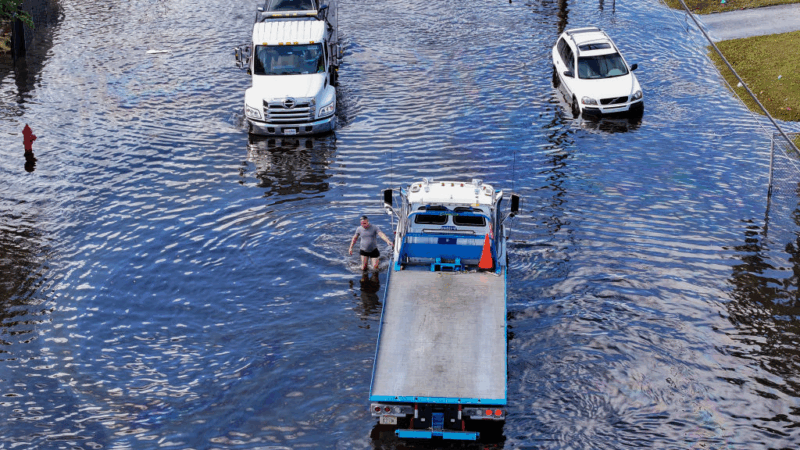
A potentially strong El Niño weather pattern will likely emerge this summer and persist through the rest of the year. The hottest years on record generally occur in years when El Niño is active.

‘Songs from the Hole’: The story behind JJ’88’s documentary and visual album
The visual album and documentary Songs from the Hole tells the story of James Jacobs, the hip-hop artist JJ'88, as he reflects on his coming-of-age within California's state prison system.

Oil price surges as Iran steps up attacks on ships in the Persian Gulf
Markets seesawed on Day 13 of the war in the Middle East, as two oil tankers were struck by projectiles near Iraq's southern ports and attacks between Israel and Hezbollah intensified.
Trump’s war with Iran is angering some swing voters who want money spent at home
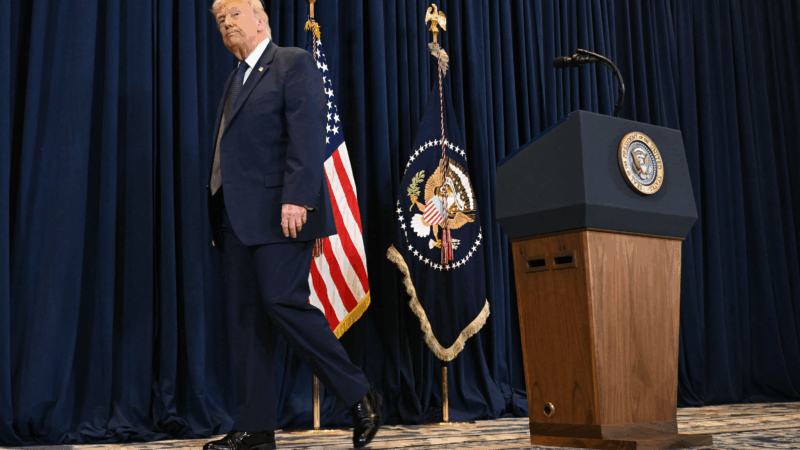
Swing voters who helped reelect President Trump in 2024 don't support his decision to go to war in Iran and instead want to see U.S. tax dollars spent tackling economic pressures facing Americans.

5 ways to resist the urge to keep looking at your phone
So you want to spend less time on your phone. How do you do that when it's designed to suck you in? Life Kit spoke to experts in behavioral science, psychology and technology for real-world advice.
