
Earl Richardson, an educator ‘armed with history’ and who changed HBCUs, dies
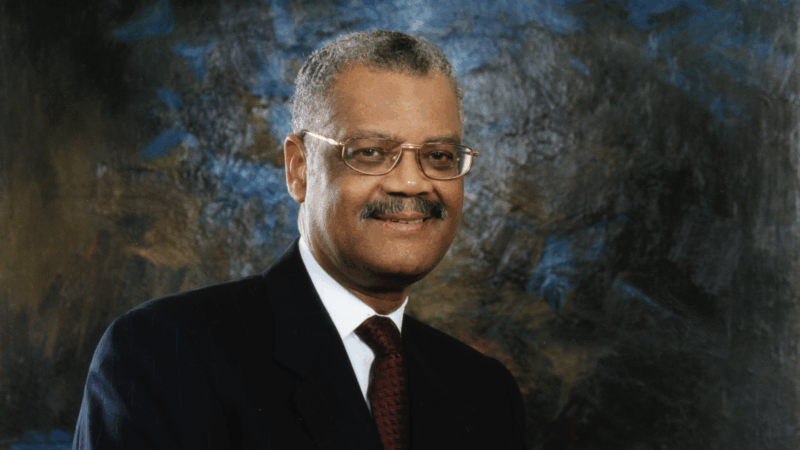
Earl Richardson was a Black college president — “armed with history,” as a colleague described him — when he led a 15-year-long lawsuit that ended in a historic settlement for four Black schools in Maryland and put a spotlight on funding disparities for all of the nation’s historically Black colleges and universities (HBCUs).
Richardson’s death, at 81, was announced on Saturday by Morgan State University, located in Baltimore, where he served as president when he helped organize the lawsuit that began in 2006. It was settled in 2021 when the state of Maryland agreed to give $577 million in supplemental funding over 10 years to four HBCUs.
Richardson led Morgan State from 1984 to 2010 and he had long chafed at stretching the little funding he got from the state. In the lawsuit, plaintiffs argued that Maryland had historically underfunded its Black colleges and had put them at a disadvantage by starting and boosting similar programs at nearby majority-white schools.
David Burton, one of the plaintiffs, told NPR that the case was compared to Brown v. Board of Education, the landmark lawsuit that brought up similar issues of disparities in educational opportunities for Black students, but the Maryland case raised the issues for students in higher education.
In 1990, when Richardson was a new school president, students took over the administration building for six days to protest the school’s dilapidated classrooms and dorms, with roofs that leaked and science labs stocked with outdated equipment.
Edwin Johnson was one of those student protesters. “We originally were protesting against Morgan’s administration,” including Richardson, he said. “But then after we dig and do a little research, we find out it’s not our administration, but it’s the governor down in Annapolis that isn’t equipping the administration with what they need to appropriately run the school.”
The protest ended when the students marched 34 miles to Annapolis to demand a meeting with the governor.
Richardson, who spoke of taking part in civil rights demonstrations when he was in school, had subtly guided the students to the correct target, said Johnson, who is now the university’s historian and special assistant to the provost.
That protest helped pave the way to the future, historic lawsuit.
Because Richardson was the university’s president, and an employee of the state, he couldn’t sue the state. So, a coalition of students and former students was created, the Coalition for Equity and Excellence in Maryland Higher Education Inc., to serve as the plaintiff.
Still, Richardson was the visionary behind the lawsuit, said Burton, a Morgan State alumnus and now a strategic planner for businesses. “He was armed with history,” Burton said.
“Dr. Richardson knew where the skeletons were,” Burton added. He was “a force that the state could not reckon with because of his institutional knowledge.”
At one point, during the trial, state attorneys objected to Richardson’s presence in the courtroom and asked the judge to make him leave, even though he had a right to be there as an expert witness, said Jon Greenbaum, then the chief counsel of the Lawyer’s Committee for Civil Rights Under Law, who helped argue the lawsuit.
Richardson stayed in the courtroom and “because this was really a desegregation case,” said Greenbaum, he provided historical detail that became critical to the arguments made by the lawyers representing the plaintiffs.
The funding that resulted, and Richardson’s leadership, jump-started what is now called on campus “Morgan’s Renaissance.” Or sometimes, said Johnson: “Richardson’s Renaissance” — because during Richardson’s presidency, enrollment doubled, the campus expanded with new buildings and new schools were added, including a school of architecture and a school of social work.
Richardson’s work put a spotlight, too, on the funding disparities faced by HBCUs across the country. They are more likely than other schools to rely upon federal, state and local funding — money that has faced budget cuts in recent years. Compared to other universities and colleges, HBCUs get a higher percentage of their revenue from tuition and less from private gifts and grants, according to one study.
In testimony before the U.S. House of Representatives in 2008, Richardson emphasized the mission of HBCUs when he told lawmakers that Black schools like his educated the most talented Black students but also sought to attract students who didn’t consider, or thought they couldn’t afford, to go to college. “We can make them the scientists and the engineers and the teachers and the professors — all of those things,” he said. But only if “we can have our institutions develop to a level of comparability and parity so that we are as competitive as other institutions.”

Hegseth: ‘We didn’t start this war but under President Trump we’re finishing it’
The remarks are the first to reporters since the U.S.-Israeli military operations against Iran began Saturday despite weeks of talks designed to stave off a conflict.
Ivermectin is making a post-pandemic comeback, among cancer patients
The anti-parasitic drug became a household name during the COVID-19 pandemic, and it is now being embraced as an alternative treatment for cancer. It is as politically polarizing as ever.
Rep. Adam Smith on the U.S. strikes on Iran and the debate over Trump’s war powers
NPR's Leila Fadel asks Democratic Rep. Adam Smith of Washington, the ranking member on the House Armed Services Committee, about President Trump's unilateral authorization to strike Iran.

Iran war widens, threatening to engulf Lebanon
The war over Iran engulfed more of the Middle East and beyond on Monday as Lebanon's militant group Hezbollah responded to the killing of Iran's spiritual leader with its first attack on Israel in more than a year.
Peer pressure can make this clownfish change its stripes
Tomato clownfish, in response to an unpredictable world, appear capable of adjusting when they lose their stripes based on cues from other fish and their habitat, a new study in PLOS Biology finds.

Hezbollah strikes Israel as American and Israeli planes pound Iran
Iran and Iranian-backed militias fired missiles at Israel and Arab states, apparently hitting the U.S. Embassy compound in Kuwait, while Israel and the United States pounded targets in Iran on Monday.
