
‘E-bike for your feet’: How bionic sneakers could change human mobility
The buildings at Nike’s world headquarters — the Philip H. Knight Campus in Beaverton, Ore. — are named after the likes of Serena Williams, Jerry Rice and Mia Hamm. But the company doesn’t recognize only sports superstars as athletes.
“If you have a body, you’re an athlete,” said Mike Yonker, who heads up the team developing Project Amplify — Nike’s new bionic sneaker.
Accordingly, the Project Amplify footwear system is aimed at a broad audience. “Amplify is designed for that everyday athlete to give them the energy they need to go further, to go faster, with greater levels of confidence,” said Yonker. “It’s like an e-bike for your feet.”
Even as some elite athletes are strapping skis and skates to their feet in an effort to move ever faster at this year’s Winter Olympics in Italy, Nike and other companies in the footwear and mobility sectors are on a quest to help humans move farther and faster in everyday life — using digital technology.
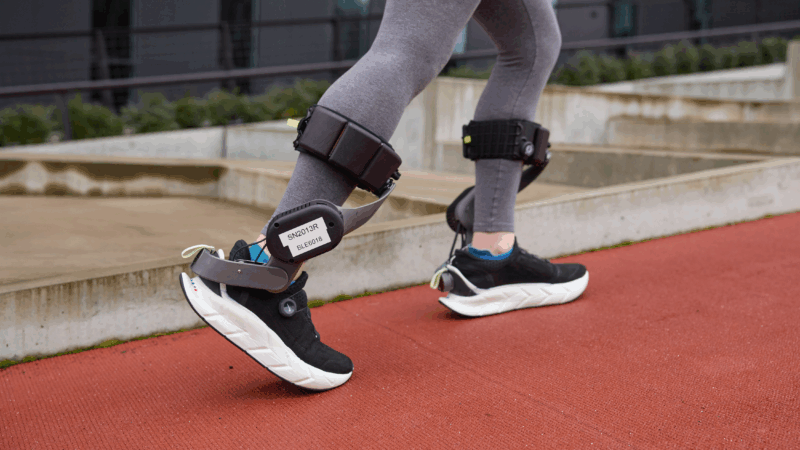
Nike said it plans to launch Project Amplify commercially in 2028. The system, tested in prototype form by NPR at the company’s headquarters, consists of fairly standard-looking sneakers with a carbon fiber plate running through the soles. These sneakers are attached at the back to close-fitting, 3D-printed titanium leg shells that cinch to the calves. The battery-powered contraptions, containing complex motors, sensors and circuitry, weigh a couple of pounds and look like something out of Terminator or RoboCop.
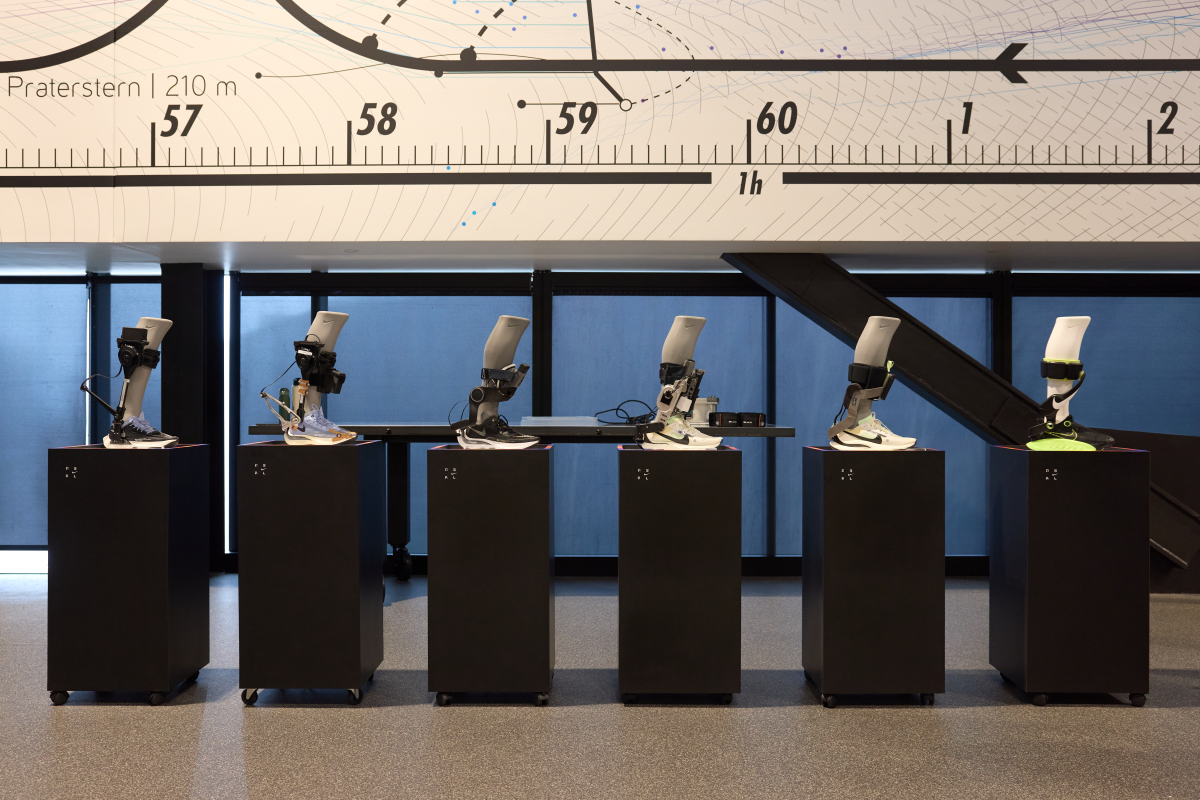
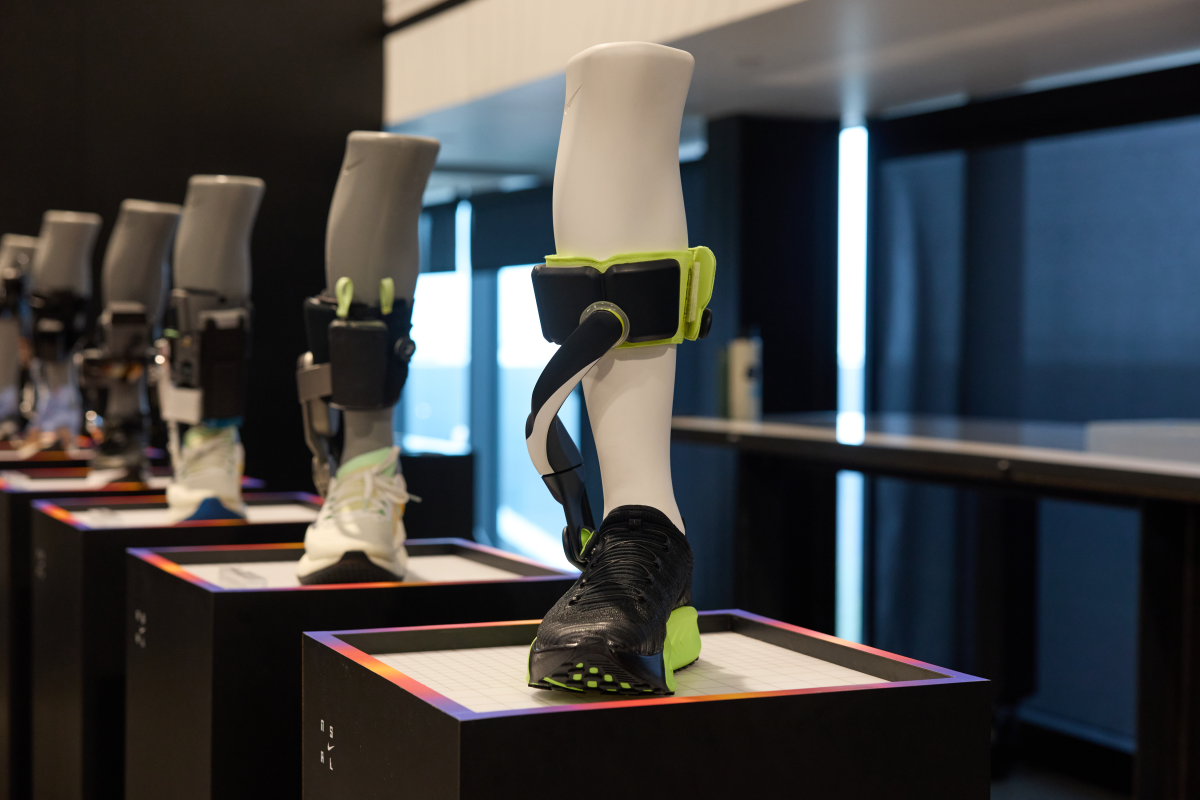
“What it’s doing is learning how your ankles are moving, how long your steps are, taking the algorithms and customizing them for you,” said Alison Sheets-Singer, Project Amplify’s lead scientist. “So that when it turns on, it feels natural and smooth.”
A phone app powers the footwear system on and off and can be used to toggle between various speed settings in “walk” and “run” mode. When activated, the leg shells pick up the heels and propel the feet purposefully forward.
A long quest for speed
Human beings have an innate desire to move faster on foot, whether for practical reasons or thrills and pleasure, said Elizabeth Semmelhack, director and senior curator of the Bata Shoe Museum in Toronto.
“The Nike Amplify comes from this long legacy of trying to increase speed and use science to help us get there,” Semmelhack said.
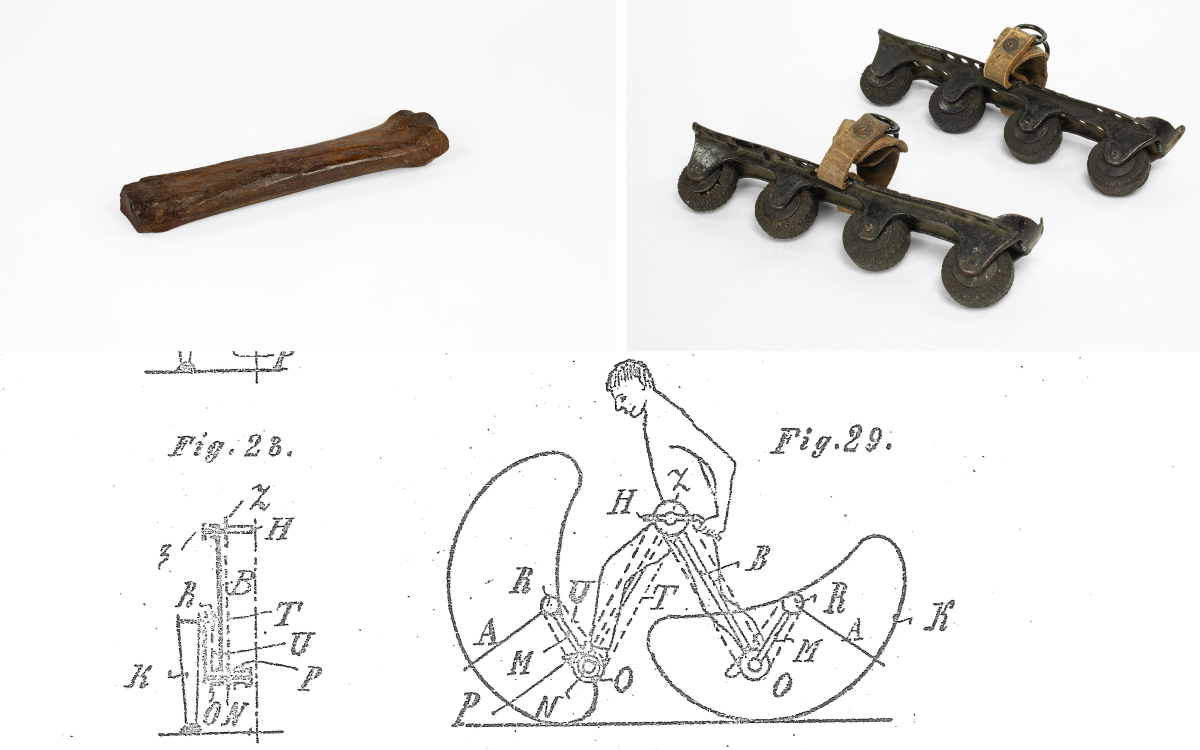
Semmelhack points to ice skates made of bone from the 1600s, 19th-century in-line roller skates and an iconoclastic pair of crescent-shaped, metal rocking-shoes patented in the early 20th century.
Athletic-shoe manufacturers initially worked to increase the wearer’s speed in the 1970s by using lighter materials — switching out rubber and leather for nylon and foam. Electronics started appearing in sneakers in the 1980s. The Adidas Micropacer and Puma RS-Computer shoe used sensors to track a runner’s distance. Nike even came out with self-lacing high-tops a decade ago — the Nike Air Mag. The limited-edition product brought to life the futuristic sneakers featured in the 1989 movie Back to the Future Part II.
But none of these innovations used digital technology to increase velocity, because of power constraints. “The energy needed to propel a human being forward is so significant that we do not have an energy source yet that is small enough that can be placed within a shoe,” Semmelhack said.
That’s why Nike and others working on electronic-assisted running and walking systems today, such as the Massachusetts-based startup Dephy — which collaborated with Nike on Project Amplify and also recently launched its own similar product, Sidekick — include ergonomic leg shells to power their products. Some of these systems avoid shoes entirely; for instance, the Ascentiz H+K takes the form of a motorized knee and hip exoskeleton. (According to Nike, Project Amplify is designed to have enough battery life, roughly, to enable the wearer to complete a 10-kilometer run. The batteries are rechargeable and can be switched out for a fresh set if the wearer wants to go for longer.)
Expanding mobility horizons
Despite the power challenges, the electronic-powered, motorized footwear space is a busy one. More than a dozen startups were exhibiting their innovations in the “bionic, footwear, exoskeleton” category at this year’s Consumer Electronics Show (CES) in Las Vegas, one of the world’s most prominent annual showcases for tech innovation. Many of these products are focused on helping people solve mobility issues, rather than necessarily aiding those who already walk and run with ease to do so faster.
“We’ve described a phenomenon called ‘personal range anxiety,’ where people are now making decisions about which activities they opt in and out of based on asking themselves, ‘Will I be comfortable? Will I be in pain? Will I be able to keep up with my friends and family?'” said Dephy co-founder and CEO Luke Mooney. “And so we’re helping them restore that confidence.”

Some experts see a future where these footwear systems make a similar impact on walking and running as electronic bikes have made in recent years on mountain biking.
“E-bikes have changed the landscape of mountain biking for people that maybe didn’t have the ability or were getting older and still wanted to participate,” said Mark Oleson, a former Adidas executive who has worked on many innovation projects in the athletic shoe sector and who currently heads up the women’s volleyball footwear and apparel company Avoli. “There’s a huge opportunity where companies are asking, ‘How do we get someone into a sport or into a recreational activity that they normally wouldn’t have the ability to do?'”

Paul McCartney’s decade of transformation: From Beatles breakup to John Lennon’s murder
Man on the Run shows McCartney's effort to define himself outside The Beatles' shadow: "Paul making this documentary was a way of coming to terms with that whole period," says director Morgan Neville.

A Biden-era rule sought to stabilize child care. Why Trump wants it gone
The Trump administration has proposed repealing a Biden-era rule that required states to change how they pay out child care subsidies, citing the potential for fraud.

Greetings from Southwest Papua, which has some of the world’s richest marine biodiversity
The Raja Ampat islands in Indonesia's Southwest Papua province are a marine biodiversity hotspot and a divers' paradise.

Families remember U.S. reservists killed in Kuwait, members of an Iowa logistics unit
Four U.S. soldiers were killed in the Iran war on Sunday and IDed Tuesday by the Pentagon; two soldiers haven't yet been publicly identified. Their unit kept troops supplied with food and equipment.

Why supporting a shelter for women is now ‘kind of radioactive’
That's how researcher Beatriz Garcia Nice describes the new U.S. stance under the Trump administration to programs addressing gender-based violence.

Telehealth abortion is in the courts. Share your experience.
Mifepristone is facing another major legal challenge.
