
DVDs and public transit: Boycott drives people to ditch Big Tech to protest ICE
In Portland, Ore., Brittany Trahan started buying DVDs rather than paying for Netflix and Apple TV, while Lisa Shannon has been relying on public transit instead of taking an Uber. And in McDonough, Ga., Brian Seymour II has been embracing the cold to shop locally instead of buying through Amazon.
They’re among a growing number of Americans participating in a boycott this month, targeting tech companies who, they believe, are not doing enough to stand up against President Trump’s aggressive immigration crackdown.
“ I have not gotten the impression that outrage among the citizenry is a problem for this administration,” Shannon said. “I think money is a problem for this administration, so I’m leaning in on that front.”
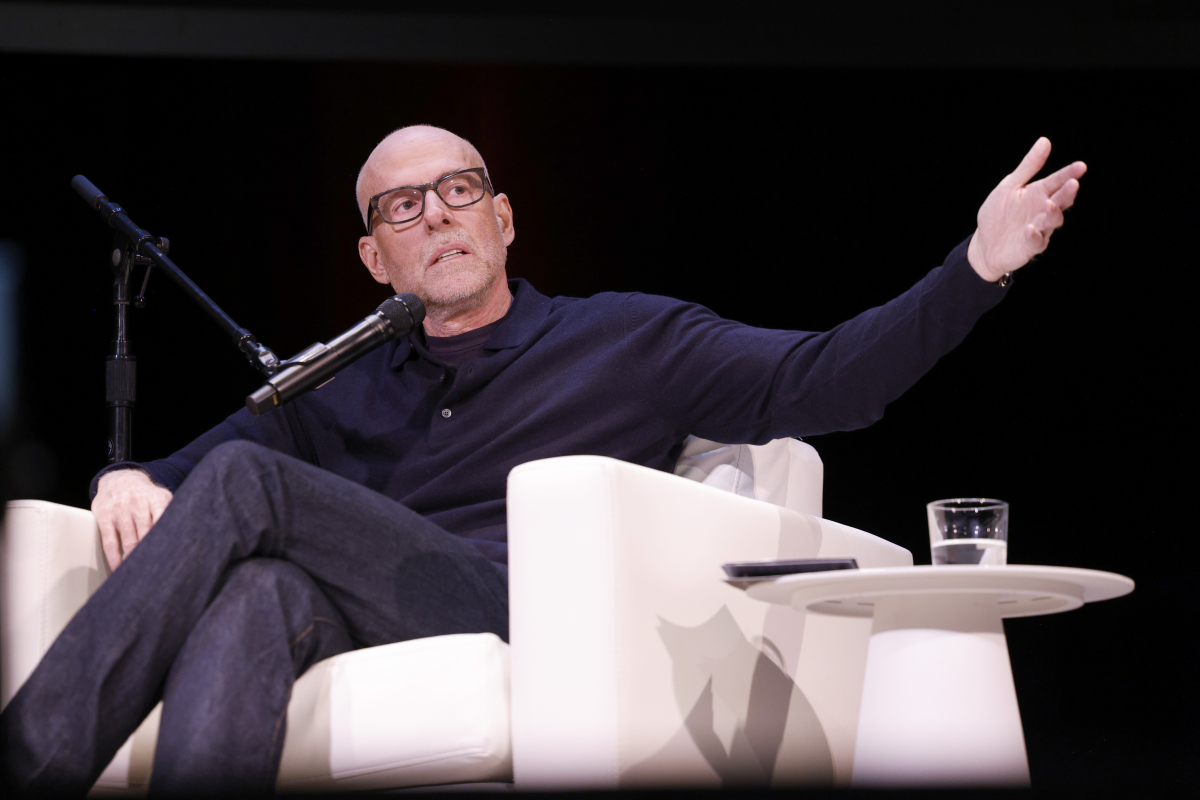
The campaign, “Resist and Unsubscribe,” was started by influential podcaster and business commentator Scott Galloway, who said he was increasingly frustrated by what he sees as the Trump administration’s indifference to protests and public outrage over immigration enforcement, especially in Minneapolis, where federal immigration officers shot and killed two U.S. citizens last month.
In recent weeks, there have been renewed calls to boycott Target, demanding that the Minneapolis-based retail giant publicly show solidarity with immigrants and oppose ICE. Last month, hundreds of businesses in Minneapolis shuttered their doors for a day as a form of protest against ICE operations in the city.
Galloway, who also teaches marketing at New York University, believes the president mainly changes course on policy when financial markets are under pressure, pointing to how Trump dropped his plan to impose tariffs on eight European nations after it rattled Wall Street. So, Galloway created a website listing over a dozen companies that have either worked directly with U.S. Immigration and Customs Enforcement or play such an outsized role in the economy that a slowdown in their growth would send shockwaves to the markets.
“ I think this is a weapon that is hiding in plain sight,” Galloway told NPR. “The most radical act you can perform in a capitalist society is non-participation.”
It’s too soon to tell how the tech companies will fare from the planned month-long strike, which began on Sunday. But it appears to be attracting some real interest: On Wednesday alone, Galloway said his website generated about 250,000 unique page views.
White House spokesperson Abigail Jackson declined to comment on the boycott. Instead, Jackson blamed anti-ICE rhetoric for a sharp increase in assaults on immigration officers, a claim frequently cited by the administration, despite previous reporting showing such a rise is not backed by public records.
The companies listed on Galloway’s website did not respond to a request for comment on the boycott.
‘Asking people to opt out of Big Tech, that could be really hard to do’
Trump’s second term has prompted a number of boycotts. Canadians shunned American products in response to new tariffs. Tesla owners sold their vehicles to protest Elon Musk’s role in the administration. And Disney+ and Hulu customers canceled their subscriptions after Disney suspended “Jimmy Kimmel Live!” amid pressure from the Trump administration.
But the “Resist and Unsubscribe” campaign is far more ambitious, according to Lucy Atkinson, a professor in the School of Advertising and Public Relations at the University of Texas at Austin.
“Asking people to opt out of Big Tech, that could be really hard to do because Big Tech is baked into so many of our day-to-day activities,” she said.
Atkinson added that the most successful strikes occur when consumers have viable alternatives to turn to. That can be especially difficult for platforms like Amazon, which dominates the e-commerce market.
At the same time, stepping away from these online services for a short period could weaken consumers’ dependency on them, which could lead to a sustained boycott. That would be promising, according to Atkinson.
She added that for most boycotts, the biggest detrimental impacts to companies come from a damaged reputation, rather than hits to their short-term profits.
“ Boycotts work when they last,” she said.
‘We need a jolt to our systems’
When Trahan, 36, from Portland, heard about the idea of a tech boycott on one of Galloway’s podcasts, she said she felt galvanized for the first time in a while, adding that she had started to doubt that Democratic leaders and protests could change Trump’s harsh immigration policies.
“We need a jolt to our systems,” Trahan said.
She canceled a slew of streaming services, even though one of her favorite shows, Shrinking, just aired a new season on Apple TV.
“Shrinking was a really big one,” she said. “That kind of sucked. Oh well, I gotta get over it because this is more important.”
Now, she’s using the free time to explore new hobbies, return to her DVD player and, most recently, she helped cancel her grandmother’s HBO Max account.
Others say they joined the boycott partly because they have personal gripes with specific companies due to their association with Trump.
Shannon, 51, who is also based in Portland, said Amazon Prime was the toughest to quit. The dealbreaker was learning that the company paid $40 million to acquire a documentary about first lady Melania Trump, and another $35 million to promote the film, she said.
“For me, the connection was that the movie was coming out and the money had come from a platform that I regularly spend money on,” Shannon said. “There’s no avoiding that connection.”
She’s also avoiding ChatGPT, HBO Max and Uber. Shannon said the digital purge felt freeing and she plans to continue the boycott past February, until she sees tangible changes in immigration enforcement.
“I’m done until this is over — until I feel secure that our democracy and our freedom and the wellbeing of our neighbors is secure,” Shannon said.
‘I want to stay unsubscribed from most of these for as long as possible’
Seymour, 40, from Georgia said there’s a saying in his home: “Show me where you spend your money and I’ll show you what you care about.” That’s why he ended his subscriptions to Disney+, HBO Max, Netflix, among others.
He also stopped shopping at Home Depot, which faced scrutiny after numerous immigration raids occurred near its stores last year. Evelyn Fornes, a spokesperson for Home Depot, told NPR that the company is not involved in ICE operations, but it could not legally prevent federal enforcement agencies from coming to the parking lots of its stores.
For Seymour, the cancellations led to unexpected benefits, he said, like realizing he was paying for subscriptions he didn’t need. When Seymour needed firewood this week, he said he came upon a mom-and-pop store in his neighborhood that he hadn’t noticed before.
“I think that finding really cool alternatives and more fulfilling ways to spend your time is gonna be a really awesome byproduct,” he said. “As well as saving some money.”
Jake Ward, 35, from Fort Collins, Colo., said he’s abstaining from Amazon Prime, Audible, Disney+, Netflix and Hulu. So far, the cancellations haven’t made much of a difference in his daily routine.
“We haven’t really missed anything that we’ve canceled,” he said. “I really think that if I can, I want to stay unsubscribed from most of these for as long as possible.”
Ward wishes the boycott was promoted to run longer than a month. He worries that many users will bring back their subscriptions in March, weakening the blow it was supposed to have on tech companies. When asked about concerns that a month-long boycott was not enough to sway tech companies, Galloway said it was a valid point.
“ I think they may be right,” he said. “I purposely tried to shape the movement around putting as much power and decision capital in the hands of the individual.”
Google, Apple and Warner Bros. Discovery (which owns HBO Max) are among NPR’s financial supporters. Amazon is also a financial supporter of NPR and pays to deliver some of our content.

Colossal Biosciences breeds controversy while trying to revive mammoths
A Texas biotech company is trying to bring mammoths and other extinct creatures back to life. The science is as intriguing as the ethical questions are thorny.
Mundane, magic, maybe both — a new book explores ‘The Writer’s Room’
Why are we captivated by the spaces where where authors write? Katie da Cunha Lewin set out to explore "The Hidden Worlds That Shape the Books We Love."
GOP Rep. Tony Gonzales heads to a runoff in Texas amid a new ethics probe in the House
Texas Republican Rep. Tony Gonzales has faced increasing pressure from his party to resign or drop out of his race after allegations of an affair with a staffer.
Satellite images show Iran school strike hit more targets than earlier reported
The images suggest that precision munitions struck other buildings, including a clinic that was also inside the complex.

As live music becomes more inaccessible, most fans stay watching through screens
Now that it is becoming harder and harder to get a ticket to your favorite artist's show, watching indirectly is becoming a popular compromise. What is gained and lost in a tiered concert hierarchy?
Paul McCartney’s decade of transformation: From Beatles breakup to John Lennon’s murder
Man on the Run shows McCartney's effort to define himself outside The Beatles' shadow: "Paul making this documentary was a way of coming to terms with that whole period," says director Morgan Neville.
