
Denmark summons US envoy over claims of interference in Greenland
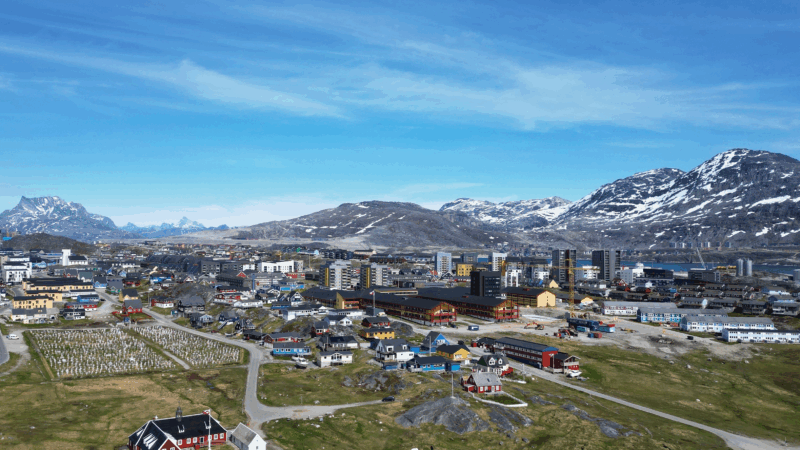
COPENHAGEN, Denmark — Denmark’s foreign minister summoned the top U.S. diplomat in the country for talks after the main national broadcaster reported Wednesday that at least three people with connections to President Donald Trump have been carrying out covert influence operations in Greenland.
In a lengthy written statement, the U.S. State Department confirmed that the deputy chief of mission in Copenhagen, Mark Stroh, had met with Danish foreign ministry officials. It declined to comment “on the actions of private U.S. citizens in Greenland.”
“The U.S. government does not control or direct the actions of private citizens,” it said.
The department said Stroh had “a productive conversation and reaffirmed the strong ties among the Government of Greenland, the United States, and Denmark.” It said the U.S. values its relationships with both Denmark, a NATO ally, and Greenland and noted that Trump and his top aides had all said they respect “the right of the people of Greenland to determine their own future.”

“We continue to foster engagement and cooperation with Denmark and Greenland to support increased security and prosperity for our nations,” it said.
Stroh is the second American diplomat to be summoned by a European NATO ally this week as the Trump administration shakes up its approach to foreign policy. France had called U.S. Ambassador Charles Kushner to its foreign ministry after he sent a letter to French President Emmanuel Macron alleging the country did not do enough to combat antisemitism.
Trump has repeatedly said he seeks U.S. jurisdiction over Greenland, a vast, semiautonomous territory of Denmark. He has not ruled out military force to take control of the mineral-rich, strategically located Arctic island.
Denmark and Greenland have said the island is not for sale and condemned reports of the U.S. gathering intelligence there.
Public broadcaster DR said Danish government and security sources that it didn’t name, as well as unidentified sources in Greenland and the U.S., believe that at least three American nationals with connections to Trump have been carrying out covert influence operations in the territory.
One of those people allegedly compiled a list of U.S.-friendly Greenlanders, collected names of people opposed to Trump and got locals to point out cases that could be used to cast Denmark in a bad light in American media, the broadcaster reported. Two others have tried to nurture contacts with politicians, businesspeople and locals, according to the report.
DR said its story was based on information from a total of eight sources, who believe the goal is to weaken relations with Denmark from within Greenlandic society. It said it had been unable to clarify whether the Americans were working at their own initiative or on orders from someone else. It said it knows their names but chose not to publish them to protect its sources.

The Associated Press could not independently confirm the report.
“We are aware that foreign actors continue to show an interest in Greenland and its position in the Kingdom of Denmark,” Danish Foreign Minister Lars Løkke Rasmussen said in a statement. “It is therefore not surprising if we experience outside attempts to influence the future of the Kingdom in the time ahead.”
“Any attempt to interfere in the internal affairs of the Kingdom will of course be unacceptable,” Rasmussen said.
Cooperation between the governments of Denmark and Greenland “is close and based on mutual trust,” he added.
The White House, like the U.S. Embassy in Copenhagen, would not comment on the substance of DR’s reporting that Americans with connections to Trump have been carrying out covert influence operations in Greenland. But a White House official, who was not authorized to comment publicly and spoke only on the condition of anonymity, downplayed Denmark’s concerns and suggested “the Danes need to calm down.”
The Danish Security and Intelligence Service said it believes that “particularly in the current situation, Greenland is a target for influence campaigns of various kinds” that could aim to create divisions in the relationship between Denmark and Greenland.
It said it “assesses that this could be done by exploiting existing or fabricated disagreements, for example in connection with well-known individual cases, or by promoting or amplifying certain viewpoints in Greenland regarding the Kingdom, the United States, or other countries with a particular interest in Greenland.”
The service, known by its Danish acronym PET, said that in recent years, it has “continuously strengthened” its efforts and presence in Greenland in cooperation with authorities there, and will continue to do so.

10 new books in March offer mental vacations
March is always a big one for books – this year is no different. We call out a handful of upcoming titles for readers to put on their radars — offering a good alternative to doomscrolling.
Sen. Chris Coons, D-Del., talks about the war with Iran and upcoming war powers vote
NPR's A Martínez asks Delaware Democrat Chris Coons, a member of the Senate Foreign Affairs Committee, about the war with Iran.

The candy heir vs. chocolate skimpflation
The grandson of the Reese's Peanut Butter Cups creator has launched a campaign against The Hershey Company, which owns the Reese's brand. He wants them to stop skimping on ingredients.

Scientists make a pocket-sized AI brain with help from monkey neurons
A new study suggests AI systems could be a lot more efficient. Researchers were able to shrink an AI vision model to 1/1000th of its original size.

U.S. evacuates diplomats, shuts down some embassies as war enters fourth day
The United States evacuated diplomats across the Middle East and shut down some embassies as war with Iran intensified Tuesday while President Trump signaled the conflict could turn into extended war.
Kristi Noem set to face senators over DHS shutdown, immigration enforcement
The focus of the hearing is likely to be on how Kristi Noem is pursuing President Trump's mass deportation efforts in his second term, after two U.S. citizens were killed by immigration officers.
