
‘Death fold’ proteins can make cells self-destruct. Scientists want to control them
In Alzheimer’s, brain cells die too soon. In cancer, dangerous cells don’t die soon enough.
That’s because both diseases alter the way cells decide when to end their lives, a process called programmed cell death.
“Cell death sounds morbid, but it’s essential for our health,” says Douglas Green, who has spent decades studying the process at St. Jude Children’s Research Hospital in Memphis, Tennessee.
For example, coaxing nerve cells to live longer could help people with Alzheimer’s disease, Parkinson’s disease or ALS (Lou Gehrig’s disease), he says, while getting tumor cells to die sooner could help people with cancer.
So researchers have been searching for disease treatments that “modify or modulate the tendency of a cell to die,” Green says.
One of these researchers is Randal Halfmann at the Stowers Institute for Medical Research in Kansas City, Missouri.
He has been studying immune cells that self-destruct when they come into contact with molecules that present a threat to the body.
“They have to somehow recognize that [threat] in this vast array of other complex molecules,” he says, “and then within minutes, kill themselves.”
They do this much the way a soldier might dive on a grenade to save others’ lives.
Halfmann’s team has been focusing on special proteins inside cells that can trigger this process.
When these proteins recognize molecules associated with a virus or some other pathogen, he says, “they implode.”
The proteins crumple and begin linking up with other crumpled proteins to form a structure called a “death fold” polymer. That starts a chain reaction of polymerization that ultimately kills the cell.
Halfmann’s team knew this process takes a burst of energy. But they couldn’t locate the source.
Then they thought about a process found in reusable hand warmers — which produce heat by changing from a liquid to a crystallized solid.
Users start the chain reaction by flexing a metal disk inside the warmer. The mechanical disturbance causes the formation of a few tiny crystals, which quickly grow into much larger crystals.
“That releases all this energy,” Halfmann says. “That’s exactly what we envisioned was happening for these proteins.”
His team provides evidence supporting this explanation in the journal eLife.
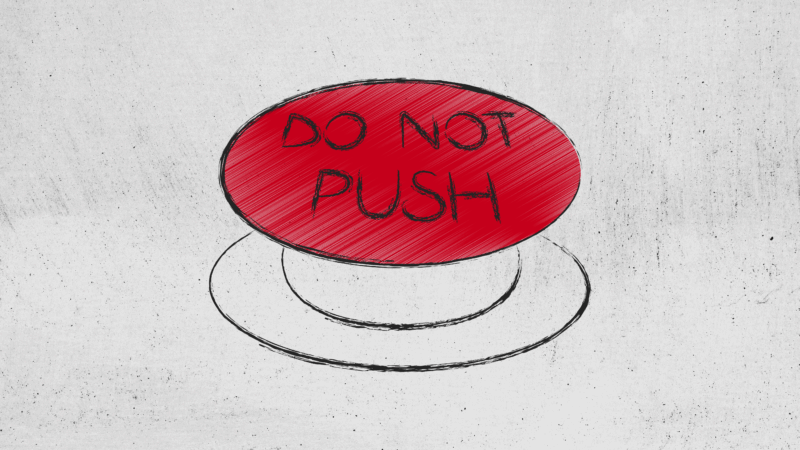
Halfmann found it a bit unsettling to think that so many cells carry these self-destruct buttons just waiting to be pushed.
“It just seemed like a really terrible way to live,” he says, “every moment of a cell’s life, to be at risk of spontaneously dying.”
Of course, death is what you want for a cancerous cell or one that’s infected with a virus. But Halfmann suspects this hair-trigger system is needlessly killing brain cells in diseases like Alzheimer’s.
He notes that one hallmark of Alzheimer’s is a misfolded protein called amyloid.
“That amyloid, for reasons we don’t really understand, ends up killing the neurons,” he says.
That could be because misfolded amyloid proteins, much like death fold proteins, seem to replicate and form crystal-like structures.
So Halfmann has begun looking for ways to keep brain cells alive by making it harder for those crystals to form. He’s hoping to use an approach that’s a bit like adding antifreeze to water to keep it from freezing.
Biotech firms are also trying to halt the process, but at a different point — by interrupting various communication pathways involved in cell death.
Several companies are “working furiously” to block one pathway in particular, Green says. It’s a pathway that involves some of the same death fold proteins Halfmann’s lab has been studying.
The pathway leads to inflammation as well as the death of neurons in Alzheimer’s and other neurodegenerative diseases.
The biotech companies are betting on products known as antisense drugs, which can prevent a cell from making specific proteins, including death fold proteins, Green says.
If they’re right, he says, these efforts are “going to cure a lot of diseases that we associate with aging and inflammation.”
They’ll do this, in part, by changing how cells make life-or-death decisions.
Supreme Court appears split in tax foreclosure case
At issue is whether a county can seize homeowners' residence for unpaid property taxes and sell the house at auction for less than the homeowners would get if they put their home on the market themselves.

Top House Dem wants Justice Department to explain missing Trump-related Epstein files
After NPR reporting revealed dozens of pages of Epstein files related to President Trump appear to be missing from the public record, a top House Democrat wants to know why.

ICE won’t be at polling places this year, a Trump DHS official promises
In a call with top state voting officials, a Department of Homeland Security official stated unequivocally that immigration agents would not be patrolling polling places during this year's midterms.
Cubans from US killed after speedboat opens fire on island’s troops, Havana says
Cuba says the 10 passengers on a boat that opened fire on its soldiers were armed Cubans living in the U.S. who were trying to infiltrate the island and unleash terrorism. Secretary of State Marco Rubio says the U.S. is gathering its own information.
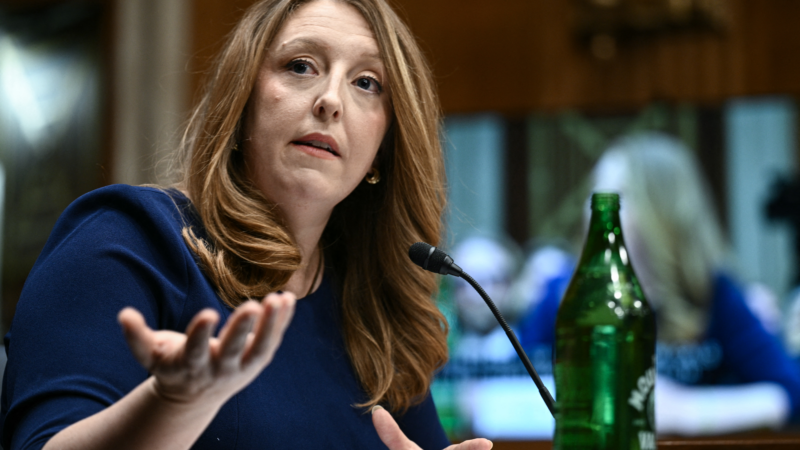
Surgeon general nominee Means questioned about vaccines, birth control and financial conflicts
During a confirmation hearing, senators asked Dr. Casey Means about her current positions and her past statements on a range of public health issues.

Rock & Roll Hall of Fame 2026 shortlist includes Lauryn Hill, Shakira and Wu-Tang Clan
The shortlist also includes a 1990s pop diva, heavy metal pioneers and a legendary R&B singer and producer.
