
D.C.’s crime numbers are all the buzz. But how do we interpret them accurately?
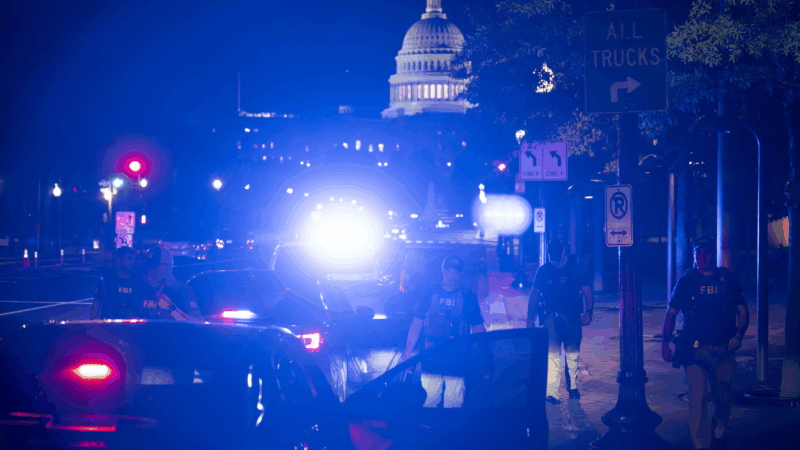
Amid President Trump’s ongoing feud with the local leaders of the nation’s capital, both sides have pointed to crime statistics to make their case on how safe — or unsafe — the city really is.
It has been a week since Trump declared a crime emergency in Washington, D.C., and deployed the National Guard to patrol the city’s streets.
In its reasoning for the move, the White House described crime in D.C. as “out of control,” noting that the city’s homicide rate in 2024 was nearly double what it was in 2012. Meanwhile, D.C. Mayor Muriel Bowser pushed back and noted that violent crime is at a 30-year low. She acknowledged there was a crime spike in 2023 but argued that violence has significantly declined since then.
Amid the back-and-forth, questions about the accuracy of data have also surfaced. Some critics say Trump is exaggerating the crime problem in D.C. The White House claims that crime stats are being understated, citing an NBC4 Washington report that a police commander allegedly manipulated data to make violent crime appear to have fallen sharply compared with last year.
Data can be insightful, but it can also be misleading and head-spinning. Here’s a breakdown on what’s true, what’s relevant and what’s being left out of the big picture.
How to interpret crime data
The city’s homicide rate in 2024 was roughly around 25 per 100,000 residents — nearly twice the rate in 2012, when it was 13.9 per 100,000 residents, according to an NPR analysis of FBI data.
FBI data also shows that the homicide rate in D.C. has been steadily climbing since 2012 — when the city hit a historic 50-year low.
At the same time, the 2024 rate is nowhere near the levels seen in the early 1990s, when D.C. was dubbed the nation’s “murder capital,” according to Thomas Abt, the founding director of the Center for the Study and Practice of Violence Reduction at the University of Maryland.
Loading…
“ So, in terms of murder, D.C. is much better off than it was in the ’90s. Things got steadily worse starting in 2012, but then there was a dramatic turnaround about two years ago,” he said, referring to how violent crime has fallen substantially in 2024 and so far this year.
Abt added that the key to understanding crime trends is deciding on the relevant time frame since different periods can tell different stories and lead to different solutions. For instance, looking at trends over decades can help determine long-term, chronic challenges to tackling crime, while focusing on a few years can help identify more immediate, acute issues.
“ People say crime is rising. People say crime is falling,” he said. “It all depends on where you set your goalposts.”
Is it fair to compare D.C. with other cities?
Part of the White House’s argument is that D.C. had a higher homicide rate in 2024 than New York City, Chicago and Compton, California. While that’s true, Abt said the rate in D.C. is also lower than in other cities of similar size, like Memphis, Tenn., or Kansas City, Mo.
“ The bottom line is this: Yes, D.C. has a chronic problem with violent crime, but it’s not nearly the worst in the United States and it’s gotten significantly better over the past two years,” he said.
Adam Gelb, president and CEO of the Council on Criminal Justice, a nonpartisan think tank, said comparing cities based on their per capita crime rates can be useful, but it may not always indicate which city is doing a better job at addressing crime.
“ There is no perfect way to compare cities against each other. They have widely varying characteristics that would explain and determine their homicide rates,” he said.
He added that factors such as how urban a city is and its average age would need to be accounted for in order to make a fair comparison.
Can you trust police data?
The White House recently said that crime in D.C. is likely significantly understated. Part of its argument was that a D.C. police commander for the 3rd District was placed on leave in May over accusations that he manipulated crime data in his district.
Abt agreed that the allegation was troubling, but he noted that trends in D.C. remain true: Homicide numbers have been declining in 2024 and 2025 so far, and the same can be said for violent crimes across all categories — including sexual abuse, assault with a dangerous weapon and robbery.
He added that while the issue of underreporting exists, homicides tend to be recorded accurately. “ The more serious the crime, the more reliable the data,” he said.
Perception vs. reality
Numbers might not lie, but they don’t necessarily inform how we feel about crime and safety. Gelb said there’s a distinction between the quantity and quality, or the nature, of crime.
“If you have just a handful or maybe even just one event that is very random or brutal or brazen — that will stick with people and drive their perceptions of crime much more than a notion that the numbers are moving in the right direction,” he said.
NPR previously reported that some Washingtonians feel that crime is a big problem in some parts of the city. Part of what might be driving those perceptions is that D.C. has seen a spike in lethality, according to Gelb.
“ What we’re finding is while the overall level of violence has dropped over time, the lethality of that violence has gone up, meaning these violent encounters are more likely to be deadly,” he said.
Still, Gelb questions whether bringing in more federal law enforcement will address those issues.
“The goal isn’t just to do things that work or simply deploy the tools at your disposal,” he said. “It’s to identify and implement the things that work best in terms of protecting public safety, both now and into the future, and cost least in terms of taxpayer dollars and infringements on civil rights and liberties.”
NPR’s Connie Hanzhang Jin contributed reporting and data analysis.

Your Winter Paralympics primer: What, who and how to watch
Hundreds of para athletes are competing in Italy through March 15. Many Americans are defending past titles, with the U.S. sled hockey team hoping to fend off rival Canada for its fifth straight gold.

After the U.S. sinks an Iranian warship, Sri Lanka takes custody of an Iranian vessel
The move followed Wednesday's sinking of another Iranian warship by a U.S. submarine. Australia confirmed three Australians were on that submarine.
Olympian Alysa Liu has also inspired fans off the ice — in the hair salon
The gold medal-winning figure skater came to the Milano Cortina winter games with a distinctive "raccoon" hairstyle — alternating rings of dark and light hair. Now, fans are following her lead.

‘Dopamine Kids’ explains why children crave screens and helps them enjoy life instead
A mom and science writer offers an operating manual for parents grappling with kids' screen use and cravings for sweets.
From guns to ballots: FARC’s campaign for votes in Colombia
Ten years after Colombia's peace deal, former FARC commander on the election campaign trail is discovering that winning ballots can be tougher than waging war.
Bill to force formal utility rate hearings for the first time in more than 40 years delayed
Alabama's Public Service Commission hasn't held a formal rate hearing for utilities since 1981. A bill that would force the commission to hold such hearings is under consideration in the state legislature, although the measure was delayed in a House committee this week. We get more details on our weekly legislative update with Todd Stacy, host of Capitol Journal on Alabama Public Television.
