
Could international troops be sent to Gaza? Here’s why Trump’s plan hinges on it
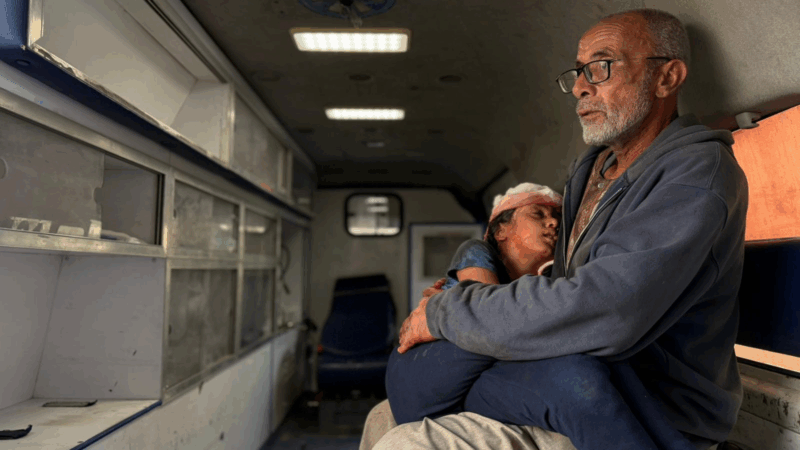
DOHA, Qatar — When 10-year-old Bayan Al-Ankah was fatally shot in the head by the Israeli military while in a displaced persons camp in Gaza last week, according to her family, she became one of several hundred Palestinians killed during a ceasefire between Hamas and Israel. Mediators Qatar and Egypt worry that the truce is threatened by near-daily Israeli attacks in Gaza.
The continued viability of the U.S.-backed ceasefire in Gaza hinges on two crucial next steps: the deployment of an international force in Gaza and the disarmament of Hamas.
But countries involved in this key phase of the ceasefire are still debating fundamental details about how to proceed — and the U.S. goal of having international forces in Gaza by early 2026 faces challenges.
Countries do not want to disarm Hamas by force
A U.S. State Department document this month obtained by NPR lays out the Trump administration’s vision for the international troops: to be “supporting the demilitarization of Gaza, dismantling terrorist infrastructure” and “decommissioning weapons used by terrorists.”
But many countries say they will refuse to send troops to confront Hamas over its weapons.
The United Nations Security Council last month mandated international troops to operate in Gaza through the end of 2027, but the exact role of these forces remains unclear.
The U.S. convened representatives of dozens of countries in the Qatari capital this week to discuss plans for the International Stabilization Force, or ISF. It was only a planning meeting, with no countries yet formally committing troops, according to a U.S. official who spoke anonymously in order to discuss the closed-door meeting.
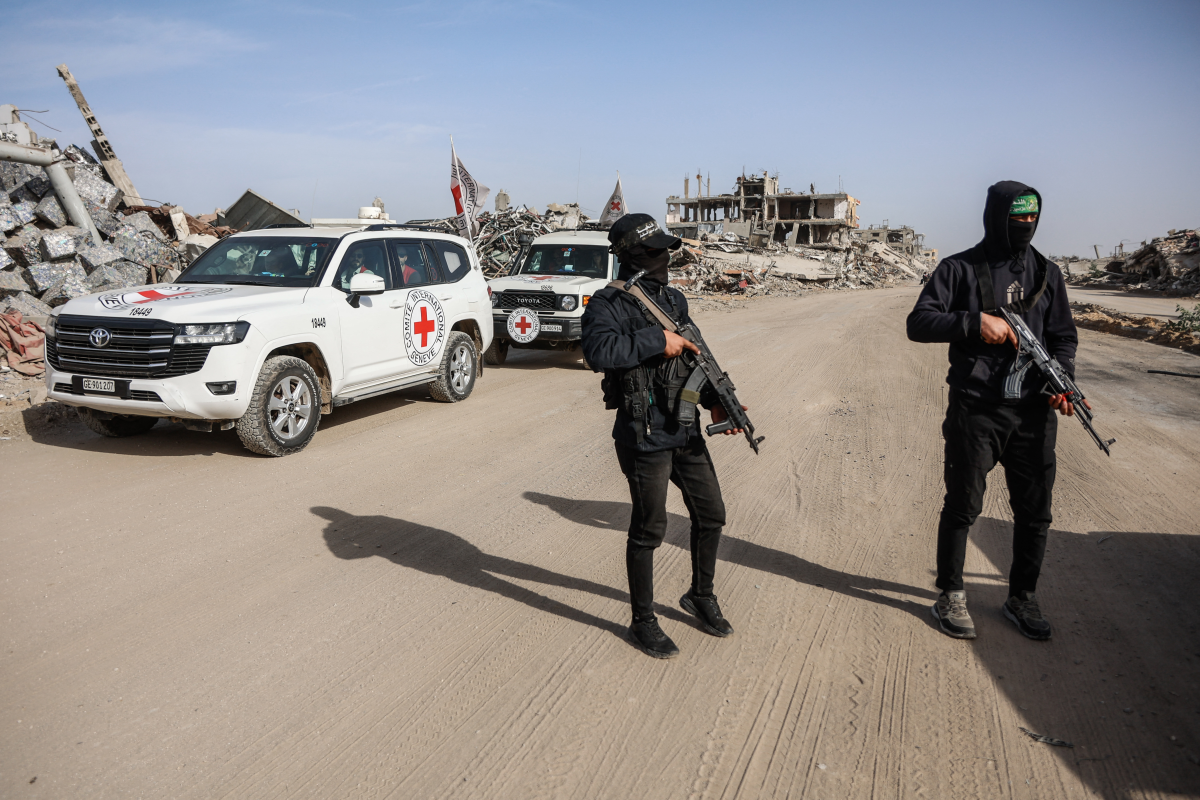
While the U.S. did not disclose which countries attended, Italy, Egypt, Indonesia, Azerbaijan and Turkey are among those being considered to contribute troops to the ISF, according to officials from those countries and media reports.
Turkey’s Foreign Minister Hakan Fidan said at the Doha Forum this month that Turkey can “play a leading role” in sending troops into Gaza, but said military personnel should be deployed as peacekeepers along a border zone between parts of Gaza controlled by Hamas and Israel — not to take part in disarming Hamas.
“We shouldn’t expect from the ISF work that has not been completed by Israeli security forces,” Fidan said.
Other Muslim-majority countries, like Egypt, have also signaled they will not send troops to Gaza to forcibly disarm Hamas and other armed groups there.
“The mandate should be, from our point of view, of peacekeeping, rather than peace enforcing,” Egyptian Foreign Minister Badr Abdelatty told the Doha Forum.
He said the ISF should be deployed as monitors “as soon as possible on the ground because one party, which is Israel, is every day violating the ceasefire.”
Israel says Hamas is violating the ceasefire by trying to rebuild its fighting force, and an Israeli airstrike last week killed a senior Hamas military commander. Israel defended the attack by saying he was trying to rearm the group.
Israel has signaled skepticism about international troops in Gaza
Israeli Prime Minister Benjamin Netanyahu said this month that an international force might not be capable of doing what Israel sees as the main task at hand: disarming Hamas.
“Our friends in America want to try and establish a multinational force to do the job. I told them … please, be my guest,” Netanyahu said.

Israel objects to Turkey’s participation in the ISF, viewing it as an adversary with strong sympathy for Hamas. Israel has also said it will not withdraw troops from inside Gaza until the territory is demilitarized.
Qatari Foreign Ministry spokesman Majed Al-Ansari says there are disagreements between countries about when to take what steps. He says Qatar is encouraging the sides to take concurrent steps toward Hamas’ disarmament and Israeli troop withdrawal.
“Sequencing is the issue,” he said. “When does disarmament happen? How does it happen? … Every lack of decision on a lot of these issues provides time for the ceasefire to collapse.”
Hamas could lay down arms, but with conditions
On the outskirts of Doha, in suburban neighborhoods lined with villas, are the offices of Hamas leaders in exile.
It’s here, in one of these compounds, that Israel launched missiles on a meeting of Hamas negotiators in September in an attempt to kill them. But Israel missed its target, instead killing a Qatari security officer, the son of a Hamas leader and several staff.
The attack sparked outrage from Gulf Arab states, which called it an attack on Qatar’s sovereignty. It also prompted Trump to push Israel to agree to a ceasefire deal to end the two-year-long war in Gaza. The ceasefire halted Israel’s push to fully occupy all of Gaza and shelved plans by some far-right members of the cabinet to displace Palestinians outside the territory.

Bassem Naim, among the Hamas negotiators who survived the September attack, told NPR in an interview in Doha that Hamas is open to disarmament, even as he says Palestinians have a right to armed resistance under Israeli occupation.
“We are ready to go for a ceasefire for five, seven, 10 years,” he said, adding that during that period of time, Hamas could be willing to store and lay down weapons so long as Gaza is not attacked.
“ Disarmament or decommissioning of weapons have to be connected to a serious political track, which has to end with a Palestinian state,” Naim said. “As long as we don’t achieve this, we keep struggling, fighting.”
Hamas welcomes an international force, but only as a peacekeeping buffer
Hamas says it would welcome the ISF as a peacekeeping force in Gaza and that it has long agreed to give up governance of the territory to a Palestinian technocratic committee. But Naim says the ISF should only be used as a buffer to separate between Israeli forces and Palestinians. Naim says any international forces should not be inside Palestinian population centers of Gaza.
Israel has been openly arming rival gangs and clans opposed to Hamas in Gaza, raising questions around whether Hamas would give up its light arms in addition to rockets and weapons that could reach Israel.
Hossam Badran, another senior Hamas leader in exile in Qatar, told NPR Hamas wants to hear from negotiators before publicly discussing the specifics of disarmament.
“We prefer to hear from the mediators and the U.S. what they mean by disarmament first,” Badran said. “We will not give the occupation (Israel) an initial or automatic response out of thin air without understanding what the next steps entail.”
He said Hamas wants its disarmament to happen alongside withdrawal of Israeli troops and the opening of Gaza’s Rafah border with Egypt for people who want to leave and return. He said it is unreasonable for Israel to insist on disarmament first.
“We will not negotiate without cards in our hands. That would be illogical and unrealistic,” Badran said.
Palestinians suffer while the next step of the ceasefire remains in limbo
Mediators Egypt and Qatar say Israel is not allowing in the quantity or type of aid agreed to in the ceasefire deal, despite Israel saying it’s allowing in hundreds of trucks of goods daily.
The U.N. says a quarter of families in Gaza are still only eating one meal a day. Basic medicines, like antibiotics, are also largely still unavailable, according to the U.N.
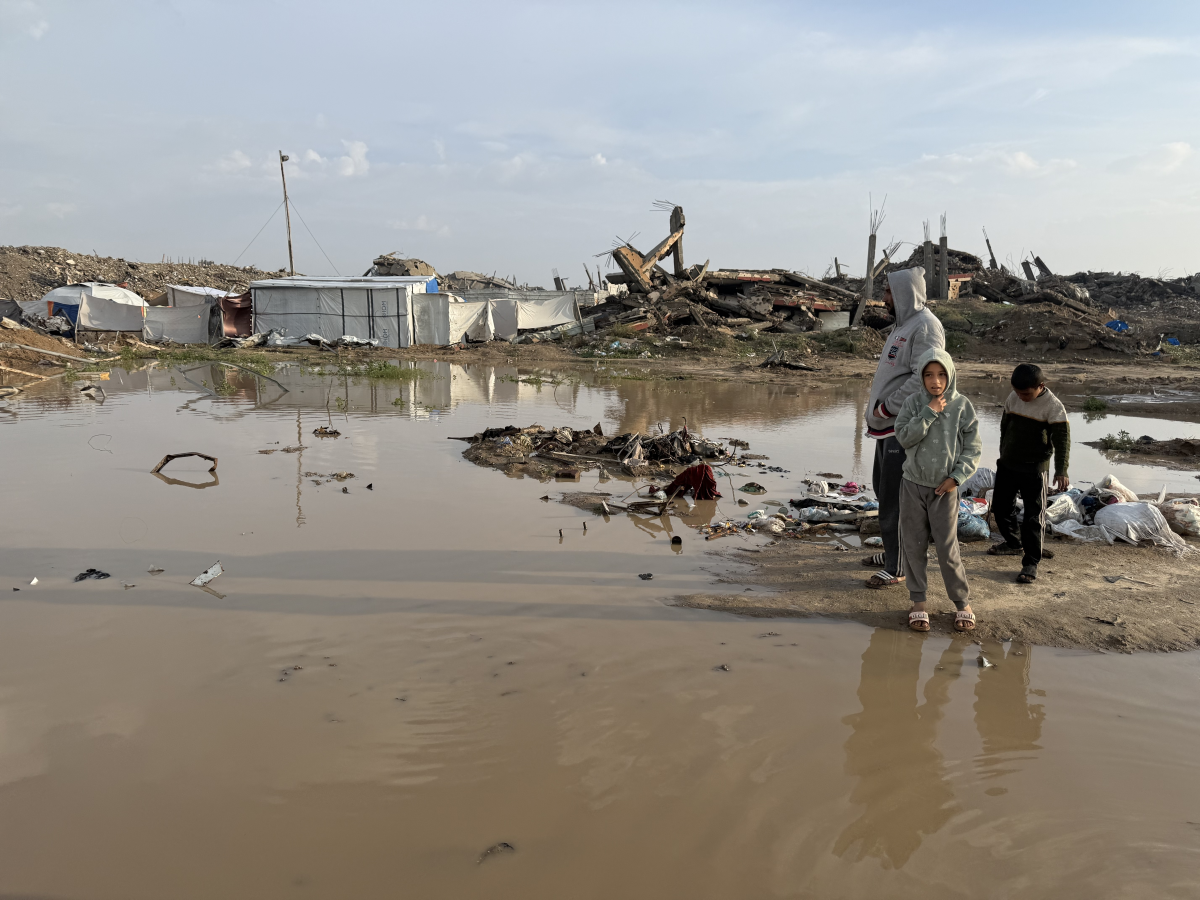
Israeli airstrikes in the war decimated Gaza, destroying or damaging more than 90% of homes, according to the U.N. Israeli attacks also killed more than 70,000 Palestinians, according to Gaza’s Health Ministry. The war was sparked by a Hamas-led attack that took hostages and killed nearly 1,200 people in Israel, according to authorities there.
Aid agencies, like the Norwegian Refugee Council and Medical Aid for Palestinians, say even in the ceasefire Israel is blocking aid urgently needed for people to survive winter. A severe storm flooded Gaza in recent days, blowing away people’s flimsy tarp shelters and tents. Families say they’re freezing in the cold with no alternative shelter.
Gaza’s Health Ministry told NPR that at least two infants died in the storm from the cold, and at least 11 others were killed when a house collapsed during the storm. They say mobile homes, not just more tents, are needed in Gaza.
NPR’s Anas Baba contributed reporting from Gaza City.
Transcript:
AILSA CHANG, HOST:
What will it take to prevent full-scale war from erupting again in Gaza? President Trump’s peace plan was endorsed by the U.N. Security Council last month, but there’s a lot of disagreement about which steps to take and when and how, as NPR’s Daniel Estrin reports.
DANIEL ESTRIN, BYLINE: As soon as Hamas finds and hands over a final Israeli hostage body, it’ll be Phase 2 of the ceasefire. The first part might be the easiest – announcing a transitional leadership to replace Hamas. President Trump told reporters we’ll hear early in the new year which world leaders will sit with him on the Board of Peace overseeing the administration of Gaza.
(SOUNDBITE OF ARCHIVED RECORDING)
PRESIDENT DONALD TRUMP: Oh, we’ll do it early next year. And the Board of Peace are going to – it’ll be one of the most legendary boards ever. Everybody wants to be on it.
ESTRIN: That Board of Peace will oversee a committee of Palestinian technocrats from Gaza who will lead Gaza’s daily affairs. Hamas has agreed to cede control to them, but then come the tricky parts of the plan. The U.S. wants a new international stabilization force to help support the disarmament of Hamas. Israeli Prime Minister Benjamin Netanyahu sounded skeptical in comments this month.
(SOUNDBITE OF ARCHIVED RECORDING)
PRIME MINISTER BENJAMIN NETANYAHU: (Speaking Hebrew).
ESTRIN: “Our friends in America want to try and establish an international force to do the job,” Netanyahu said. “I told them, please be my guest.” Netanyahu said such an international force might not be capable of doing the main task – disarming Hamas. Many countries being considered to contribute troops don’t want to be in charge of disarming Hamas. Turkish Foreign Minister Hakan Fidan said this month…
(SOUNDBITE OF ARCHIVED RECORDING)
HAKAN FIDAN: We shouldn’t expect from ISF a work that has not been completed by the Israeli security forces.
ESTRIN: He said an international force should first deploy along a border zone as a buffer separating between Israeli forces and Hamas to prevent further war, and then later, Hamas would decommission its weapons. But Israel says it won’t withdraw its troops from Gaza until Hamas is disarmed. Mediating country Qatar is trying to get the sides to act at the same time, senior Qatari official Majed al-Ansari told reporters.
(SOUNDBITE OF ARCHIVED RECORDING)
MAJED AL-ANSARI: We cannot have a situation where we end up with, you know, Palestinians handing over their weapons and Israeli occupation just remaining there. So this needs to be linked together to make sure that the both processes happen at the same time.
ESTRIN: The U.S. gathered representatives of countries this week in Qatar to plan the international force for Gaza. But the force’s mandate is still unclear, and no country has publicly committed troops yet. It’s also unclear how the U.S. can achieve its goal of having the international force in Gaza by early 2026. The force is supposed to work alongside a new Palestinian civil police force. The European Union is planning to train about 3,000 Palestinian police and judges and prosecutors, but a European official who was not authorized to speak to the media and requested anonymity told NPR that the majority of Palestinian police officers would likely start training in April, and the training would take time. The longer the ceasefire plan lingers, the more Qatar is concerned full-scale war can resume, says Ansari, the Qatari official.
(SOUNDBITE OF ARCHIVED RECORDING)
AL-ANSARI: Every lack of decision on a lot of these issues provides time for the ceasefire to collapse. We are quite concerned, but we believe in the process and we believe in the partnership with the United States over it.
ESTRIN: In the two months since the U.S. brokered the ceasefire, Gaza health officials say more than 380 Palestinians, including children, have been killed by Israeli military fire, and Israel says several of its soldiers have been killed by Palestinian fire in Gaza – which means young lives are at stake the longer it takes to choreograph the next steps of President Trump’s peace plan. Daniel Estrin, NPR News.
Pentagon tightens controls over Stars and Stripes after calling it “woke”
The new rules for the independent military newspaper are the Defense Department's latest effort to put extraordinary restrictions on journalists covering the agency.

‘War of the Worlds’ remake sinks to the bottom at this year’s Razzie Awards
The surveillance industry version of HG Wells' 1898 classic sci-fi novel stars Ice Cube, and won accolades for worst picture, actor, director and more.
Russian strike on Kyiv region kills 4 and wounds 15, with peace talks stalled
The strikes comes after the United States paused ceasefire talks between Russia and Ukraine due to the war with Iran.
As the risk of measles grows, why are parents so divided on vaccines?
In South Carolina, some parents embrace vaccines, others opt out. Why do people make such different choices? A mix of politics, distrust and misinformation is pushing neighbors apart.

Brazil’s ex-President Bolsonaro is in intensive care with pneumonia, hospital says
One of Bolsonaro's doctor's described the former Brazilian president's medical condition as "serious."
Opinion: An ancient, sophisticated palate
Researchers looking at foodcrusts on the pottery shards of ancient humans say there's evidence of a wide variety of ingredients, indicating that they may have been experimenting with "recipes."
