
Congress moves to loosen toxic air pollution rules
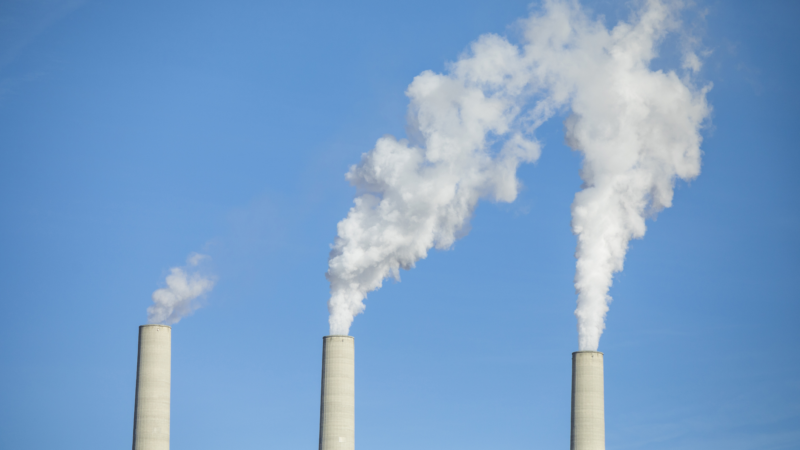
Congress has voted to undo a Clean Air Act regulation that strictly controls the amount of toxic air pollutants emitted by many industrial facilities like oil refineries, chemical plants, and steel mills.
The decision represents the first time since the creation of the landmark environmental law that Congress has rolled back its environmental protections.
Environmental groups and public health advocates condemned the vote, saying the rollback could cause higher pollution and harm human health.
“What that will mean for Americans is more hazardous air pollution across the country,” says John Walke, an environmental health expert at the Natural Resources Defense Council, an environmental advocacy group.
“These are pollutants that cause cancer and birth defects and brain damage,” Walke says.
The vote targets a rule finalized late in the Biden administration, which re-imposed tight regulations on facilities that emit seven so-called “super pollutants” like mercury, a dangerous form of lead, and dioxins. The rules regulating those seven pollutants, along with more than 180 others, were first imposed in the 1990s, but were rolled back during the first Trump administration.
The House approved the resolution early Thursday morning, following a Senate vote in favor of changing the rule earlier this month. Under the Congressional Review Act, lawmakers can review EPA regulations within a short window after their implementation and reverse them with a simple majority vote. President Trump has signaled he is likely to sign the bill when it arrives on his desk.
The move is part of a larger effort by the Trump administration to roll back environmental and public health regulations. EPA Administrator Lee Zeldin announced in March that he intends to re-evaluate other regulations like the one Congress just voted to change, which is related to a section of the Clean Air Act that deals with Hazardous Air Pollutants.
The agency, Zeldin says, is embarking on the “biggest deregulatory action in U.S. history,” which he says is meant to lower the cost of operating businesses in the U.S. while fulfilling the agency’s core mission of protecting the environment. Zeldin also aims to target other parts of the Clean Air Act, like the rules regulating mercury pollution from coal-fired power plants and the National Ambient Air Quality Standards.
Industry groups like the National Association of Manufacturers welcomed Congress’s decision. In a December open letter to president-elect Trump, the group had called for a review of EPA’s rules regarding hazardous air pollutants, calling them “technically unachievable and economically infeasible.”
“By eliminating the misguided “Once-in, Always-in” rule, we can reduce compliance costs for manufacturers while incentivizing better environmental outcomes,” says Chris Phalen, vice president of domestic policy at NAM.
But environmental and public health experts warn the change could result in higher pollution levels in communities that neighbor industrial facilities like “oil refineries, chemical plants, coke ovens, aluminum plants, lead smelters, things of that nature. We call it the worst of the worst list,” says Walke. The facilities are largely concentrated in parts of the country with high industrial activity, like the Gulf Coast and parts of Appalachia.
“Once in, always in”
The rule concerns the regulation of seven particularly hazardous air pollutants like dioxins and mercury. Such pollutants move through the air but also accumulate in soil, dust, and people’s bodies; several are known to cause cancer, neurological issues, and birth defects even at very low exposure levels.
Rules regulating those seven air toxic pollutants, along with more than 180 others, have been in place since 1990 when Congress passed a major amendment to the Clean Air Act that greatly increased its specific regulatory powers. It tasked EPA with tightly regulating what it called “major sources” of dangerous air pollutants—facilities that emitted more than 25 tons (50,000 pounds) of the hazardous pollutants a year, or 10 tons of any single one. Facilities that emitted less pollution, called “area sources,” would be much more lightly controlled.
The regulation Congress targeted concerns which facilities count as “major sources.”
Since the 1990s, EPA’s policy has stipulated that any “major source” would remain categorized as such, even if it cut pollution levels to below the certain thresholds—a policy known as “Once in, always in.” The policy intended to keep toxic air pollution levels not just lower, but as low as possible.
But under the first Trump administration, the EPA allowed major sources to re-categorize if they had reduced their dangerous emissions. Last year, the EPA under Biden undid part of that change, once again expanding the number of facilities covered.
Since the rule change is relatively recent, Republicans in Congress could now challenge it using the Congressional Review Act. The result would be a more durable change to the law. Under the rules of the CRA, “EPA can no longer do a similar rule or a rule that is substantially similar,” says Carrie Jenks, an environmental law expert at Harvard University. To revisit the HAP rule once again, EPA would have to come up with a new, different argument for why to keep major sources classified as major.
The advocacy group EarthJustice estimated that the change would allow roughly 1,800 industrial facilities, like steel mills or chemical factories, to apply to be taken off the “major sources” list.
Pollution risks
Exposure to even small levels of the seven super-toxins is so dangerous, say environmental and public health experts, that releasing major sources from the strict regulations and controls under the “major sources” framework could lead to higher levels of pollution exposure in nearby communities.
“Picture some of the communities in the industrial Midwest, West Virginia, Pennsylvania, Ohio or along the Gulf in Texas and Louisiana,” where there are many emitters of toxic air pollutants concentrated in one area, says former Biden-era assistant EPA administrator Joseph Goffman.
Even if each of them were below their individual emissions limit, the total amount of pollution in the air nearby would be high, he explains. The more stringent regulations, he says, help to keep that total amount of pollution low — and safer for people nearby.
Ultimately, what matters to human health is not how much each facility emits but how much is released altogether in a specific region, Goffman says — and the EPA’s more strict regulations intended to keep that overall level low.
“It’s so important to keep a focus on the total amount of toxic air pollution that the people who live there are breathing, and not just on the individual sources level of pollution,” he says.

Pentagon tightens controls over Stars and Stripes after calling it “woke”
The new rules for the independent military newspaper are the Defense Department's latest effort to put extraordinary restrictions on journalists covering the agency.

‘War of the Worlds’ remake sinks to the bottom at this year’s Razzie Awards
The surveillance industry version of HG Wells' 1898 classic sci-fi novel stars Ice Cube, and won accolades for worst picture, actor, director and more.

Russian strike on Kyiv region kills 4 and wounds 15, with peace talks stalled
The strikes comes after the United States paused ceasefire talks between Russia and Ukraine due to the war with Iran.
As the risk of measles grows, why are parents so divided on vaccines?
In South Carolina, some parents embrace vaccines, others opt out. Why do people make such different choices? A mix of politics, distrust and misinformation is pushing neighbors apart.

Brazil’s ex-President Bolsonaro is in intensive care with pneumonia, hospital says
One of Bolsonaro's doctor's described the former Brazilian president's medical condition as "serious."

Opinion: An ancient, sophisticated palate
Researchers looking at foodcrusts on the pottery shards of ancient humans say there's evidence of a wide variety of ingredients, indicating that they may have been experimenting with "recipes."
