
Come along with some geese as they migrate back from their southern winter havens
Greetings, and welcome aboard Goose Airlines.
It’s a beautiful and clear March day, perfect for our flight north today.
I’ll be your flight attendant on this journey. Our pilots have started returning from the south. They started traveling northbound flights in late February, and will continue into May. They’re going to their summer homes from thousands of miles away, and with the help of our crew of experts, I’ll be walking you through takeoff, in-flight and landing procedures.
Enjoy your ride, and as always, thank you for choosing Goose Airlines.
Takeoff

When geese migrate, they’re following their food, said Mitch Weegman, an avian ecologist who teaches at the University of Saskatchewan in Canada.
“Because it’s cold, sometimes ice prevents the access to drinking water for these birds, and snow is preventing access to food,” he said. “So they’re getting kicked out of these places.”
Our pilots could stay in their wintering areas for the summer, but that also means more competition for resources from the local, year-round residents.
“Any one environment can only support so many different species,” Weegman said.
They know it’s time to return when the days get warmer and longer, the snow has started melting and vegetation has started growing again.
“They are following the green wave, as we call it,” said Andrea Kölzsch, an assistant professor of ecology at Radboud University in the Netherlands.
This typically happens from late February to May, and there are four major routes, or “flyways,” that migrating geese in North America take, Weegman said.
There’s the Pacific, which runs between Alaska and California; the Central, from western and northern Canada, to Arizona and Texas; the Mississippi, from northern Canada to Louisiana; and the Atlantic, from eastern Canada to Florida.
But before take off, the birds have to bulk up, through a hefty diet of corn, beans and wheat, Weegman said. During this time, they’re upping their fat and protein intake to help their endurance. But they can’t eat too much, or they’ll be slowed down, Kölzsch said.
“They have to kind of find a balance,” she said.
There are usually multiple generations of parents, children and siblings onboard, as well as “loose family associates,” Weegman said.
However, some geese don’t migrate at all. In the last 30 to 40 years, Canada geese have been able to adapt year-round to the areas where they spend warmer months. They’re bigger, and have bolder, more aggressive personalities, and so are able to compete for food better than other goose species, Weegman said.
“You can imagine how they win these interactions with foxes, coyotes, other birds,” he said. “They’re serious competitors.”
In-flight procedures
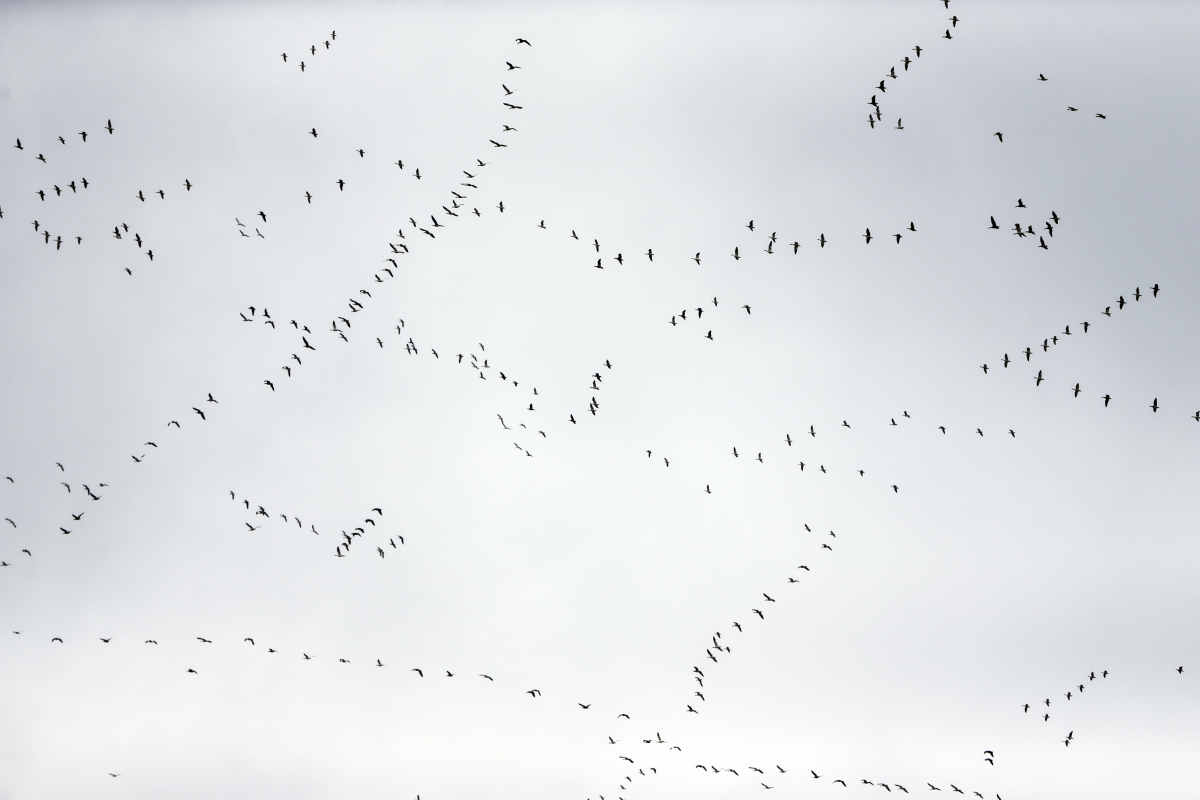
Faster birds can get to their destinations in a few days. But for most geese, long-haul flights will take a few weeks or months, Weegman said.
Some species, like snow and Ross’s geese, have frequent layovers. Others, like black and Atlantic brant geese, can fly 1,000 miles without stopping, Weegman said.
To fly efficiently, the birds have to take advantage of good aerodynamics. That’s possibly where the “V” formation comes into play, Kölzsch said.
“The bird in front flies, and the one flying behind it can profit from the air currents that the wings of the first bird is producing,” she said.
It also could be that the bird most familiar with the route will fly in front. However, many migrating geese know the way, so they’ll split the responsibility and reassign the lead pilot from time to time. The lead could change more often if a bird is sick, or there are extreme weather conditions, Weegman said.
It can get a little loud on the trip, so don’t hesitate to use your earbuds.
“There’s a lot of continued conversation, or decision making, throughout the year, not only in the air, and that leads to lots of individuals being able to take over the lead position,” Weegman said.
During layovers, the birds will rest and eat. But climate change has made storms more frequent and more intense, so sometimes, geese will have to eat and move along quickly, Weegman said.
Landing
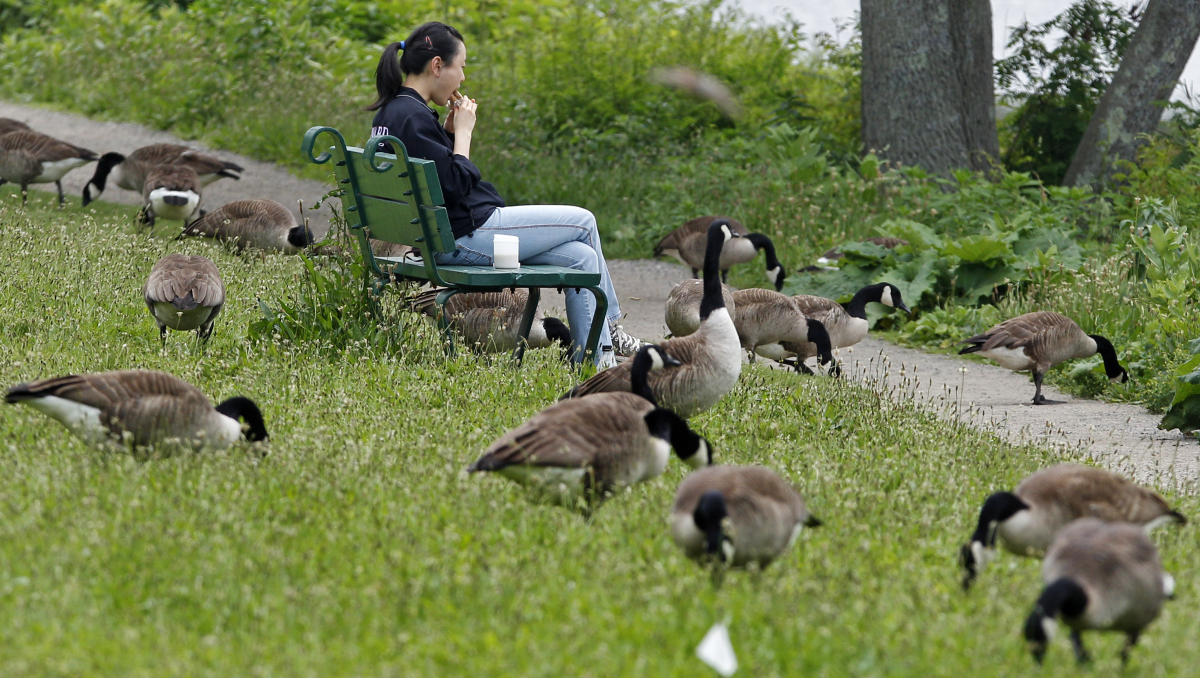
By the time the geese reach their destinations, they’ve already found other copilots — breeding partners. And once they find their copilot, they’re together for life, Weegman said.
So they head to their breeding spots, which for most geese is the same spot as last year.
Goslings hatch in early to mid-summer. From there, the babies quickly develop their flight and subadult feathers. These will serve them well as they start to follow mom and dad around.
They have to learn quick. The pilots-in-training will have to complete their one-way flight south for the winter around August and September.
Again, thank you for choosing Goose Airlines today. We hope you enjoyed flying with us.
Microshelters for Birmingham’s unhoused set to open soon
The pilot program called Home For All involves building 14 small pallet homes to house those who would otherwise be living on the streets.
Chimps’ taste for fermented fruit hints at origins of human love of alcohol
Scientists analyzed the urine of wild chimpanzees who'd feasted on fallen fruit to see how much alcohol they consumed from the fermented sugars.
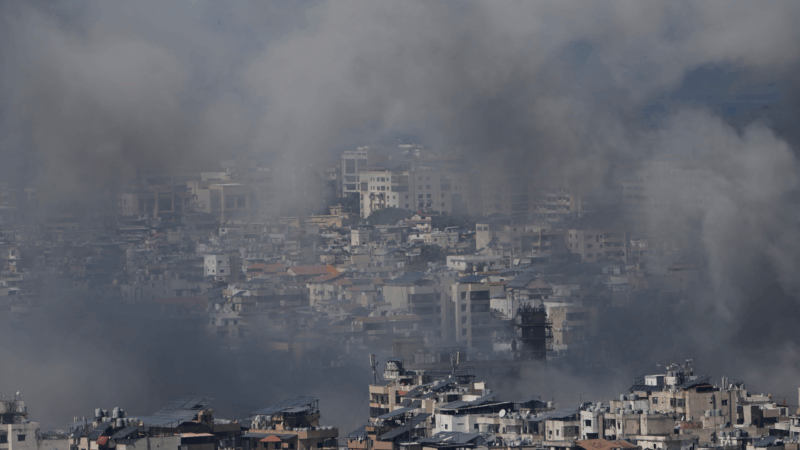
Iran attacks Israel, Gulf states, after naming new leader on Day 10 of war
The price of crude oil briefly neared $120 a barrel Monday as Iran named Mojtaba Khamenei the supreme leader and then launched new attacks at Israel and Gulf states.

World shares tumble as Iran war pushes crude prices over $110 a barrel
World shares tumbled on Monday, with Japan's benchmark Nikkei 225 index plunging more than 5%, after oil prices spiked at nearly $120 a barrel.
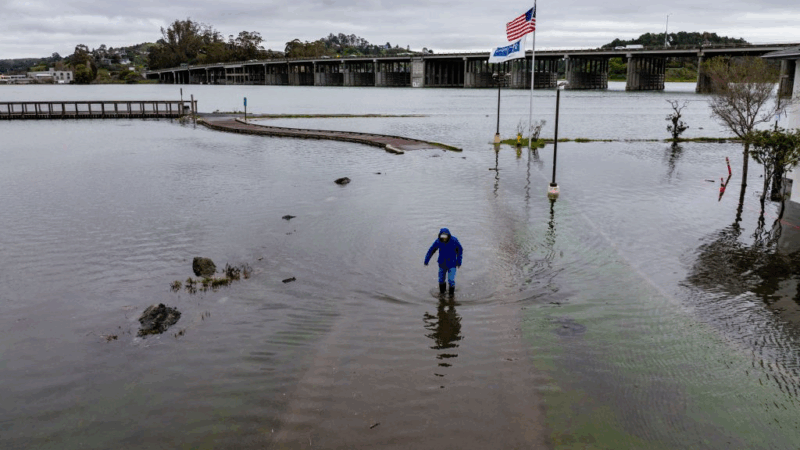
Millions more people are in the path of rising seas than previously thought
Oceans are rising as the climate changes, threatening coastal cities. A new study shows that much more of the world's population is vulnerable than earlier predictions had estimated.

The next redistricting battle might be who is counted in state legislative districts
A Republican push to alter the census may lead to a radical shift in redistricting for state legislatures — drawing districts that don't take into account children and non-U.S. citizen adults.
