
China slams Trump’s trade investigation, as it approves a 5-year economic plan
BEIJING — China’s Foreign Ministry criticized a U.S. investigation opened this week into the trade practices of dozens of countries, calling it a “pretext for political manipulation.”
U.S. Trade Representative Jamieson Greer announced the investigation Wednesday into what the administration considers “excess capacity and production in manufacturing sectors” in countries and blocs including China, Mexico and the European Union. The move came after the Supreme Court last month struck down tariffs the president had imposed on imports from countries around the world. This could enable the administration to levy tariffs on goods from countries if it determines they discriminate against U.S. companies.
“We oppose any form of unilateral tariff measures,” Foreign Ministry spokesperson Guo Jiakun told reporters on Thursday. “The so-called issue of ‘China’s overcapacity’ does not really exist and should not be used as a pretext for political manipulation.”
This comes just weeks before President Trump and Chinese President Xi Jinping are slated to meet in a high-stakes summit.
It also happened as lawmakers in Beijing approved a roadmap for economic growth that continues the types of practices that have irked some of its partners.
China’s new five-year economic roadmap
The Chinese legislature on Thursday approved what it calls a Five-Year Plan, a social and economic blueprint, which includes policies around technological self-reliance and industrial manufacturing.
While the plan does not mention the U.S., it is focused on “managing what Beijing calls its ‘great-power competition’ with Washington,” according to Yu Jie, a senior research fellow on China at London-based think tank, Chatham House.
Here are key takeaways of China’s plan.
1. Scientific and technological self-reliance
The plan calls for “substantial improvements” to China’s self-reliance and strengthening of its science and technology sectors.
China has long been uncomfortable with relying on foreign suppliers of high-end technology, such as aircraft engines and high-end semiconductors, Yu writes.
The resolve for self-reliance hardened after the U.S. restricted sales of high-end semiconductors and advanced tech to Chinese firms.
China is set to increase spending on research and development by over 7% annually.
2. Global leader in tech innovation
China doesn’t want to just catch up with the U.S. and Europe in semiconductors and aerospace, but it also wants to lead in those areas along with future industries such as intelligent robotics, biomedicine, quantum technology and what’s known as the “low-altitude” economy, ranging from drones to flying taxis.
Similar ambitions in the past have raised concerns among American and European business groups in China that there will be little opportunity for them.
The Chinese official news agency, Xinhua, tried to allay those fears: “Tech sovereignty is not about isolation,” it said in an editorial.
3. Doubling down on industrial manufacturing
China wants to innovate like the U.S., and manufacture what it innovates.
The plan calls on manufacturers to capitalize on the breakthroughs China made in robotics and artificial intelligence to build a “modern industrial system with advanced manufacturing as its backbone.”
The blueprint, however, does not address the problem of “involution,” where fierce competition among manufacturers led to price wars and oversupply, affecting profits and increasing trade friction abroad.
Many Chinese manufacturers have been accused of dumping their excess inventory abroad, undercutting the key industries of their trade partners.
The plan also calls for strengthening China’s competitive advantages in rare earths and other strategic minerals. Chinese officials used China’s advantage as a leverage to pressure President Trump to back down on triple-digit tariffs on Chinese exports last year.
4. Boosting consumption
The plan also calls for “vigorously boosting consumption.”
Most of China’s household wealth is invested in real estate. A yearslong property slump has made Chinese consumers spend more cautiously.
Consecutive U.S. administrations and European leaders have called on China to resolve its overcapacity issue by reviving its domestic consumption.
“They want China to actually export less and import more, encourage local consumption, increase local wages so they can sell more to China,” said Wang Dan, China director of Eurasia Group.
The plan lists consumption as a key task, but it doesn’t provide details on how China may address this gap.
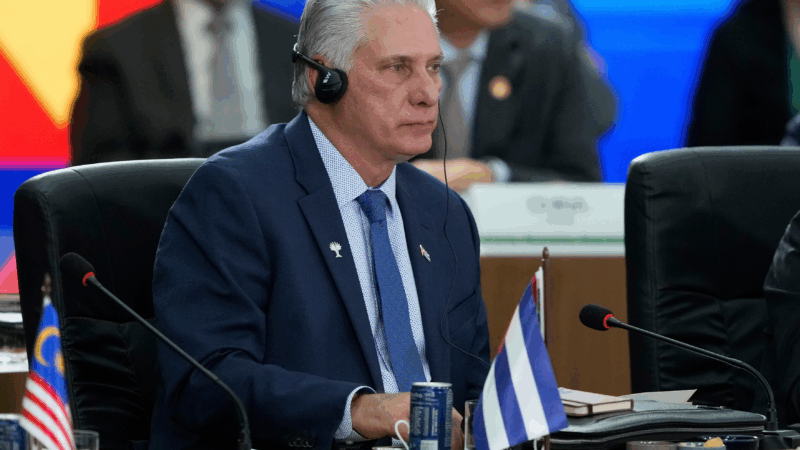
Cuba will release 51 people from prison in an unexpected move
The announcement was made just hours before Cuban President Miguel Díaz-Canel is scheduled to speak early Friday "to address national and international issues."

A record number of political parties register for Haiti’s first election in a decade
A record 280 political parties had registered by Thursday's deadline to participate in Haiti's first general election in a decade, hopeful for a chance to help ease their country's multiple crises.

NYC’s Mamdani condemns Tuberville’s anti-Muslim posts as “bigotry”
Speaking at a public iftar dinner, held to break the daily Ramadan fast, New York City Mayor Mamdani described Sen. Tuberville's anti-Muslim rhetoric as "bigotry" and "hatred."
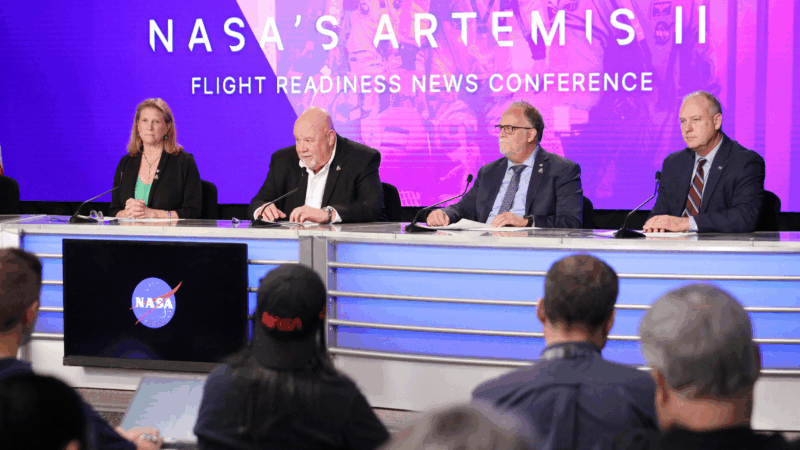
NASA targets Artemis II crewed moon mission for April 1 launch
A six-day launch window opens on April 1 from NASA's Kennedy Space Center in Florida. The lunar orbital mission would be the first time humans have returned to the moon since Apollo 17 in 1972.

Auburn football player uses NIL funds to open a community hub in Birmingham
Jourdin Crawford, a freshman defensive lineman at Auburn, used earnings from a Name, Image, and Likeness deal to give back to his hometown.

Fear of Iranian mines in the Strait of Hormuz could further slow the flow of oil
Attacks by Iran have already nearly halted the flow of oil through the vital waterway as commercial ship crews fear being hit by missiles, drones or mines.
