
China has declared war on the chikungunya virus. How much of a threat is it?
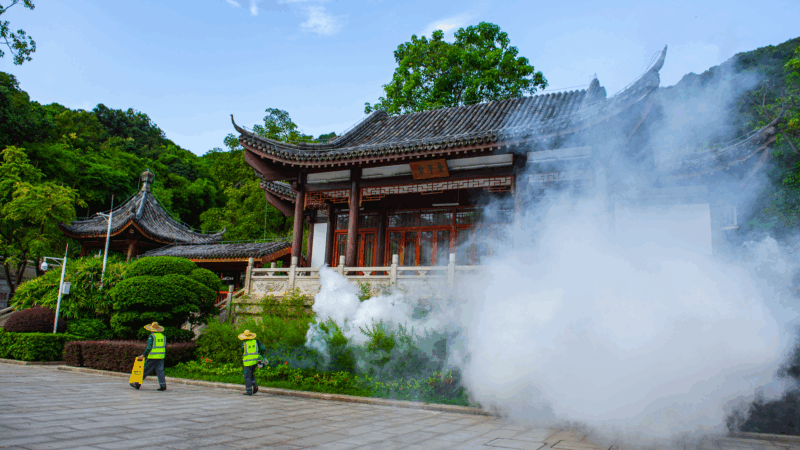
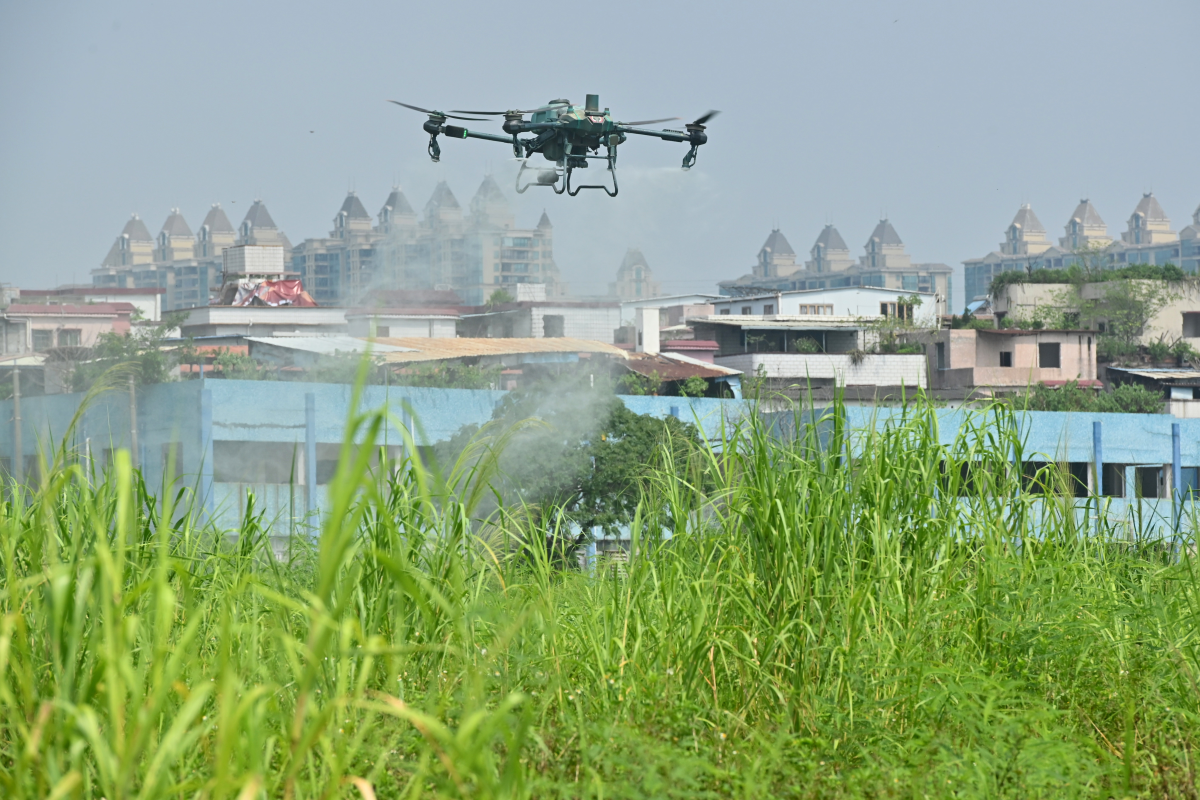
Health officials in Guangdong province in southern China are waging an all-out war against mosquitoes in response to an outbreak of the chikungunya virus that’s sickened thousands with fever, rashes and joint pain over the past month.
Soldiers are fogging streets and parks in the city of Foshan with insecticide. Community workers are going door-to-door to look for stagnant water, where mosquitoes can breed. People who test positive are reportedly being forced to hospitalize to isolate themselves, says Yanzhong Huang, senior fellow for global health at the Council on Foreign Relations.
“It’s reminiscent of the COVID-19 tactics,” he says, where citizens were extremely restricted in their activities to slow the spread of SARS-CoV-2.
Some of the current measures are likely overkill, says Huang. Chikungunya is rarely fatal, and the mosquito-borne virus can’t spread through the air. But mosquitoes easily pick it up from infected people. And because chikungunya outbreaks are rare in China, he says “some of the measures are justified given the population has no immunity.” Typically, the virus is found in Africa, southeast Asia and South America.
So far, more than 8,000 people have been infected in Guangdong, making it the largest chikungunya outbreak in China’s history.
Here’s what you should know about chikungunya (whose name is pronounced “chick’n-GOON-ya”).
What is chikungunya and how does it spread?
Chikungunya disease is caused by the chikungunya virus. It’s spread through infected Aedes aegypti or Aedes albopictus mosquitoes. People can get sick within 3 to 7 days of a bite from a mosquito carrying the virus.
The virus can cause fever, rash and fatigue, but the most notable symptom is joint pain. “It can be debilitating, where people cannot get out of bed, they are laid out,” says Laurie Silva, a virologist at the University of Pittsburgh. The virus is named for a word from the Kimakonde language of Tanzania — where the virus was first discovered in 1952 — that means “that which bends up,” because of the distorted posture of those suffering from the pain.
Symptoms tend to resolve within a week or so, but some patients can go on to have chronic illness, says Silva. “They can have prolonged joint pain that can last for weeks or months, and in some cases years,” she says. “That’s one of the main concerns for this virus.”
Are there treatments or vaccines?
There are no specific antivirals for chikangunva. “It’s really just rest, hydration and pain medicine,” says Silva.
There are two licensed vaccines, but they’re not widely available or used, according to the World Health Organization. In the U.S., they’re only recommended for travelers or lab workers likely to be exposed to the virus. The U.S. Centers for Disease Control and Prevention has issued a notice for travelers to Guangdong, urging them to exercise precautions including mosquito repellent and vaccination.
The vaccines aren’t currently available in China.
How common are chikungunya outbreaks?
The disease was first detected in 1952 in Tanzania, and began popping up in other African and Asian countries over the subsequent decades.
More global outbreaks have occurred since 2004, and the virus has been reported in more than 110 countries. Cases and outbreaks are most common in tropical and subtropical regions where mosquitoes thrive year round. Climate change and increased global travel are contributing to chikungunya’s growing footprint, says Silva.
For example, the United States gets a handful of cases most years, mostly in returning travelers. There hasn’t been a locally acquired case of chikungunya in the U.S. since 2019.
So far this year, there have been roughly 240,000 cases of chikungunya and 90 deaths from the virus, mostly in South America. Compared to other outbreaks, China’s is so far small. La Réunion, an island in the Indian Ocean, has reported nearly 50,000 cases so far this year.
But chikungunya can spread quickly in dense, urban areas where mosquitoes can thrive. That’s why China is taking such extreme measures to tamp down the mosquito population in Foshan.
Over the past few days, confirmed cases appear to be declining, says Huang. “That seems to indicate that the disease is plateauing in Foshan,” he says. But with hot and humid weather conditions in the region and travel, he adds, “we cannot rule out the possibility that the disease will spread beyond Guangdong.”

Justice Department publishes some missing Epstein files related to Trump
The Justice Department has published additional Epstein files related to allegations that President Trump sexually abused a minor after an NPR investigation found dozens of pages were withheld.
Pregnant women in ERs took less Tylenol after Trump autism warning
A study in The Lancet finds that pregnant women in emergency rooms used less Tylenol after President Trump said it could raise their babies' risk of autism. Scientists say there is no proven link.

Mixed reactions, including relief, greet news the Coast Guard is buying BSC campus
The U.S. Coast Guard will take possession of the 192-acre campus in the northeast corner of Birmingham’s Bush Hills Neighborhood and will begin work to refit it as a training center for officers and enlisted personnel.

What you need to know about Sen. Markwayne Mullin, Trump’s new pick to lead DHS
President Trump announced Thursday that Sen. Markwayne Mullin, R-Okla., is his pick to replace Kristi Noem as the head of the Department of Homeland Security.
Travel industry pushes Congress to end DHS shutdown and pay federal security workers
With the busy spring break travel season looming, travel and aviation industry leaders urged Congress to end the stalemate over DHS funding before workers at TSA and ports miss a full paycheck.

Trump fires Kristi Noem as DHS chief, names Sen. Markwayne Mullin to replace her
President Trump has fired his homeland security secretary, Kristi Noem, and said Markwayne Mullin, a senator from Oklahoma, would replace her.
