
CDC to disburse delayed funds for fighting fentanyl and more, staffers say

The Centers for Disease Control and Prevention will be able to fully fund the Overdose Data to Action or OD2A program ahead of a key budget deadline, according to a CDC senior leader. A second CDC staff member confirmed that “there have been developments and we are likely to have full funding,” although they did not have details on when the funding would become available.
Both spoke to NPR on the condition of anonymity because they fear retribution for speaking to the press without authorization. Some staffers at CDC expressed to NPR that this appeared to be good news, although the funding situation was still fluid and confusing.
NPR reported last month that the Trump administration was withholding $140 million from the OD2A program, which state and local public health departments rely on to lower overdose deaths from fentanyl, methamphetamines and other drugs across the U.S.
Previously frozen funding for other CDC programs, including rape and domestic violence prevention, is also getting released, the senior CDC leader said.
Funding, 30 days at a time
The delays were part of a broader issue with funding at CDC. As NPR reported in June, for months, CDC waited for the $9 billion Congress intended for the agency for fiscal year 2025. In the meantime, it received small amounts of money every 30 days to cover payroll and other limited expenses.
The senior leader described the process like receiving money “with an eyedropper.”
Without a pot of money to distribute out to various centers and divisions, the CDC couldn’t send out the notice of awards that state and local health departments need to be able to do their work and know they will be reimbursed for it.
“Most state health departments get most of their funding from the feds — in Alabama’s case, we get more than two thirds of our funding from federal grants, predominantly CDC,” Dr. Scott Harris, who runs Alabama’s health department, told NPR in June.
Deadlines missed
Health departments across the country sounded the alarm as deadlines approached or passed for CDC funding of HIV prevention, cancer registries and overdose prevention programs.
Now, most of those programs across CDC apparently can continue, including OD2A. Grantees for the OD2A program, who had been told in July they would be receiving only half of their funding, will soon be told they will receive the full amount, according to the senior leader at CDC.
The news comes after advocates had been warning for weeks of the harms that delayed or partial funding to the program could have. If full funding is actually coming, “it’ll be welcome, but it’s not without the toll that it’s already taken,” says Sharon Gilmartin, director of the Safe States Alliance, a public health advocacy group. For instance, NPR reported on a local health department in North Carolina that laid off staff because of CDC funding delays, only to have the funding come through weeks late without explanation.
“I don’t think anybody will feel confident until they have money in hand,” Gilmartin adds. “And I’ll be honest, I think the concern is that — if this is what we went through this year, even if funding comes through, are we going to be doing this again next year?”
There was no available explanation from the Trump administration or the Office for Management and Budget for the delays or the release of the funding. OMB and the Department of Health and Human Services did not respond to NPR’s request for comment.
The CDC senior leader describes the release of funding for the agency as a relief. “It’s great we have our apportionment,” they tell NPR.
Some funds frozen
But there’s a new funding challenge. Several dozen specific CDC programs have now had their budget lines frozen at the direction of OMB, according to the senior leader at CDC. The news of the frozen funds was first reported by the Wall Street Journal.
The frozen programs are mostly in the National Center for Chronic Disease Prevention and Health Promotion, according to the senior leader at CDC.
A list of frozen programs reviewed by NPR includes those that address tobacco use, nutrition, physical activity and obesity, school health, inflammatory bowel disease, excessive alcohol use, chronic disease education and awareness, national diabetes prevention program, oral health, epilepsy, and more.
“What does it all mean?”
Funding for five programs at the CDC’s Injury Center was frozen by OMB as well, including youth violence prevention, adverse childhood experiences, firearm injury, injury control research centers, and injury prevention activities. Gilmartin of the Safe States Alliance says it’s hard to understand why these programs were targeted. “I can’t come up with an ideological reason why you would want to cut funding that supports positive early childhood,” for instance, she says.
The senior leader at CDC says there are some big questions for OMB and the Trump administration: “How do we interpret all of this? What does it all mean?”
There were whole teams fired during the dramatic reduction in force across HHS in April that appear to have full funding, the senior leader says, such as the Rape Prevention and Education Program.
Similarly, there are programs with their budget lines frozen by OMB that are fully staffed, and still other priorities set forth in President Trump’s 2026 budget, they say, which leaves the impression that there’s no overarching strategy.
Malinowski concedes to Mejia in Democratic House special primary in New Jersey
With the race still too close to call, former congressman Tom Malinowski conceded to challenger Analilia Mejia in a Democratic primary to replace the seat vacated by New Jersey Gov. Mikie Sherrill.

FBI release photos and video of potential suspect in Guthrie disappearance
An armed, masked subject was caught on Nancy Guthrie's front doorbell camera one the morning she disappeared.

Reporter’s notebook: A Dutch speedskater and a U.S. influencer walk into a bar …
NPR's Rachel Treisman took a pause from watching figure skaters break records to see speed skaters break records. Plus, the surreal experience of watching backflip artist Ilia Malinin.

In Beirut, Lebanon’s cats of war find peace on university campus
The American University of Beirut has long been a haven for cats abandoned in times if war or crisis, but in recent years the feline population has grown dramatically.
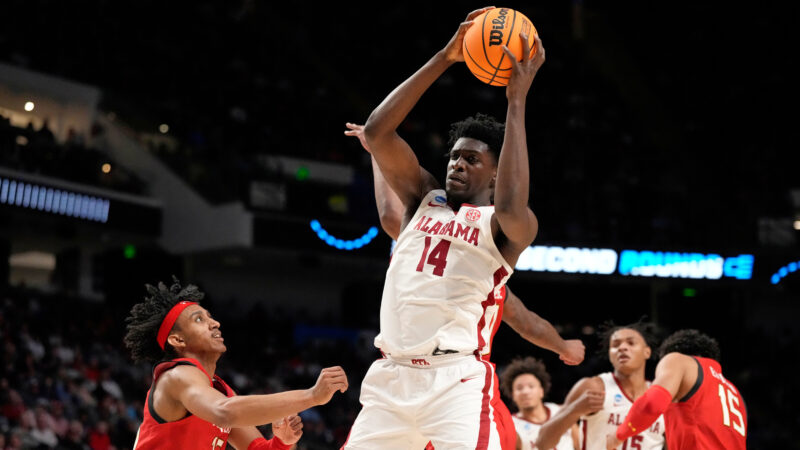
Judge rules 7-foot center Charles Bediako is no longer eligible to play for Alabama
Bediako was playing under a temporary restraining order that allowed the former NBA G League player to join Alabama in the middle of the season despite questions regarding his collegiate eligibility.

American Ben Ogden wins silver, breaking 50 year medal drought for U.S. men’s cross-country skiing
Ben Ogden of Vermont skied powerfully, finishing just behind Johannes Hoesflot Klaebo of Norway. It was the first Olympic medal for a U.S. men's cross-country skier since 1976.
