
CDC director is out after less than a month; other agency leaders resign
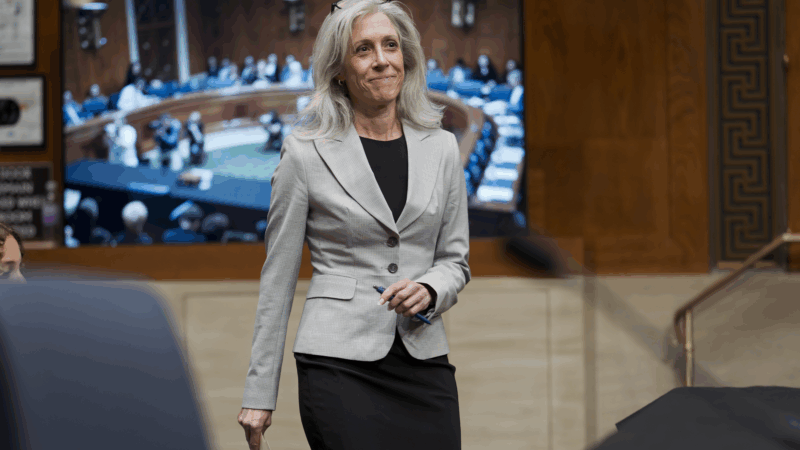
NEW YORK — The director of the nation’s top public health agency is out after less than one month in the job, and several top agency leaders have resigned.
“Susan Monarez is no longer director of the Centers for Disease Control and Prevention. We thank her for her dedicated service to the American people,” the U.S. Department of Health and Human Services wrote in a social media post Wednesday.
HHS officials did not explain why Monarez was no longer with the agency.
On Wednesday evening, her lawyers Mark Zaid and Abbe David Lowell issued a statement that said she had neither resigned nor been told she was fired.
“When CDC Director Susan Monarez refused to rubber-stamp unscientific, reckless directives and fire dedicated health experts, she chose protecting the public over serving a political agenda. For that, she has been targeted,” the attorneys wrote.
“This is not about one official. It is about the systematic dismantling of public health institutions, the silencing of experts, and the dangerous politicization of science. The attack on Dr. Monarez is a warning to every American: our evidence-based systems are being undermined from within,” they said.
Her departure coincided with the resignations of at least three top CDC officials. The list includes Dr. Debra Houry, the agency’s deputy director; Dr. Daniel Jernigan, head of the agency’s National Center for Emerging and Zoonotic Infectious Diseases; and Dr. Demetre Daskalakis, head of its National Center for Immunization and Respiratory Diseases.
In an email seen by an AP reporter, Houry lamented the crippling effects on the agency from planned budget cuts, reorganization plans and firings.
“I am committed to protecting the public’s health, but the ongoing changes prevent me from continuing in my job as a leader of the agency,” she wrote.
She also noted the rise of misinformation about vaccines during the current Trump administration, and alluded to new limits on CDC communications.
“For the good of the nation and the world, the science at CDC should never be censored or subject to political pauses or interpretations,” she wrote.
In his resignation letter, Daskalakis wrote: “I am unable to serve in an environment that treats CDC as a tool to generate policies and materials that do not reflect scientific reality and are designed to hurt rather than to improve the public’s health.”
HHS officials did not immediately respond to questions about the resignations, or to the statement from Monarez’s lawyers.
Some public health experts decried the exodus.
“The loss of experienced, world-class infectious disease experts at CDC is directly related to the failed leadership of extremists currently in charge of the Department of Health and Human Services,” said Michael Osterholm, a University of Minnesota infectious disease researcher.
“These departures are a serious loss for America. They make our country less safe and less prepared for public health emergencies,” he said.
Monarez, 50, was the agency’s 21st director and the first to pass through Senate confirmation following a 2023 law. She was named acting director in January and then tapped as the nominee in March after Trump abruptly withdrew his first choice, David Weldon.
She was sworn in on July 31 — less than a month ago, making her the shortest-serving CDC director in the history of the 79-year-old agency.
Her short time at CDC was tumultuous. On Aug. 8, at the end of her first full week on the job, a Georgia man opened fire from a spot at a pharmacy across the street from CDC’s main entrance. The 30-year-old man blamed the COVID-19 vaccine for making him depressed and suicidal. He killed a police officer and fired more than 180 shots into CDC buildings before killing himself.
No one at CDC was injured, but it shell-shocked a staff that already had low morale from other recent changes.
The Atlanta-based federal agency was initially founded to prevent the spread of malaria in the U.S. Its mission was later expanded, and it gradually became a global leader on infectious and chronic diseases and a go-to source of health information.
This year it’s been hit by widespread staff cuts, resignations of key officials and heated controversy over long-standing CDC vaccine policies upended by Health Secretary Robert F. Kennedy Jr.
During her Senate confirmation process, Monarez told senators that she values vaccines, public health interventions and rigorous scientific evidence. But she largely dodged questions about whether those positions put her at odds with Kennedy, a longtime vaccine skeptic who has criticized and sought to dismantle some of the agency’s previous protocols and decisions.
The Washington Post first reported she was ousted, citing unnamed sources within the Trump administration.
‘One year of failure.’ The Lancet slams RFK Jr.’s first year as health chief
In a scathing review, the top US medical journal's editorial board warned that the "destruction that Kennedy has wrought in 1 in office might take generations to repair."
Here’s how world leaders are reacting to the US-Israel strikes on Iran
Several leaders voiced support for the operation – but most, including those who stopped short of condemning it, called for restraint moving forward.

How could the U.S. strikes in Iran affect the world’s oil supply?
Despite sanctions, Iran is one of the world's major oil producers, with much of its crude exported to China.

Why is the U.S. attacking Iran? Six things to know
The U.S. and Israel launched military strikes in Iran, targeting Khamenei and the Iranian president. "Operation Epic Fury" will be "massive and ongoing," President Trump said Saturday morning.
Sen. Tim Kaine calls on the Senate to vote on the war powers resolution
NPR's Scott Simon talks to Sen. Tim Kaine, D-Va., about the U.S. strikes on Iran.
Iran strikes were launched without approval from Congress, deeply dividing lawmakers
Top lawmakers were notified about the operation shortly before it was launched, but the White House did not seek authorization from Congress to carry out the strikes.
