
Cartagena’s iconic horse carriages give way to electric buggies

CARTAGENA, Colombia — Cartagena sits on Colombia’s Caribbean coast and for decades it has been one of the country’s most beloved destinations.
Its historic center is encircled by thick stone walls, built by the Spaniards to fend off pirates. Inside, narrow streets wind past sun-drenched plazas and colonial mansions, a cityscape straight out of a movie.
The city is also famous for the horse-drawn buggies that carry tourists through its streets; their large-spoked wheels clattering over the pavement, and their open tops perfect for snapshots of Cartagena’s charm.
But soon the romantic buggies will be outlawed by the city government. Which wants to replace them with electric vehicles due to concerns over animal welfare.
The move has angered horse cart owners and traditionalists, pitting them against animal rights activists and local officials who say there should be no place for horse carts in a city that wants to portray itself as a global destination.
“It’s very sad,” says Cristian Munoz, one of Cartagena’s traditional horse cart drivers. “We are part of this city’s heritage, like the walls that surround it.”

Tourists in the UNESCO World Heritage Site say that the horse carts are a fun way to get around in Cartagena’s sweltering heat. And many appreciate the way in which drivers tell the colonial city’s history.
But animal rights activists have long argued that these joy rides are terrible for the horses pulling the carriages, because cars on the city’s roads stress out the horses. And the pavement injures horses’ knees, and hurts their legs.
Fanny Pachon, a local animal rights activist, says that on several occasions, horses have collapsed from exhaustion.
“Horses are pack animals, and they’re designed to carry things,” she admits. “But they’re meant to be in rural areas, not in the middle of a city with paved roads.”
Alejandro Riaño, a popular comedian from Bogota, has been lobbying Cartagena´s government to replace the horse carts for the past four years.
In 2021, he raised more than 25,000 dollars on a crowd funding site, to build an electric vehicle that resembles a traditional horse buggy, but runs with battery power. The prototype was tested on the city’s streets two years ago.
“We have shown there is the technology now to do things differently” he said.
After years of protests, the city is finally siding with Riaño and the animal rights activists.
On December 29, traditional horse-drawn buggies will be banned, and replaced by a fleet of 62 electric carriages imported from China, under a joint venture between Cartagena’s city government and Corpoturismo, an agency that promotes tourism in the city.

The new vehicles have big wheels and open tops, just like the traditional buggies. But they are powered by large batteries that can last for about 70km (43 miles) on a single charge.
Instead of reins, there’s a steering wheel at the front for the driver. The new carts also come with speakers that could be used to play music, or to replicate the sound of a horse’s gallop.
Liliana Rodriguez, Corpoturismo’s director, says that this new fleet of carts could inspire other cities where horse carriages are still in use.
She said that Cartagena’s carts will also be environmentally friendly because their batteries will be charged with solar power.
“These are the kinds of changes that new generations are demanding,” she said.
The city is investing around 2 million dollars in the new fleet of electric carts, and in a warehouse that is fitted with a solar powered charging station.
But the owners of Cartagena’s horse carriages are worried.
They say that the municipal government is pushing them out of a business they’ve spent decades building.
“We are not against a transition,” said Miguel Angel Cortez, the owner of two horse carts that make around $150 per day. “But we need to know how we will be included.”
Cart owners said they have not gotten any offers in writing from the city government. But they have been to meetings where there has been some talk of a $10,000 payment to compensate them for their carriages. Cart owners say that would hardly compensate for their losses.
Cartagena’s mayor Domek Turbay, accuses the cart owners of “sabotaging” negotiations. He says that the municipal government is willing to share the profits of the new electric vehicles with the horse cart owners. But so far, there has been no agreement between both sides, and cart owners have threatened to sue the city government for leaving them out of work.
“I get the feeling that they are trying to take advantage of the situation,” Mayor Turbay told NPR news.
Turbay says that tourists will be able to ride on the city’s new electric carts for free, for the next two months.
And some of the carriage drivers — who currently work for cart owners — admit that they will apply for jobs driving the new electric buggies.
But others are wondering if tourists will want to ride on electric vehicles, even if they resemble 19th century carriages.
“People come to Cartagena for tradition,” says cart driver Cristian Munoz. “Without the horses, it’s not the same.”
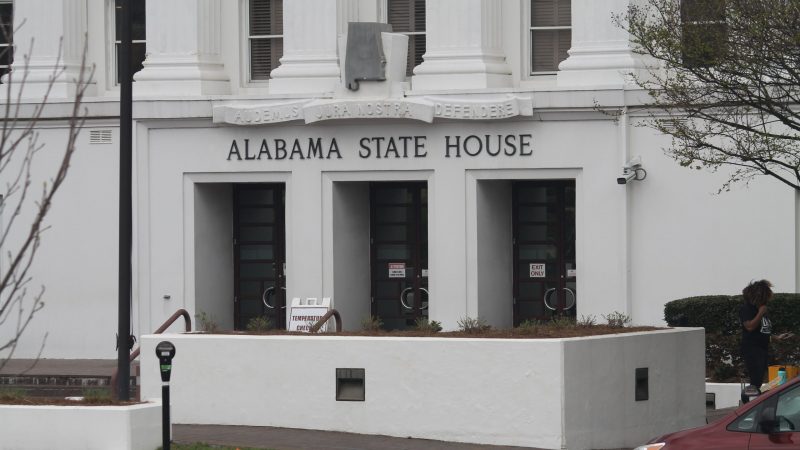
Bill making the Public Service Commission an appointed board is dead for the session
Usually when discussing legislative action, the focus is on what's moving forward. But plenty of bills in a legislature stall or even die. Leaders in the Alabama legislature say a bill involving the Public Service Commission is dead for the session. We get details on that from Todd Stacy, host of Capitol Journal on Alabama Public Television.

My doctor keeps focusing on my weight. What other health metrics matter more?
Our Real Talk with a Doc columnist explains how to push back if your doctor's obsessed with weight loss. And what other health metrics matter more instead.

Baz Luhrmann will make you fall in love with Elvis Presley
The new movie is made up of footage originally shot in the early 1970s, which Luhrmann found in storage in a Kansas salt mine.

Forget the State of the Union. What’s the state of your quiz score?
What's the state of your union, quiz-wise? Find out!

A team of midlife cheerleaders in Ukraine refuses to let war defeat them
Ukrainian women in their 50s and 60s say they've embraced cheerleading as a way to cope with the extreme stress and anxiety of four years of Russia's full-scale invasion.

SNL mocked her as a ‘scary mom.’ In the Senate, Katie Britt is an emerging dealmaker
Sen. Katie Britt, Republican of Alabama, is a budding bipartisan dealmaker. Her latest assignment: helping negotiate changes to immigration enforcement tactics.
